U.S. offers up to $2.8 billion for a Wyoming power link
The planned Wyoming Intertie would move electricity between two major U.S. grid systems. The loan and the line still face conditions.
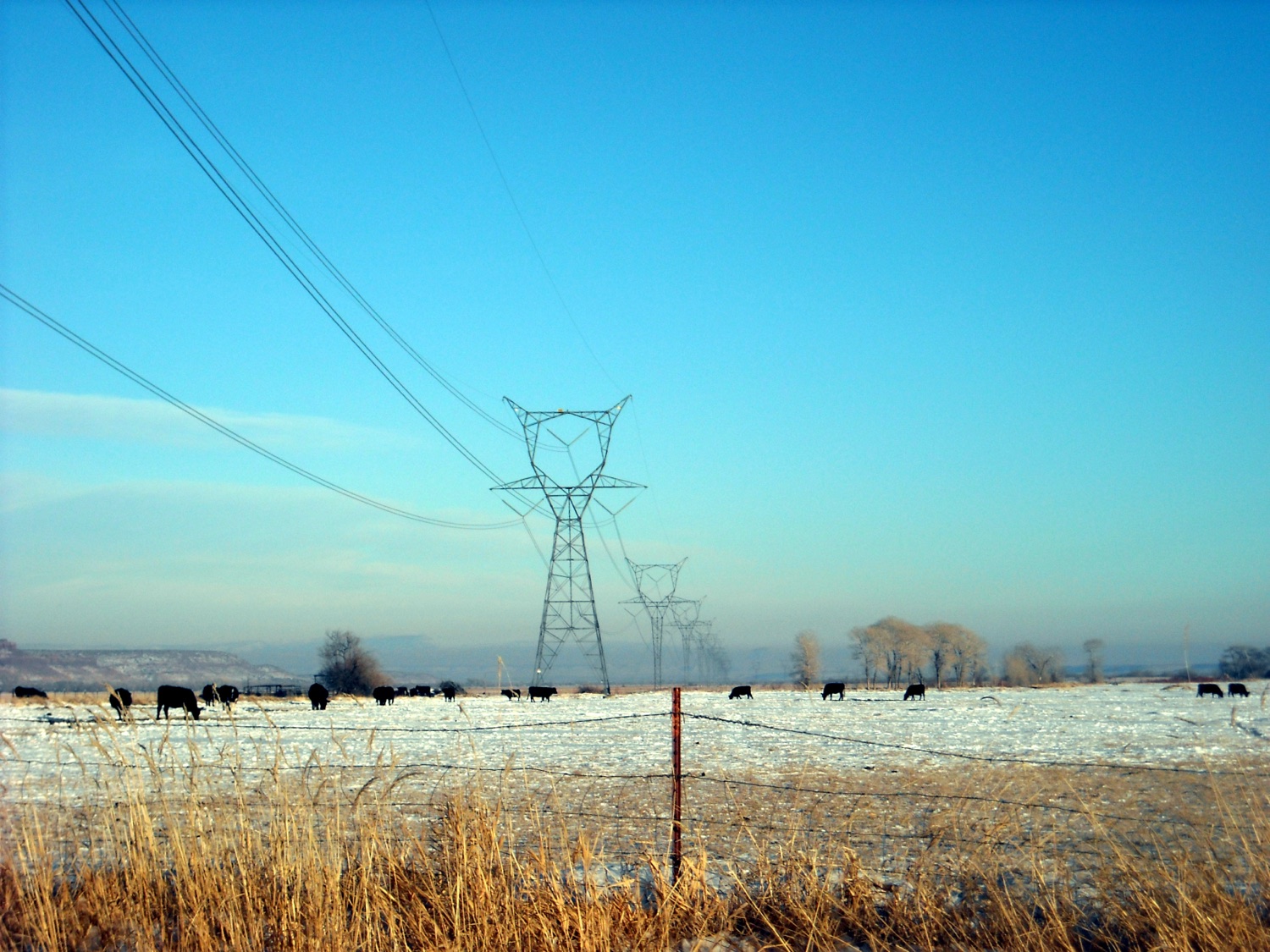
File photo: existing high-voltage lines in Duchesne County, Utah, December 2008. Not the Wyoming Intertie route or construction. David Jolley (Staplegunther) · CC BY-SA 3.0; resized, distributed under the same license. · Edited

The U.S. Department of Energy offered a conditional loan commitment of up to $2.8 billion on Nov. 17 for the Wyoming Intertie, a proposed transmission link that would let more electricity move between major eastern and western power grids. The project is being developed by Grid United. The announcement is a financing milestone, not a loan closing, construction start or change to anyone’s electricity bill.
The proposed line would run about 106 miles across Carbon, Albany and Platte counties, according to the project developer. It would connect substations near Medicine Bow and Wheatland. Its capacity would be as much as 1,800 megawatts, or 1.8 gigawatts. The developer says power could move in either direction as demand changes. The line would carry power from different kinds of generation rather than serving one fuel source or one generating station.
Why this connection matters
Wyoming sits near parts of two large electricity systems that do not share much transfer capacity. A region can have spare generation while a neighboring region is short, especially during peak demand or unusually severe weather. Generating capacity and delivery capacity are different. If the connections between grids are full, utilities on one grid cannot necessarily buy all the electricity they want from the other.
The department says the line would roughly double existing transfer capacity between the Southwest Power Pool and the Western Electricity Coordinating Council regions. That does not mean the whole Western grid would have twice as much generating capacity. It means a larger connection between systems, which can give grid operators more ways to balance supply and demand. The practical difference can be important if an evening demand peak, a generator outage or adverse weather leaves one side under pressure while the other has room to help.
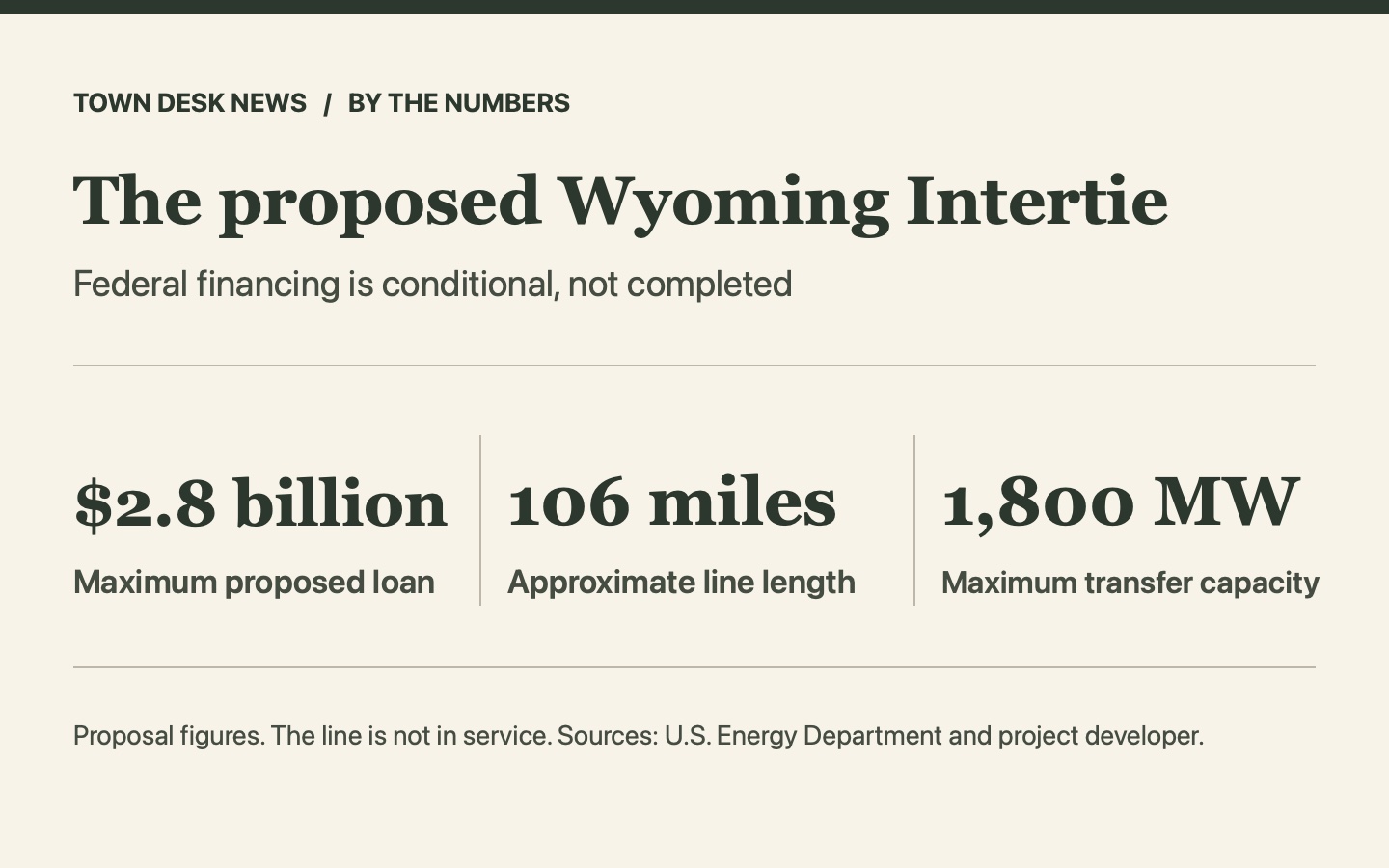
The figures describe a proposed transmission link and a conditional federal financing offer. Town Desk News · Original Town Desk News graphic; based on the linked source.
A power line also does not generate electricity itself. The benefit comes from being able to move power already produced or from making new generators commercially useful to more customers. Grid United says its project would give Wyoming producers another market for surplus output. Which way that power moves on a given day would depend on what is available and where it is needed.
What the savings figure does and does not mean
The department estimates that lower electricity costs could total up to $39 billion across 17 states in the two grid regions. That figure is a projection, not an annual saving or a promised reduction for any specific account. The announcement does not set a per-household figure or specify how much an individual utility would pass through in rates. Transmission costs, market conditions and local rate decisions would all matter to the bill a customer eventually receives.
Reuters independently reported that the federal financing offer is conditional. The department says the project must meet technical, legal, environmental and financial requirements before officials execute definitive financing documents and money is made available. A loan is also different from a grant: it is financing, not an announcement that the federal government will simply pay the entire cost of building the line.
Approvals and a route come first
Grid United’s project site says the work is still in planning and development. It identifies a proposed route and describes outreach with landowners, Tribal Nations and other community members. The developer says construction would start after it obtains land rights and regulatory approvals, and that the link could be operating in the early 2030s. That is a target, not a confirmed opening date. For landowners along the corridor, the details to watch are the specific route, land-access discussions and the filings that govern where the line can actually go.
For other electricity customers, useful evidence will arrive in stages. A final financing agreement would answer whether the proposed federal loan has closed. Route and permit decisions would show whether work can proceed where planned. Operating agreements and eventual utility proceedings would provide a better basis for judging what the link may mean for reliability and bills. Tuesday’s announcement moved the financing forward, but it did not settle those outcomes.
Sources & reporting notes
- Agency statement
Energy Department announcementDetails the conditional financing, estimated capacity and modeled savings.
- Developer statement
Wyoming Intertie project informationDescribes the route, substations and projected timeline.
- Independent reporting
Reuters coverageConfirms the announcement and conditional nature of the federal offer.