What can the World Court’s Myanmar ruling change for the Rohingya?
The Gambia won the central finding it sought in The Hague. The next question is what the judgment can deliver for people who have been waiting years for a safe way home.

The Peace Palace in The Hague in July 2025, not the November hearing. Image resized. Stck w / Wikimedia Commons · CC BY-SA 4.0

The International Court of Justice has found, by a 9–6 vote, that Myanmar committed genocide against the Rohingya in northern Rakhine State. The published judgment records the ruling against the state under the Genocide Convention. It does not convict individual people, set an award for survivors, or announce that displaced families can return safely. Those distinctions matter as attention shifts from the courtroom to what anyone can do with its decision.
Eleven states intervened in the proceeding, as the United Nations hearing record notes. The named parties remained The Gambia and Myanmar. The court in this case was deciding what one state owed under a treaty. Separate criminal investigations, charges and trials have different purposes and standards. The ruling’s direction to investigate suspected acts is therefore distinct from a finding of criminal guilt.
What the judges decided
The case grew out of military operations in northern Rakhine State in 2017. The Gambia brought it in 2019, thousands of miles from where the events took place. It argued that Myanmar had broken commitments under the 1948 Genocide Convention. The court had already issued interim orders in 2020; Thursday’s ruling was its decision on the substance of the case. The court’s release lays out that sequence and the main findings.
The votes differed across parts of the ruling. The court found Myanmar failed to prevent genocide by people acting alongside its security forces and failed in its obligation to punish genocide. It did not find that Myanmar directly and publicly incited private individuals to commit genocide against the group in northern Rakhine. That distinction does not undo the 9–6 finding that the state committed genocide. It shows why the operative part of the judgment matters more than a single headline about who won.
Myanmar denied the genocide allegations during the case and argued its 2017 operations responded to armed attacks, Al Jazeera reported. Radio Free Asia’s Burmese service covered the decision and its reparations implications in Burmese. Separately, the opposition National Unity Government said it respected the court’s authority, Reuters reported. The opposition statement is not a commitment by the authorities who would have to implement the order.
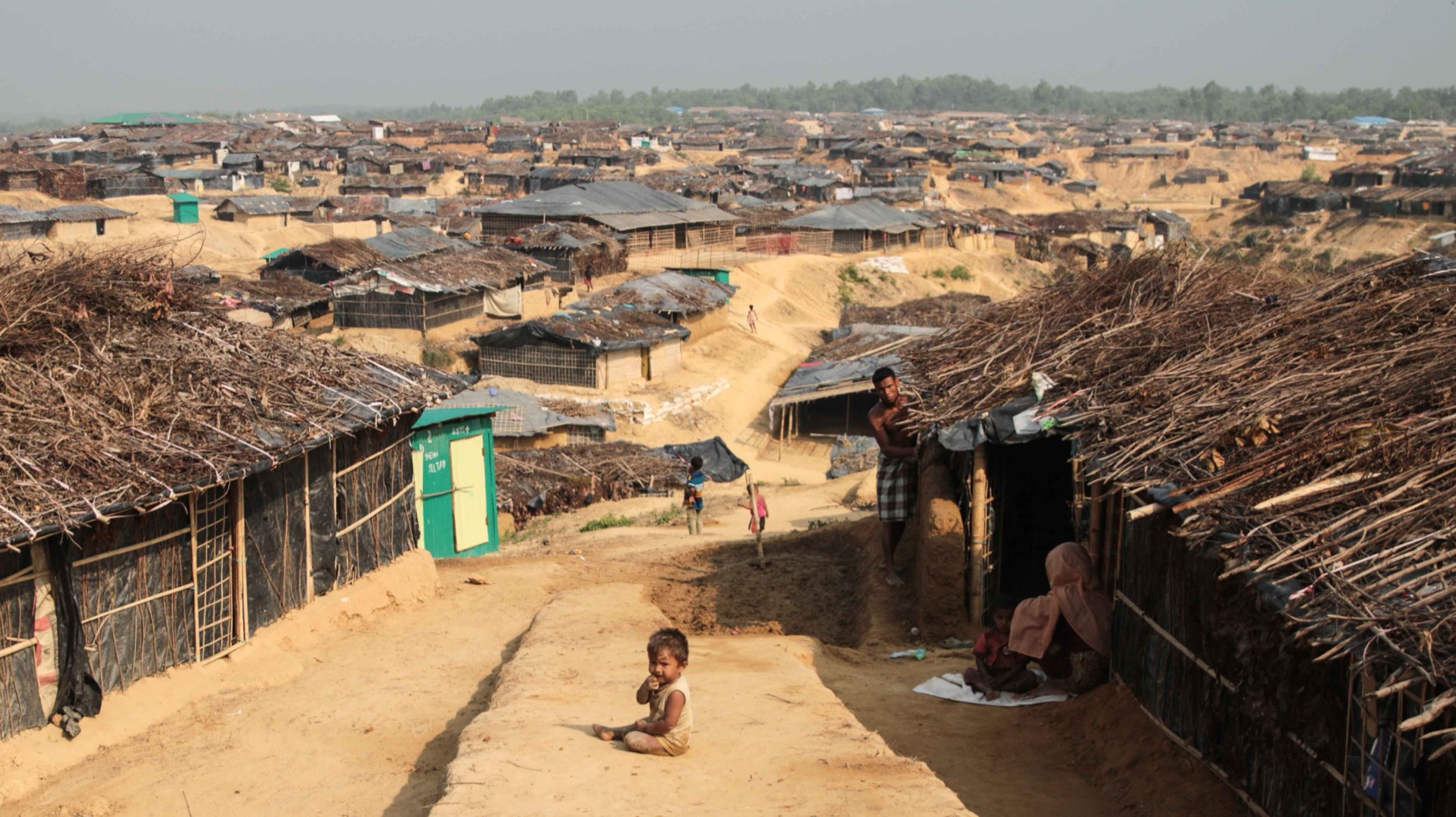
Archival view of a Rohingya refugee settlement in Bangladesh. The court’s ruling does not set a date for return. John Owens / Voice of America / Wikimedia Commons · Public domain (U.S. federal work)

An order to repair the harm is not a payment schedule
The judges ruled that Myanmar must take measures to restore what can be restored and compensate for damage that restitution does not make good. They left the amount and the mechanics for a later phase and gave Myanmar two years to report to the court on restitution and compensation. The court also directed Myanmar to take immediate effective steps to investigate people reasonably suspected of relevant acts and, where warranted, prosecute them. The decision itself does not identify anyone as criminally convicted.
For families who crossed the border into Bangladesh, a court decision and a safe return are different milestones. Bangladesh welcomed the ruling and called for international pressure to support repatriation, Bangladesh Sangbad Sangstha reported. The ruling did not announce a departure date, a plan accepted by both governments, or changed conditions in Rakhine. A return arrangement would have to be judged by what it actually offers people, not by the fact that the legal case reached judgment.
What to watch next
The United Kingdom said it had ordered Myanmar’s defense attaché expelled and called for a U.N. Security Council meeting, according to the Foreign Office statement. That was an announced British action and request, not confirmation that the Security Council had set a meeting. The U.N. secretary-general urged Myanmar to comply.
The next tests are measurable: whether Myanmar says how it will implement the order, whether the court receives the report, and whether people affected by the ruling see tangible changes to their rights, safety or ability to return. Thursday’s vote answered the legal question at the center of the case. It did not answer any of those practical ones.
Developing story: Town Desk has not verified an implementation timetable from Myanmar’s authorities or a scheduled Security Council session on the ruling. We’ll update this report when those details are confirmed.
Sources & reporting notes
- Source
published judgmentCourt judgment and operative findings.
- Source
United Nations hearing recordUN recording identifies the parties and intervening states.
- Source
court’s releaseCourt press release on verdict and case timeline.
- Source
Al Jazeera reportedIndependent overview and reporting on the case arguments.
- Source
Radio Free Asia’s Burmese serviceIndependent original-language Burmese coverage.
- Source
Reuters reportedIndependent wire reporting of reactions.
- Source
Bangladesh Sangbad Sangstha reportedBangladeshi news agency coverage of the government response.
- Source
Foreign Office statementUK official statement and proposed Security Council meeting.
- Source
U.N. secretary-generalUnited Nations secretary-general’s response.