A Vineland lab is betting that algae can turn industrial exhaust into something useful
French company Syklea says it has opened a 110,000-square-foot research lab and North American headquarters. Its first U.S. demonstration partner was not named in the announcement.
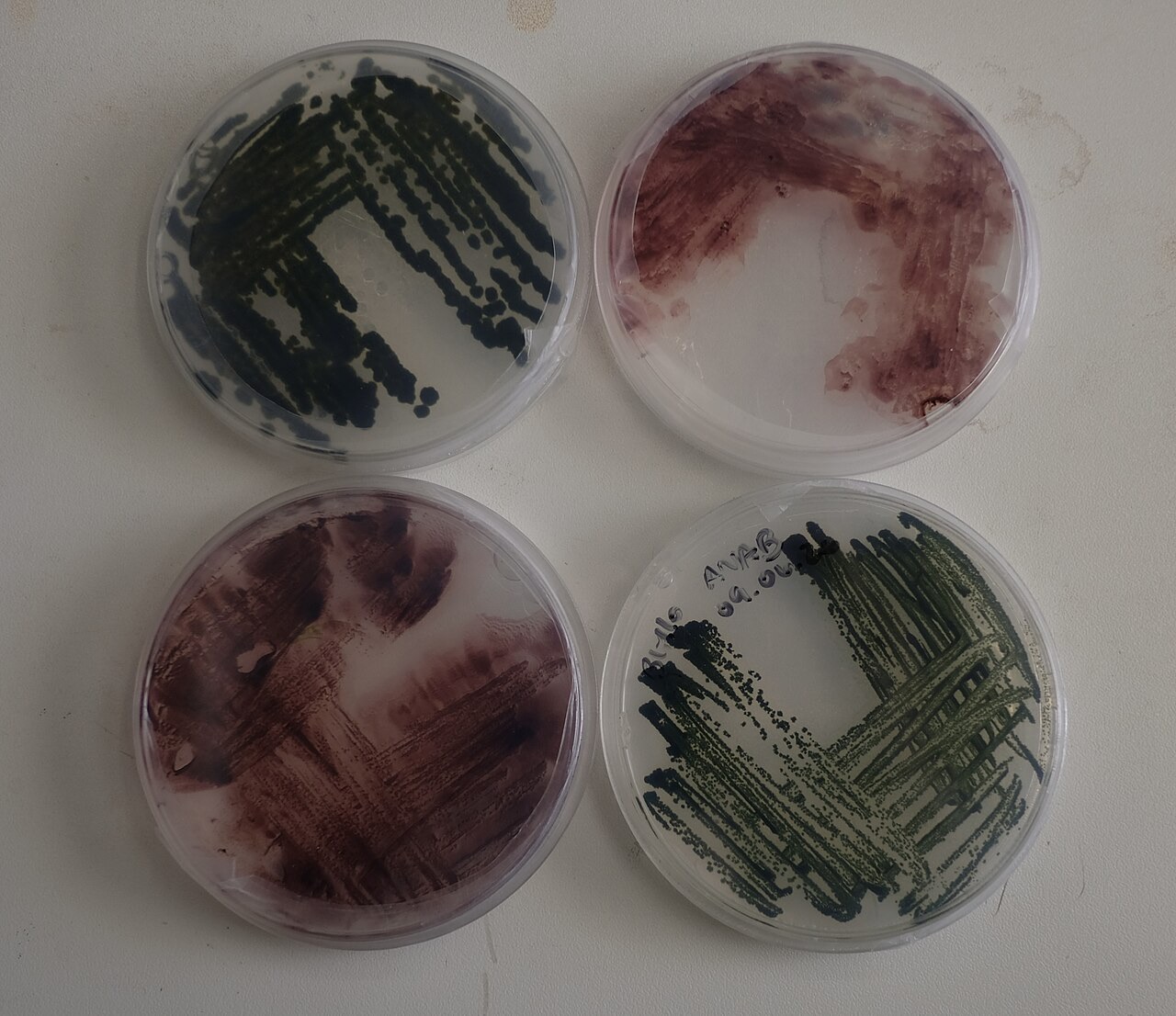
Microalgae culture plates. Illustrative photo, not equipment from Syklea’s Vineland lab. Jba.batista / Wikimedia Commons · CC BY-SA 4.0 · Edited

On Nov. 10, a French company said it opened a 110,000-square-foot research laboratory and North American headquarters in Vineland to develop an unusual way of dealing with industrial exhaust. Syklea wants to use microscopic algae to take up carbon dioxide from gas that would otherwise leave an industrial site. The local opening is concrete: the company announced a facility in Cumberland County. The size of any emissions benefit from an American installation is an open question.
Syklea says the Vineland site will house its U.S. sales, engineering and research teams and a demonstration platform it plans to develop with a customer. That customer was not named in the Nov. 10 announcement. The company said it expected to identify the partner before the end of the year. ROI-NJ, in coverage republished by Choose New Jersey, also reported that the business had listed openings in engineering, operations and sales. Neither source gives a verified local headcount or commits to a number of new jobs.
Why algae and industrial exhaust go together
The idea starts with a familiar process: microscopic algae can use carbon dioxide as they grow. The U.S. Department of Energy has studied ways to put concentrated gases from industrial sources to use in algae growth. A carbon-rich exhaust stream is different from ordinary outdoor air, where the carbon dioxide is far less concentrated. That gives researchers a potentially useful source to work with, but putting the idea next to a plant also means the setup has to function on the kind of exhaust the plant actually produces.
This differs from taking carbon dioxide out of the air and storing it underground. Syklea is pursuing a form of carbon use: the company describes the algae as a way to turn some industrial emissions into material that can be used. Whether the resulting material is durable or breaks down quickly makes a difference to what happens to the carbon. So does the energy needed to grow, harvest and process the algae. Simply showing that an organism has taken up carbon dioxide is not the same as showing that the full process keeps more of it out of the atmosphere.
The Energy Department’s carbon-conversion research program points to related questions, including how much usable material an algae system produces, the cost and effort of collecting it, and the water and nutrients it needs. Those are general questions about this technology, not government findings about Syklea’s specific equipment. In Vineland, the first useful numbers would be measurements from a real demonstration: how much exhaust went through, how much carbon the system took up, what resources it consumed and what happened to the material afterward. The same experiment could produce a useful material and still be too costly to run at a plant. The pilot needs to address both questions.
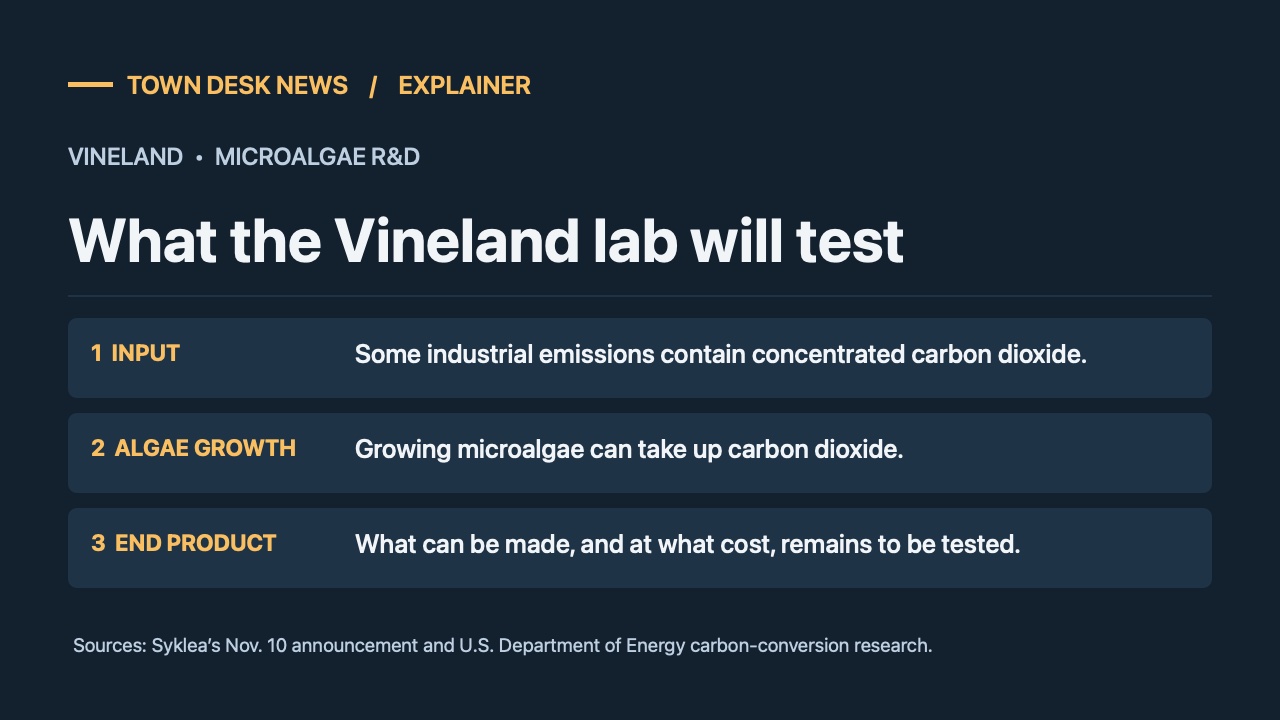
These are conceptual steps behind the research announced for Vineland, not operating instructions, a photo of the lab or results of the company’s tests. Town Desk News · Original Town Desk News graphic based on published facts; no third-party image.
What Vineland residents should watch for
Syklea says it is interested in customers in chemical manufacturing, steel, cement and construction materials, and data centers. That is a list of potential customers, not a list of companies with signed local deals. The announcement does not name a Vineland factory that will feed exhaust into the trial. In particular, readers should not infer a deal with an existing South Jersey data center simply because the two subjects appear in the same story.
For now, the lab brings the research work to Vineland, not a demonstrated solution that can be applied to every smokestack. The difference is useful when following what happens next. An identified partner could tell residents where the equipment is intended to run and whether a future trial would happen in Vineland or at another industrial site. A public project plan or permit would answer different questions than a recruiting post. Most important, results from the demonstration would show whether the system can make a measurable difference under real conditions. The first test of this announcement is seeing who signs up to try it.
Sources & reporting notes
- Company announcement
Syklea: Nov. 10 U.S. announcementDocuments the lab size, intended work and timeline for identifying the first demonstration partner.
- Business reporting
ROI-NJ via Choose New Jersey: Vineland openingReports the same opening and describes the roles advertised by the company.
- Technical background
U.S. Department of Energy: Carbon Uptake PathwayExplains research on using industrial carbon dioxide in algae growth.
- Research program
U.S. Department of Energy: Carbon Conversion programOverview of converting captured carbon dioxide into useful products, rather than assuming every use stores carbon permanently.