Ukraine and EU prepare winter energy support as outages threaten heat
Officials are planning emergency help for Ukraine while Europe’s grid outlook separates EU-wide supply from Ukraine’s much more difficult conditions.
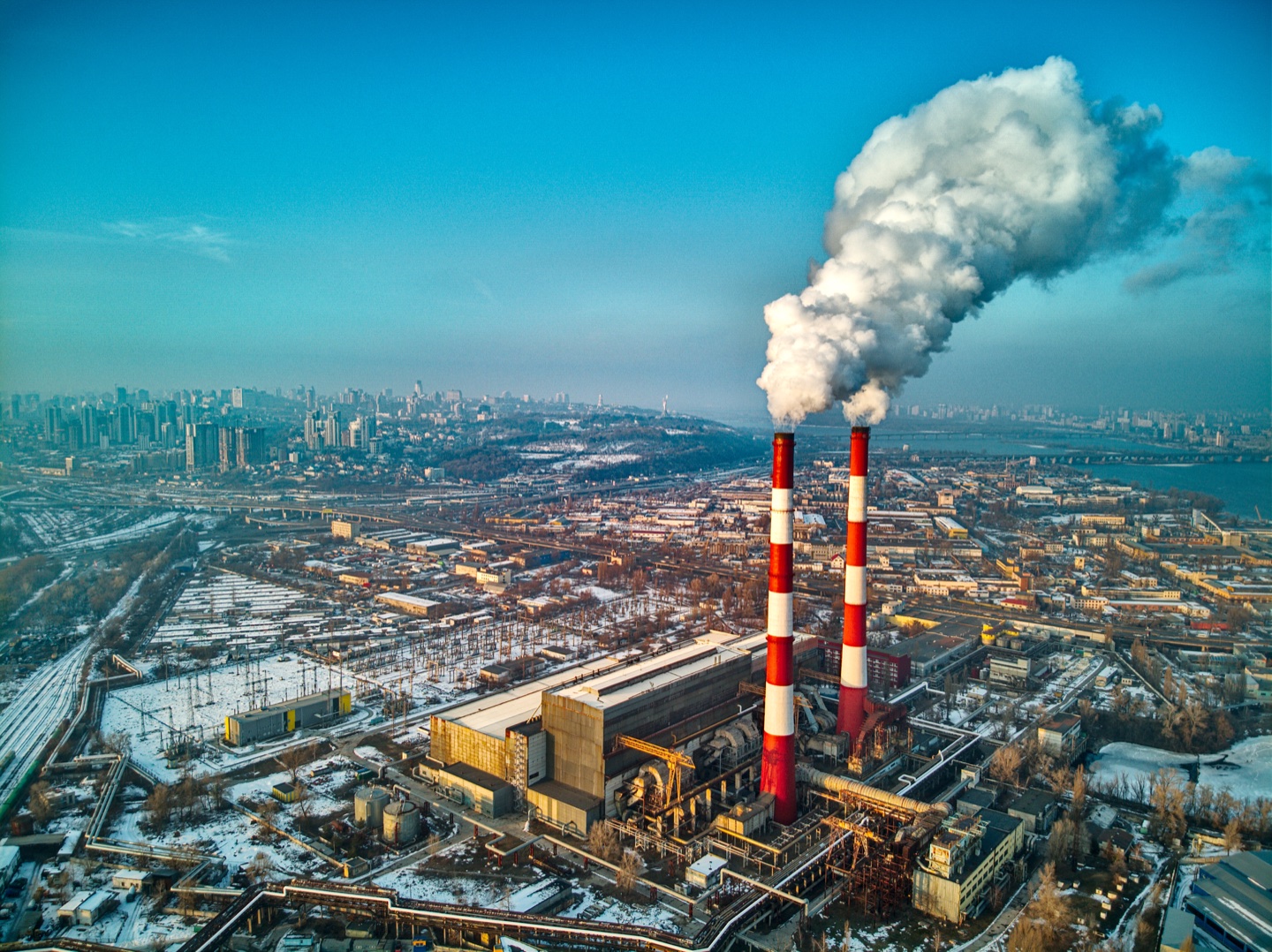
File photo: Kyiv’s combined heat and power plant No. 5 in February 2019. This does not show damage or outages reported in November 2026. Cherubic / Wikimedia Commons · CC BY-SA 4.0 · Edited

Ukrainian Prime Minister Sergii Koretskyi met with European Commissioner Hadja Lahbib in Brussels on Nov. 16 to discuss emergency help for Ukraine this winter, Ukraine’s Cabinet said. The government said the European Commission would coordinate aid that EU member states are prepared to offer. A separate EU electricity outlook released that day described difficult conditions in Ukraine, even as it projected sufficient electricity supplies across the EU as a whole.
The two statements describe separate things. A regional forecast for the European Union’s electricity market is not a guarantee that a home in Ukraine has power. Likewise, a discussion of emergency support is not confirmation that additional equipment has already been delivered, connected or put into service. The public record identifies immediate needs and existing forms of support, while the outcome for a given community depends on the condition of its own energy and heating systems.
How outages become a winter problem
Ukraine’s Cabinet said the emergency package under discussion was expected to include generators, charging stations, buses and help with bridges and river crossings. That list describes proposed support, not a shipment or installation schedule. The EU electricity coordination update said ongoing attacks on critical infrastructure were making conditions especially difficult in Ukraine. It did not give a national household outage count.
A sustained electrical outage can create other problems besides darkness. Electric equipment powers pumps and controls in some heating systems, and water and other municipal services also depend on a working power supply. What backup power can cover varies by building and community. It may keep an essential service operating without replacing everything that a normal grid connection provides.
What the EU has announced
The European Commission’s overview lists a €920 million Winter Energy Plan for 2026–27 and a separate €100 million announcement earlier in the year for emergency generators and humanitarian needs. The plan includes repairing and strengthening networks, adding decentralized generation, and supporting heat supply and energy efficiency. These are earlier announcements, not a new amount announced at the November meeting. They show the kinds of existing support on which new arrangements could build.
The Commission also points to the Ukraine Energy Support Fund, which was established in 2022 by the Energy Community with Commission support. The EU Council identifies the fund and the EU Civil Protection Mechanism as key channels for assistance with energy security and infrastructure. An emergency generator, a replacement component, a district heating measure and a multiyear grid investment all serve different roles. Their funding or delivery dates should not be treated as interchangeable.
Cross-border power helps, but has limits
The EU’s Electricity Coordination Group said the outlook for Ukraine and neighboring Moldova will depend on the weather, the state of critical energy infrastructure and available connections with the EU. Connections give operators access to electricity elsewhere when supplies allow. They do not by themselves repair the equipment needed to bring power from the wider system to a household. Local repairs and the availability of replacement equipment remain separate requirements.
For the EU itself, the group said the overall winter outlook was stable, even with lower hydro storage than before and some planned nuclear maintenance. That assessment applies to the market at a broad scale. It does not eliminate local problems, and the Commission said continued monitoring and coordination were necessary. Ukraine’s situation warranted separate emphasis in the same update.
What would count as progress
Support is measurable at several stages: an announced commitment, an order for necessary equipment, delivery to Ukraine and installation where it is needed. A report that one stage is complete should not be mistaken for confirmation of the others. More useful indicators for civilians include restored electricity and heating service, working backup at essential facilities and shorter interruptions where repairs are possible.
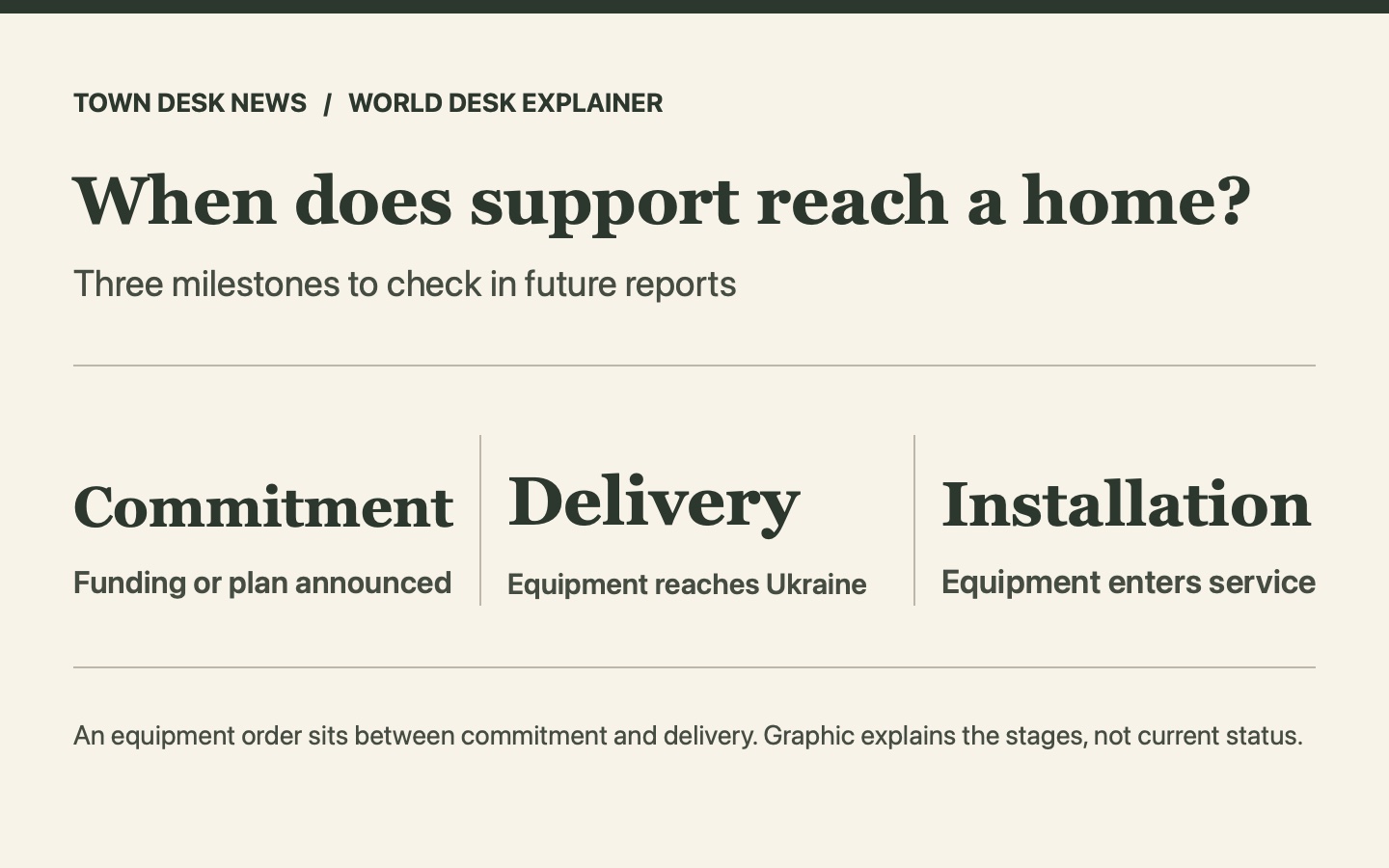
The stages illustrate why announcing support does not prove service has been restored. Town Desk News · Original Town Desk News graphic; based on reporting and linked source.
The latest EU and Ukrainian statements make clear that planning and technical coordination continue. They offer no assurance that winter outages can be avoided. The immediate issue is how much assistance can become working infrastructure before weather adds to the strain.
Sources & reporting notes
- Government statement
Ukraine Cabinet readout of Koretskyi’s Nov. 16 meeting with LahbibDescribes the Brussels discussion, the Commission’s coordinating role and the types of equipment and support under consideration.
- Agency statement
European Commission electricity coordination updateSeparates the wider EU power outlook from risks in Ukraine and Moldova.
- Agency background
EU–Ukraine energy cooperation overviewDocuments the earlier winter plan and emergency package.
- Agency background
EU Council infrastructure assistance overviewIdentifies existing aid channels.