AAA expects 81.5 million Thanksgiving travelers. Leaving earlier could matter more than the dip.
AAA expects slightly fewer travelers than last year, but nearly 73 million will still go by car. The forecast puts the worst traffic on some routes in the afternoon.
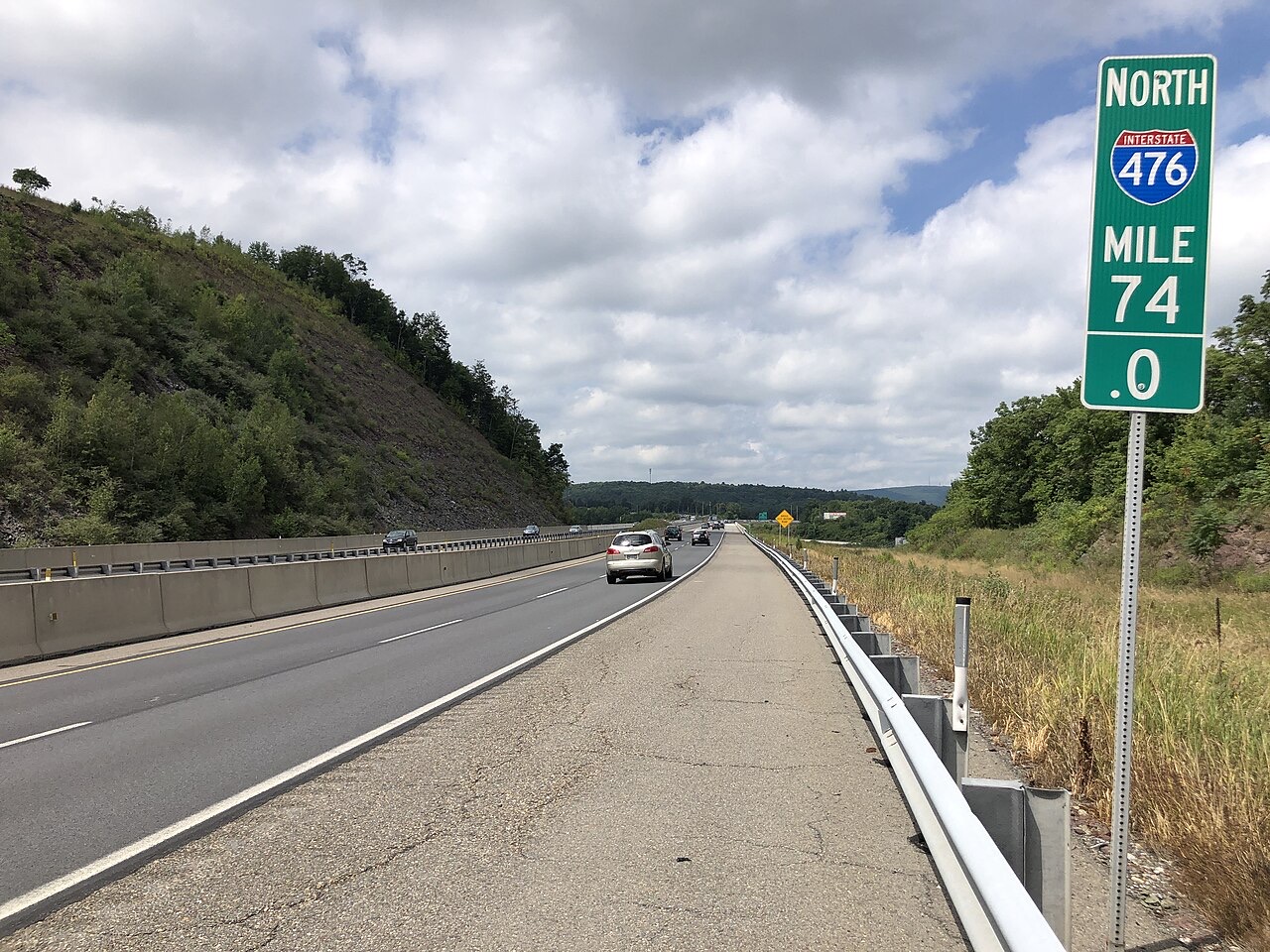
Northbound I-476 in Carbon County, Pennsylvania, Aug. 6, 2022. This file photo shows the corridor discussed in the forecast, not Thanksgiving traffic conditions. Famartin / Wikimedia Commons · CC BY-SA 4.0; optimized JPEG remains under the same license. · Edited

About 81.5 million people are expected to travel at least 50 miles from home during Thanksgiving week, AAA said Monday. That’s slightly fewer than last year, but not a big enough drop to count on easier roads. If you can choose when to leave, the more useful part of the forecast is the hour traffic is expected to build on your route, not the national number.
AAA’s forecast runs from Tuesday, Nov. 24, through Monday, Nov. 30. The auto club projects 72.9 million people will travel by car and about 5.96 million by air. Another 2.6 million are expected to take a bus, train or cruise. The categories are rounded, and the numbers are forecasts, not head counts. The Associated Press reported that the overall projection is about 121,000 below last Thanksgiving, roughly a tenth of a percent.
When traffic is expected to build
For drivers, transportation analytics firm INRIX expects traffic to be heaviest around common departure and return times. AAA’s national table lists Tuesday from 2 to 8 p.m. and Wednesday from noon to 7 p.m. as windows to avoid if you can. Thursday is expected to have comparatively light traffic, and Sunday’s difficult stretch is expected to run from noon to 8 p.m. Those are broad estimates; they don’t tell you precisely when congestion starts on a particular road.
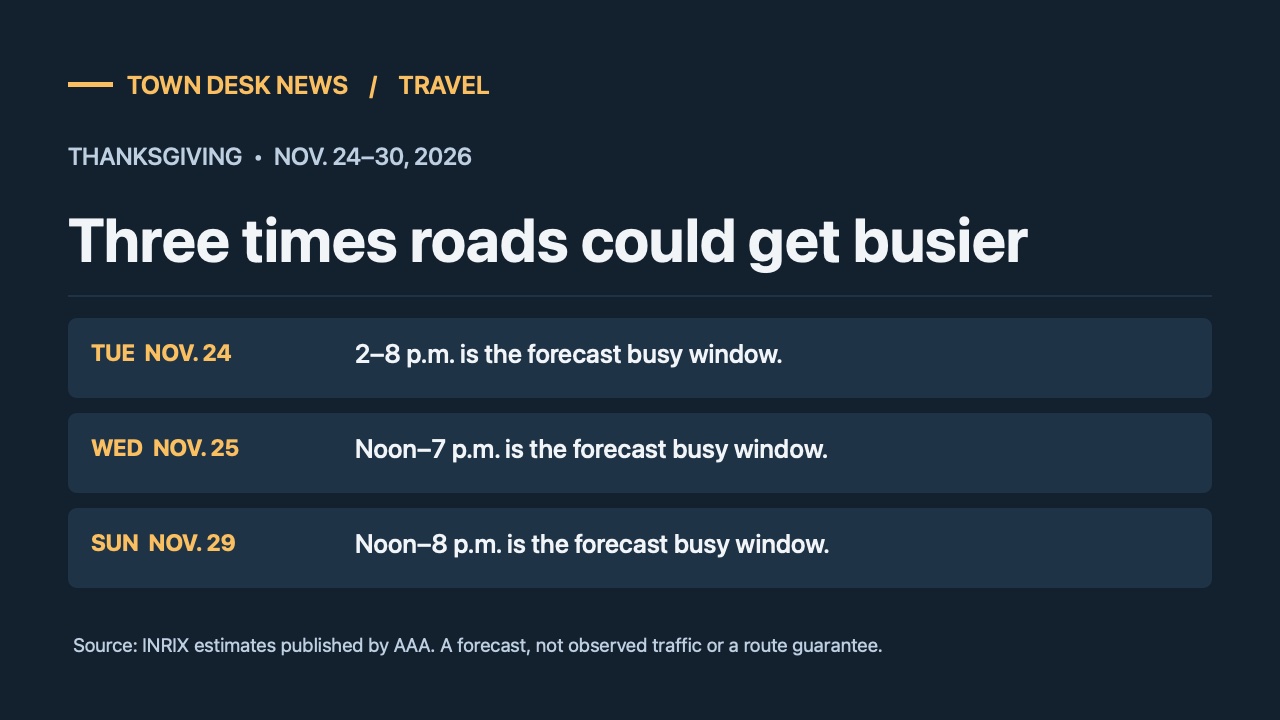
Selected high-traffic windows from INRIX estimates published by AAA, not traffic observations or specific route guarantees. Town Desk News · Original Town Desk News graphic based on published facts; no third-party art copied.
The regional examples show why one schedule cannot fit everyone. The forecast puts a Tuesday afternoon Philadelphia-to-Poconos trip on Interstate 476 at four hours and 15 minutes, or 58 percent longer than usual, at its modeled peak. It estimates a Tuesday afternoon New York-to-Hamptons trip at the same duration but 138 percent above normal. The same time in the car can represent a very different kind of delay if one route usually takes much less time.
Use the schedule to pick a starting point, not to predict your arrival to the minute. If the only realistic departure is after work Tuesday, decide where you can stop if the trip runs long, especially if you’re traveling with children or need to coordinate with someone at the destination. A crash, weather change or lane closure can matter more to that day’s trip than a national table. Check your state’s road information service or live navigation before setting out.
Airport crowds and ticket prices measure different things
AAA says round-trip domestic airfare in its Thanksgiving booking data averaged $800, up 17 percent. That’s what travelers in its data paid, not a current quote for any flight. It also isn’t the amount every traveler paid. If you’re shopping late, compare the fare with the cost of bags, parking and getting to the airport. If you already have a ticket, checking flight status and terminal plans may matter more than wondering whether the average fare is higher.
There’s another counting distinction if you’re looking at airport headlines. AAA measures U.S. domestic leisure travel in person-trips, counting a full itinerary rather than every trip through a checkpoint. The Transportation Security Administration’s daily screening counts include domestic and international passengers traveling for different reasons. It would be misleading to compare AAA’s nearly six million air travelers for the week directly with the sum of TSA’s daily checkpoint numbers.
Make a plan for your actual route
Start with your own departure and return times. If there’s room to move either one, look up the region you’ll pass through and compare that estimate with the time you’d normally allow. For a train, bus or flight, check the specific trip with the operator rather than trying to infer its status from the national forecast.
AAA and S&P Global Market Intelligence prepared the volume forecast in October, before the travel period. INRIX’s route estimates are a different tool, aimed at predicting congestion on selected corridors. Neither can account for everything that happens on Thanksgiving week. What the two forecasts do tell you is that a small dip in travelers does not buy a short trip. A carefully chosen departure may.
Sources & reporting notes
- Primary
AAA: 2026 Thanksgiving travel forecastNov. 16 travel projection, departure estimates and methodology.
- Independent reporting
Associated Press: Thanksgiving forecastReports travel forecasts and what the slight year-over-year decrease means.
- Primary
TSA: checkpoint travel numbersDaily checkpoint volumes are a different measure from AAA’s leisure-trip forecast.
- Public service
Pennsylvania 511 traveler informationLive conditions for Pennsylvania corridors, including traffic advisories and restrictions.