Renewed Gulf hostilities put shipping through Hormuz under pressure
Reports of attacks and slower vessel traffic point to renewed risks for seafarers and energy cargo. The evidence does not show that all shipping has stopped.
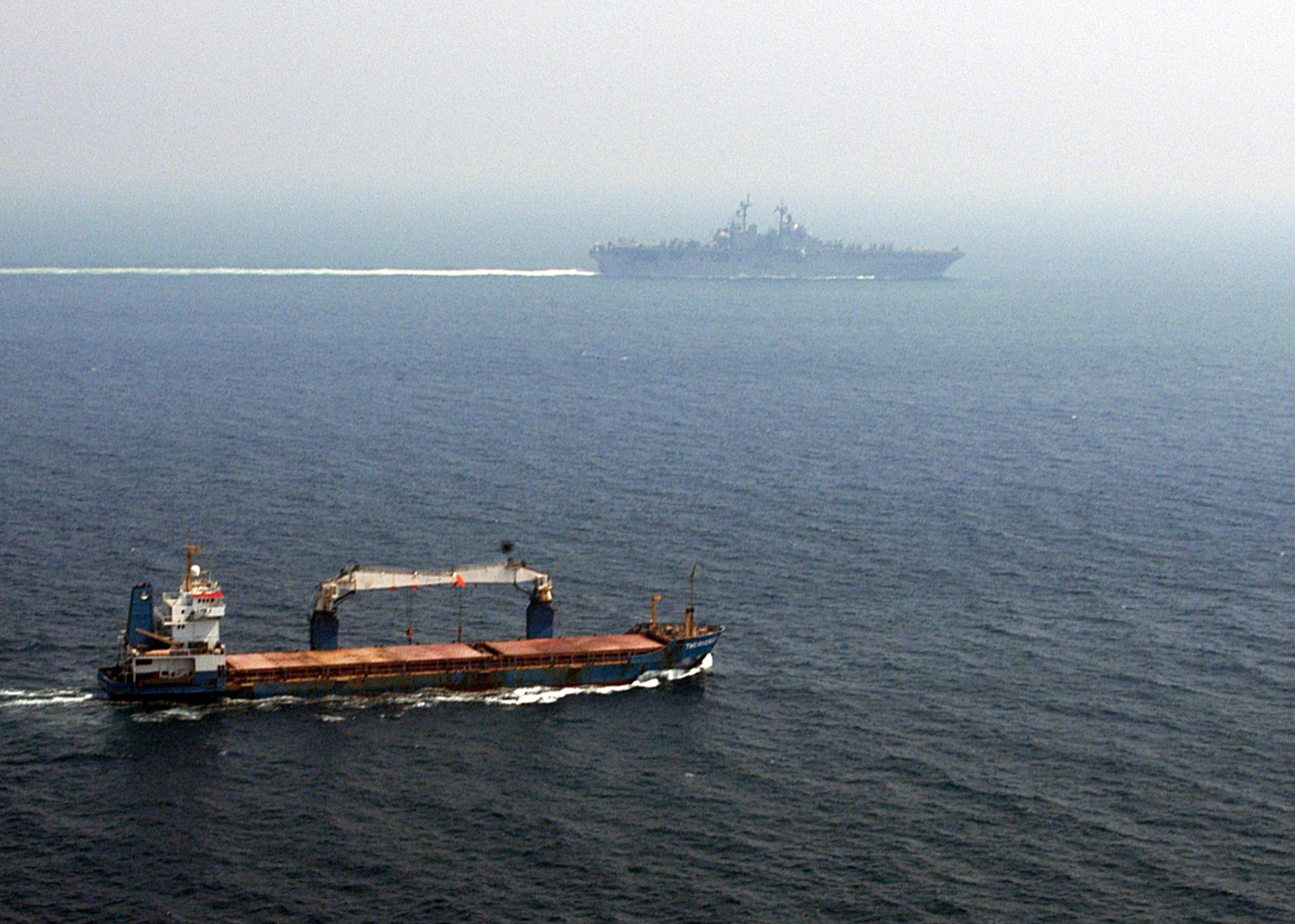
File photo: A merchant ship transiting the Strait of Hormuz in July 2004. This photograph does not show the recent incidents. Photographer’s Mate 3rd Class Angel Roman-Otero / U.S. Navy · U.S. public domain · Edited

A renewed exchange of hostilities in the Gulf on Nov. 18 brought fresh attention to the risk facing civilian crews and commercial ships passing through the Strait of Hormuz. The Associated Press and Reuters reported attacks affecting the region, with authorities in Bahrain and Kuwait saying their forces intercepted aerial attacks. The reports came amid tensions between the United States and Iran and after recent attacks on tankers.
Commercial shipping was already showing signs of strain before the latest developments. Reuters reported that tracking data showed fewer passages over the preceding weekend following tanker attacks. That is evidence of slower traffic in the period measured, not proof that the route shut completely. The Associated Press reported that some oil shipments had resumed under U.S. military protection, while attacks on tankers remained a risk. Those observations can both be true when some vessels continue moving and others delay or decline to sail.
What has been independently confirmed
The UK Maritime Trade Operations incident register separately records maritime reports involving tankers in and near the strait. The register identifies how some reports reached the service, including through a vessel’s security officer or another authority. An initial alert can establish that a report was received without independently settling who was responsible or whether every detail is accurate. Accounts can change as officials, shipping companies and crews provide more information. In a separate Nov. 18 statement, ADNOC Logistics & Services said one crew member remained unaccounted for after what it reported was an attack on one of its vessels the previous evening. The company said search and rescue was continuing. Reuters reported the company’s account.
On land, reports by regional governments and independent news organizations described a wider exchange that included Bahrain and Kuwait. The Financial Times reported both countries’ announcements that they intercepted aerial attacks. Statements from governments engaged in or affected by the hostilities should be attributed, particularly when accounts differ. That is separate from the observable commercial question of whether shipping companies continue using the passage.
Why the strait matters far beyond the Gulf
The Strait of Hormuz links the Gulf with open routes to the Indian Ocean. Tankers carrying oil and other energy cargo use it to move supplies to international buyers. An interruption does not have to be total to have consequences. Uncertainty can lead ship operators to change schedules, wait for clarification or reassess which voyages they can operate. Those decisions can reduce the amount of cargo arriving on time even while the route remains in use. A sustained slowdown can matter to businesses and ports waiting for cargo even before a shortage becomes visible to consumers.
Owners and insurers can also reassess the price and terms of coverage when risks change. Those costs are not the same as the price of crude oil, and changes do not translate automatically into one immediate move at gas pumps. Cargo schedules, inventories and prices can respond on different timescales. Reuters reported that oil prices moved lower early Nov. 18 as U.S. inventories rose, even as Gulf risks limited the decline. That mix is a reminder that a single day’s price does not isolate the effect of shipping disruption.
For crews, safety is the immediate issue
Financial headlines can obscure the people on the ships. For crews, the questions are whether they can get through safely, whether operators can keep them informed about changing conditions and whether assistance is available if a ship is damaged. Commercial disruption is measurable in vessel movements, but that alone cannot measure the risk borne by workers aboard ships that continue to pass.
The terms in early reports also matter. A tanker reported damaged is not the same thing as a ship confirmed sunk. A report of an attack does not by itself mean casualties occurred. A military claim about an episode and a shipping-company or maritime authority’s report may address different parts of it. Avoid combining distinct notices without verification.
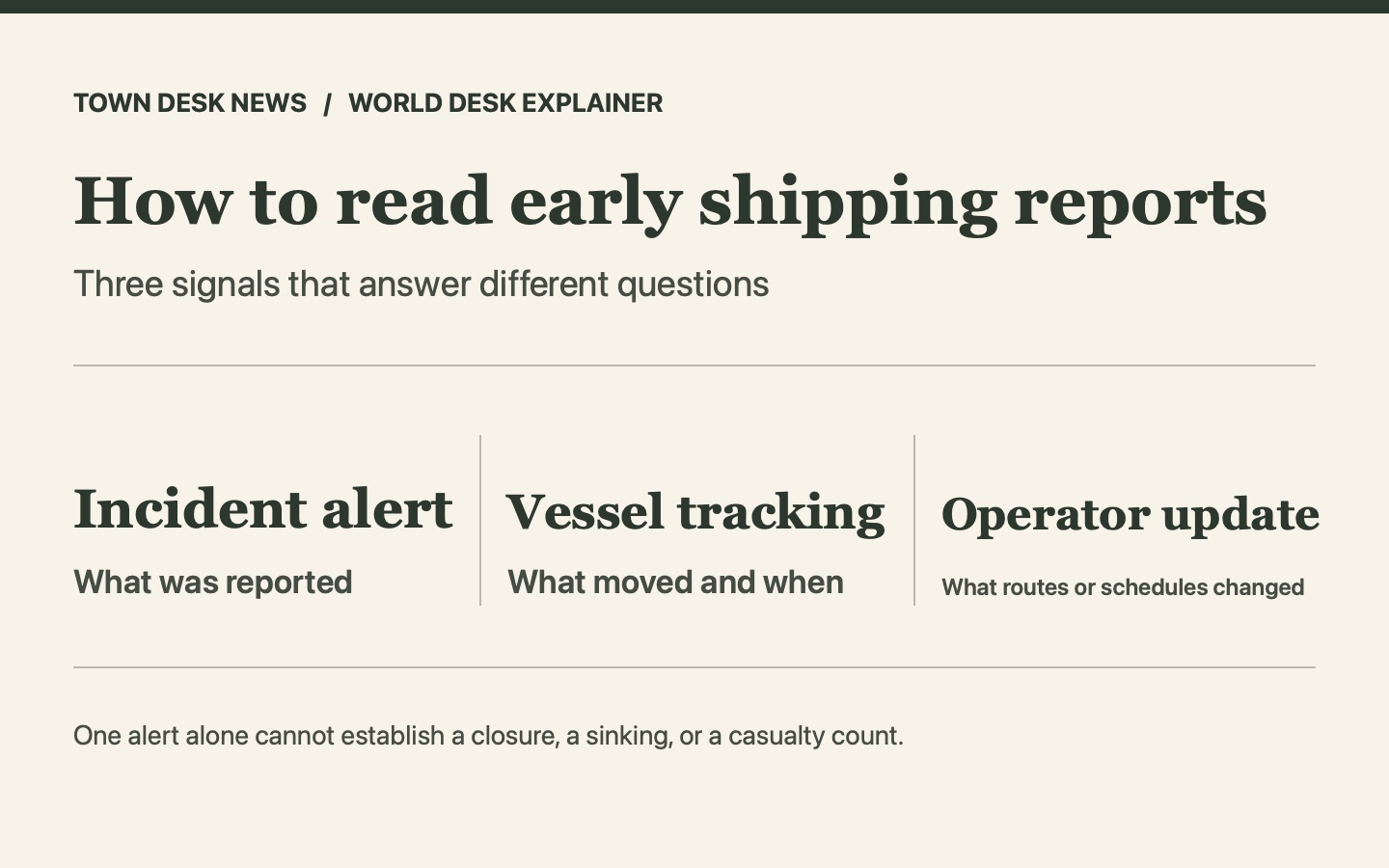
Different sources answer different questions about maritime disruption. Town Desk News · Original Town Desk News graphic; based on reporting and linked source.
The evidence to watch next is whether vessel traffic recovers or slows further over several days, what maritime authorities confirm about individual incidents, and whether operators restore regular schedules. Those measures will say more about the commercial effect than a claim of normal operations or complete closure made in the middle of a rapidly changing situation.
Sources & reporting notes
- Independent reporting
Associated Press reportReports the Nov. 18 exchange and risks to continuing tanker traffic.
- Independent reporting
Reuters shipping report via Gulf TimesDescribes slower traffic in preceding days based on vessel data.
- Maritime authority
UK Maritime Trade Operations incident registerLists incident notifications and distinguishes the original sources of reports.
- Independent reporting
Financial Times reportingReports Bahrain and Kuwait’s announcements.
- Independent reporting
Reuters market reportDocuments different influences on oil prices at the time of the latest reports.
- Primary incident notice
UKMTO Nov. 16 incident noticeRecords a tanker incident reported to UKMTO; not an independent adjudication of responsibility.
- Company statement
ADNOC Logistics & Services crew statementCompany account of the crew status and continuing search and rescue.
- Independent reporting
Reuters on ADNOC Logistics & Services statementReports the company’s account; no independent assignment of responsibility.