New Jersey is asking what schools need. South Jersey families have two ways to weigh in.
A postponed statewide forum is now Nov. 19. A separate Dec. 1 roundtable in Cape May Court House lets local families talk through how school funding decisions play out.
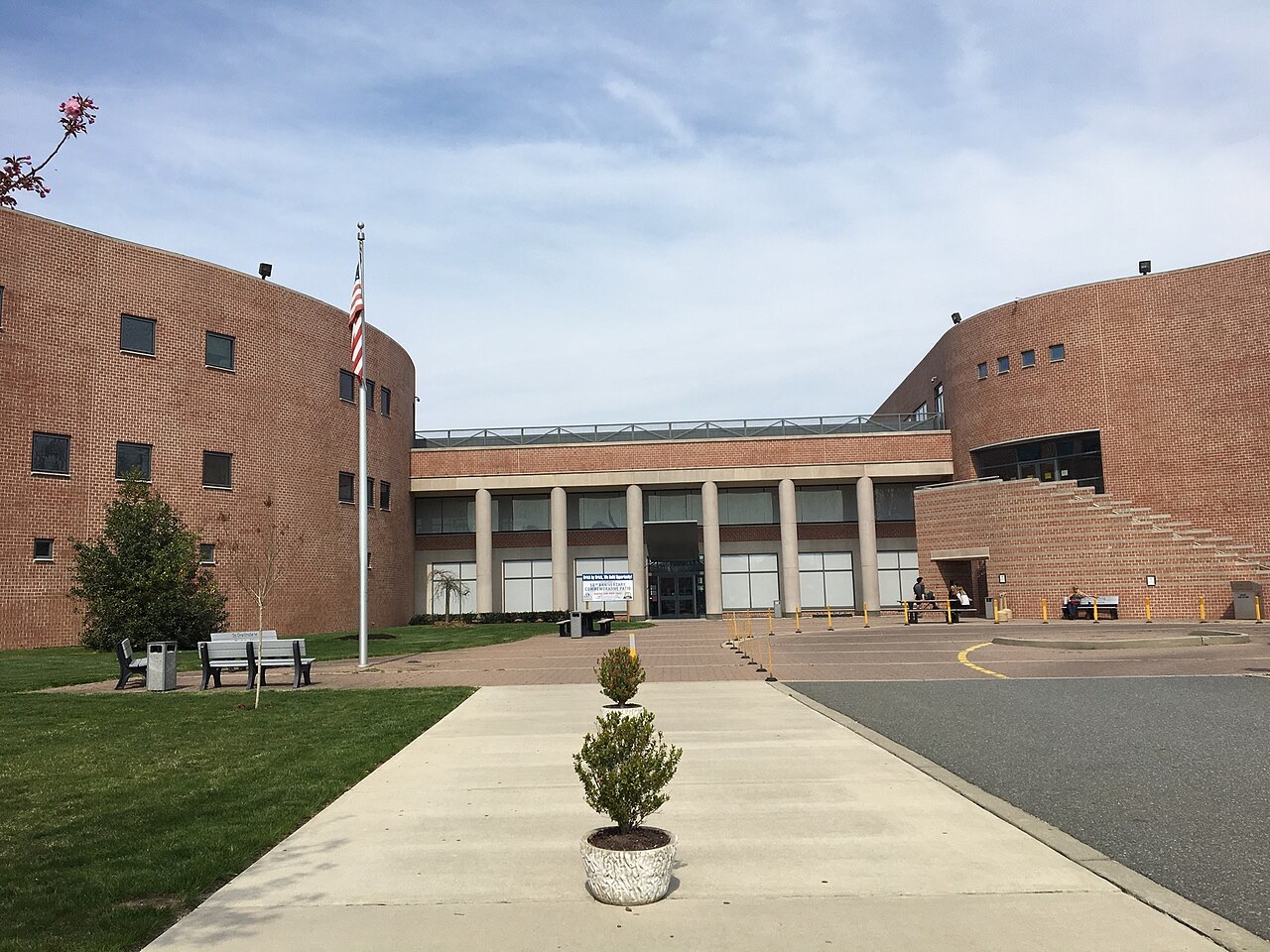
Atlantic Cape Community College’s Cape May County campus in a 2017 file photo. The Dec. 1 roundtable is scheduled there; the Nov. 19 statewide forum is online. Sasae86 / Wikimedia Commons · CC BY-SA 4.0 · Edited

South Jersey families have two upcoming chances to tell New Jersey officials what is and isn’t working in school funding. An online statewide forum that was postponed last week is now set for Thursday, Nov. 19. A separate in-person roundtable comes to the Cape May campus of Atlantic Cape Community College on Dec. 1. Neither session is a vote on a district budget. They are ways to tell the state which problems the current approach is leaving schools and families to solve on their own.
Two sessions, two formats
The state Department of Education lists the online forum from 6 to 7:30 p.m. Thursday. It says a Microsoft 365 outage affected the platform it had planned to use, and that people who had already registered or put their name down to speak do not need to do so again. The format gives each public speaker up to three minutes. That is enough time for one clear local example and a question, not a detailed walkthrough of a district’s budget.
The Cape May County roundtable is Tuesday, Dec. 1, also from 6 to 7:30 p.m., at 341 Court House-South Dennis Road in Cape May Court House. It is a separate event with its own registration. The department describes roundtables as facilitated discussions rather than a series of short remarks. If registration reaches capacity, its events page says to email FundingOutreach@doe.nj.gov for the waitlist. Check the event page rather than assuming a seat or a virtual speaking slot is still available.
These meetings are part of a statewide outreach project the administration announced in August. The department says ideas and questions from the public will inform summaries, reporting and continued outreach. It has already held regional conversations in Blackwood and Galloway, and roundtables in Pitman and Carneys Point. These two remaining options give people who couldn’t make an earlier session another way to join.
What the funding formula measures
One useful starting point is how the state calculates a district’s share of funding. In its public learning series, the department describes an adequacy budget as the formula’s estimate of what a district needs to provide an education that meets state standards. That estimate starts with a base amount and accounts for differences in student needs. The calculation is not the same as the district’s line-by-line operating budget or an instruction on how to spend every dollar.
The formula also estimates how much a community can afford to contribute from its own resources, called local fair share. That estimate is not necessarily the amount the district actually raises in local taxes. State equalization aid helps close the gap the formula identifies between the estimated cost and local capacity. It is the largest category of state aid under the School Funding Reform Act, not the only category. The department publishes summaries showing what individual districts are projected to receive.
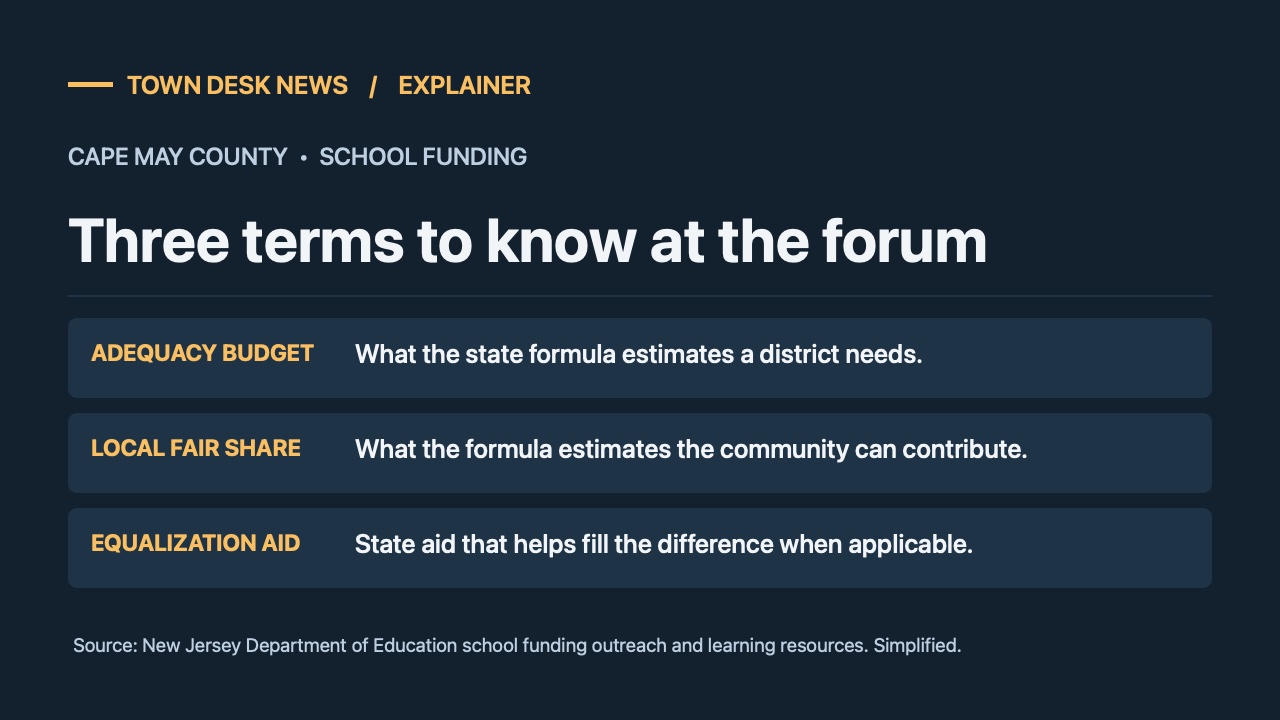
A reading guide for the school finance discussion, not a district funding calculator. Town Desk News · Original Town Desk News graphic based on published facts; no third-party image.
If your district is facing a change, those distinctions matter. A reduction in one state-aid line is not automatically the explanation for a change in class sizes, an after-school program or the local tax rate. A district’s own budget and meeting materials are the places to see its spending and tax proposals. The state aid tables answer which funds the state says it is providing. Bring both if you want to ask how a state calculation affects a local choice.
How to make your comment count
A family does not need to learn the whole formula to contribute. A parent could describe what it means when an after-school service is available in one building and not another; an educator might explain which funding changes take effect too late to plan for staffing; a student can describe a service that is hard to access. Name the district or type of program, give one example, and say what you want answered. The state is gathering ideas, not announcing new funding at either event. For South Jersey residents, the practical choice is whether three minutes online or a longer discussion close to home is the better way to be heard.
Sources & reporting notes
- Official schedule
NJ Department of Education: school funding engagement datesConfirms the Nov. 19 rescheduling and Dec. 1 campus roundtable, times and registration.
- Project overview
NJ Department of Education: school funding outreach projectExplains the scope of the outreach and its steering committee.
- State explainer
NJ Department of Education: school funding learning seriesLinks to the state’s materials on adequacy, local fair share and the funding formula.
- State funding data
NJ Department of Education: district state aid summariesLinks to the 2026–27 summaries for individual districts.