The Senate filled an appeals court seat. Two Oklahoma picks didn’t move
Anna St. John won a 52–46 confirmation vote for the Fifth Circuit. Two district court nominations came up against a different hurdle in committee.
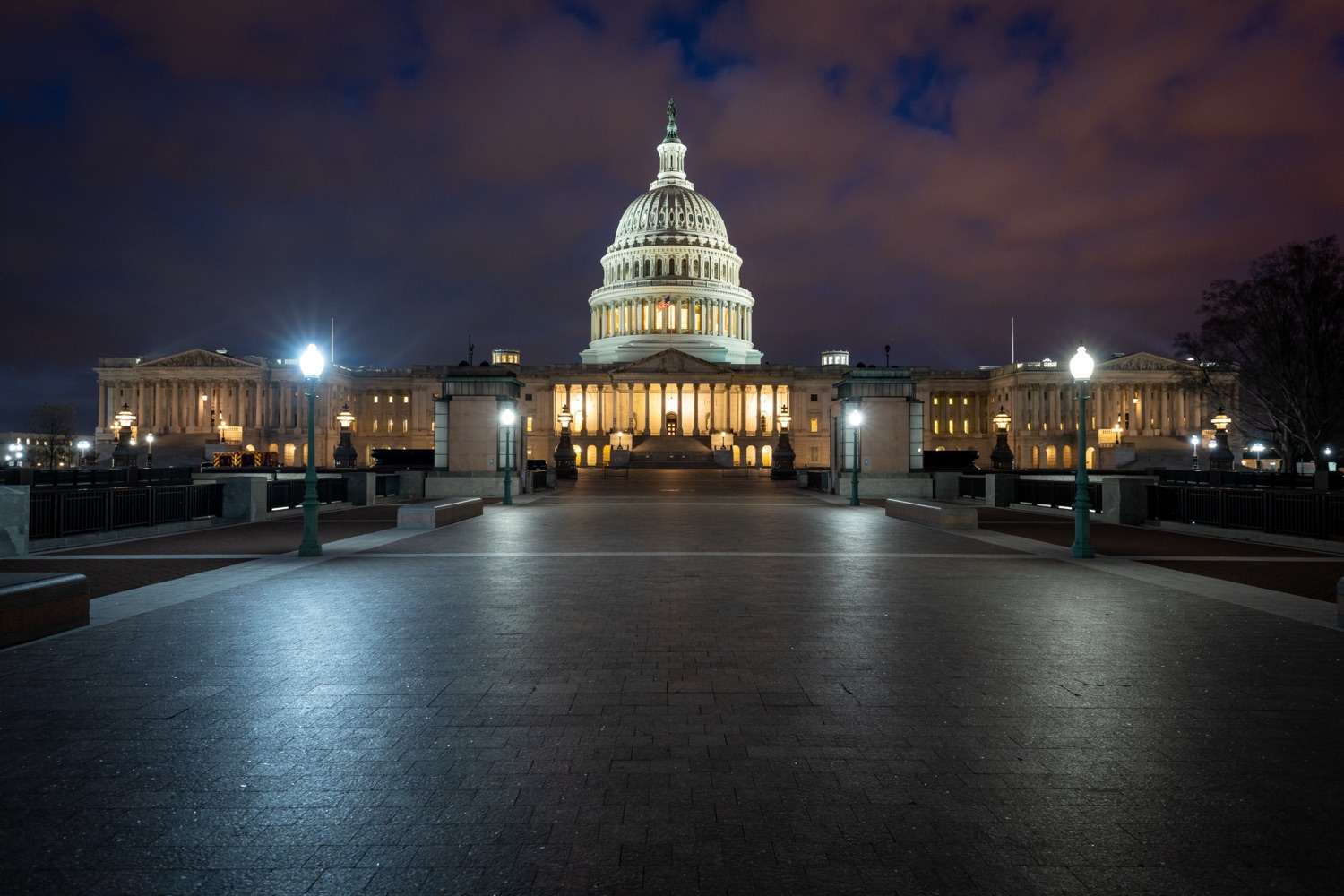
File photo: U.S. Capitol east front before dawn; not the day of the confirmation vote. AOC Photo Branch / Architect of the Capitol · U.S. public domain, Architect of the Capitol federal government image; resized. · Edited

The U.S. Senate confirmed Louisiana federal judge Anna St. John for a seat on the Fifth Circuit Court of Appeals on Tuesday, Nov. 17. The vote was 52–46. That same day, two federal trial court nominees in Oklahoma remained stalled in committee. The parallel developments show how a nomination can sail through the last step and how another can have trouble reaching that step at all, even when the White House and Senate leadership are from the same party.
What the Senate voted on
The Senate’s roll call names St. John as the nominee for the Fifth Circuit seat and records the formal result as confirmed. That is different from clearing a procedural vote to end debate. The Senate held an earlier vote on whether to bring debate on her nomination to a close. Tuesday’s vote was the decision to approve her nomination itself.
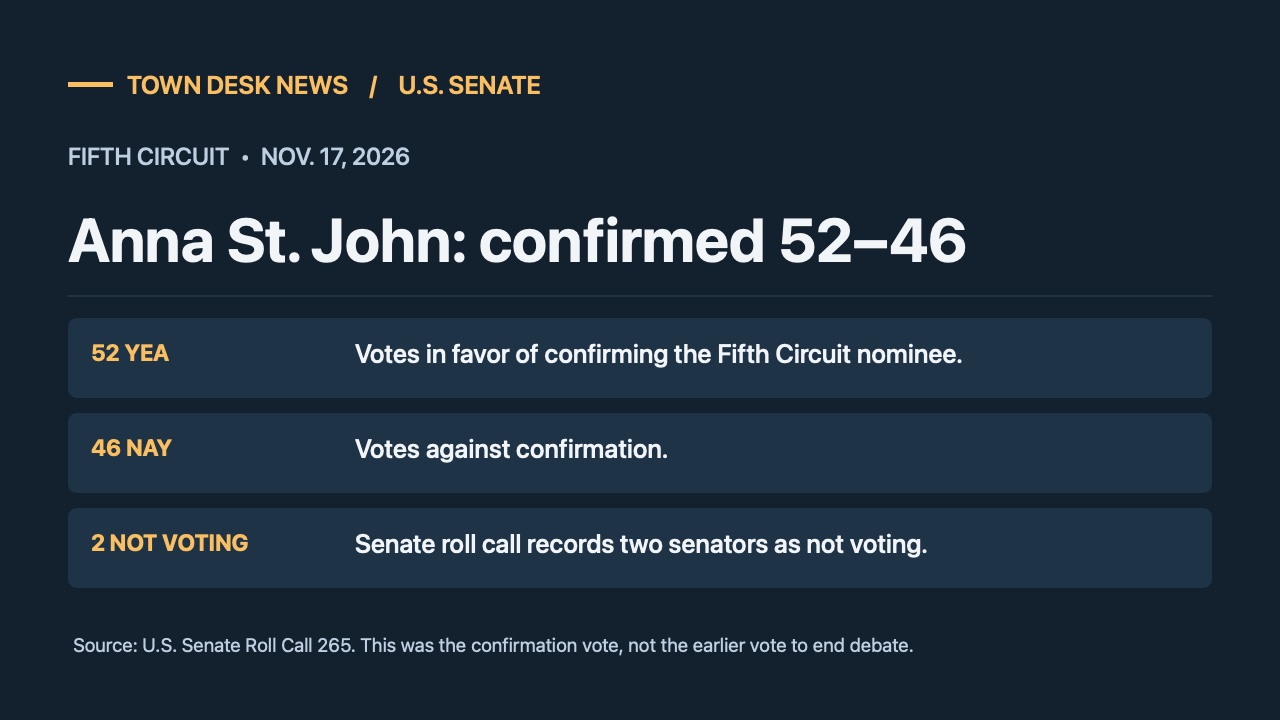
Source: U.S. Senate Roll Call 265, Nov. 17, 2026. This roll call confirmed St. John and does not reflect the separate pending Oklahoma nominations. Town Desk News · Original Town Desk News explanatory graphic based on public facts; no third-party imagery.
St. John had served on the U.S. District Court for the Eastern District of Louisiana since her confirmation in March, Reuters reported. Moving from a federal district court to a circuit court is not just a change of office. A federal district court is generally where a case starts and where evidence is presented. An appeals court generally reviews what the trial court or an agency did, rather than holding another trial with new witnesses.
The New Orleans-based Fifth Circuit hears appeals from federal courts in Louisiana, Mississippi and Texas. Its rulings determine how federal law is applied to cases within that circuit unless reconsidered by the court or overturned by the Supreme Court. The court routinely handles disputes that matter outside the region too, including challenges to federal rules. But this week’s vote fills a seat; it does not decide any of those cases or put St. John on a particular panel.
How senators split on the pick
Louisiana Republican Sen. John Kennedy supported her move to the appeals court and described his reasons in a statement after the vote. Democrats who opposed the nomination raised questions about how quickly she was moving to the appeals court and about her past testimony supporting arbitration, Reuters reported. The earlier debate involved whether workers alleging sexual assault or harassment should be bound to take their cases into private arbitration. The Senate vote confirms her to the court. It does not resolve those disagreements about her record.
Why the Oklahoma nominees are still waiting
In Oklahoma, the question was whether two nominations would advance out of the Senate Judiciary Committee. Reuters reported that the committee put off votes on Zach West, nominated for the Eastern District of Oklahoma, and Trevor Pemberton, nominated for the Northern District. North Carolina Republican Sen. Thom Tillis, a member of the committee, said he would not support advancing West because one of Oklahoma’s senators, Republican Alan Armstrong, opposed the move. Reuters reported that people familiar with the matter said the White House preferred that the nominations move together.
On the same day, the committee advanced nominees for district court seats in Florida, Louisiana and Missouri, Reuters reported. That is why the Oklahoma delay is not evidence that the whole committee stopped working on judges.
The Oklahoma nominations had not been defeated on a Senate floor vote. Their path remained open and might change when Sen.-elect Kevin Hern succeeds Armstrong. Reuters reported that a Hern spokesperson supported advancing both nominees and Tillis said he would drop his opposition if Hern wanted them to move. What matters for now is the next recorded action: a committee vote, a change to a nomination or a decision to leave it where it is. None of those is a confirmation.
There is a practical clock in the background. Senate Democrats are set to take control in January following November’s elections, and Reuters reported that Republican leaders are trying to get remaining court nominees through the current Senate before then. For this week, the two clear outcomes are narrower: the Fifth Circuit nomination was approved in a recorded vote, and the Oklahoma picks were held up before they reached one. The committee’s nominations page and the Senate’s roll-call records are where those statuses can be checked separately.
Sources & reporting notes
- Primary
U.S. Senate: Nov. 17 confirmation roll call 265Gives the nominee, job and 52–46 confirmation vote.
- Primary
U.S. Senate: earlier cloture roll callVerifies the separate earlier procedural vote.
- Primary
Senate Judiciary Committee: judicial nominationsOfficial status and records of judicial nominations.
- Primary
Sen. John Kennedy: statement on St. John’s confirmationThe sponsoring Louisiana senator’s own public response.
- Reporting
Reuters: Fifth Circuit confirmation and Oklahoma delayReports the stalled nominees, Republican disagreements and debate over the Fifth Circuit pick.
- Primary
U.S. Court of Appeals for the Fifth CircuitCourt location, current bench and calendars.