The arena plan is gone. Philly’s mayor now wants more than 2,000 homes on Market East
A Nov. 16 briefing put a housing number on the corridor’s future. It did not say who would build all of those homes, what they might cost, or which incentives would pay for them.
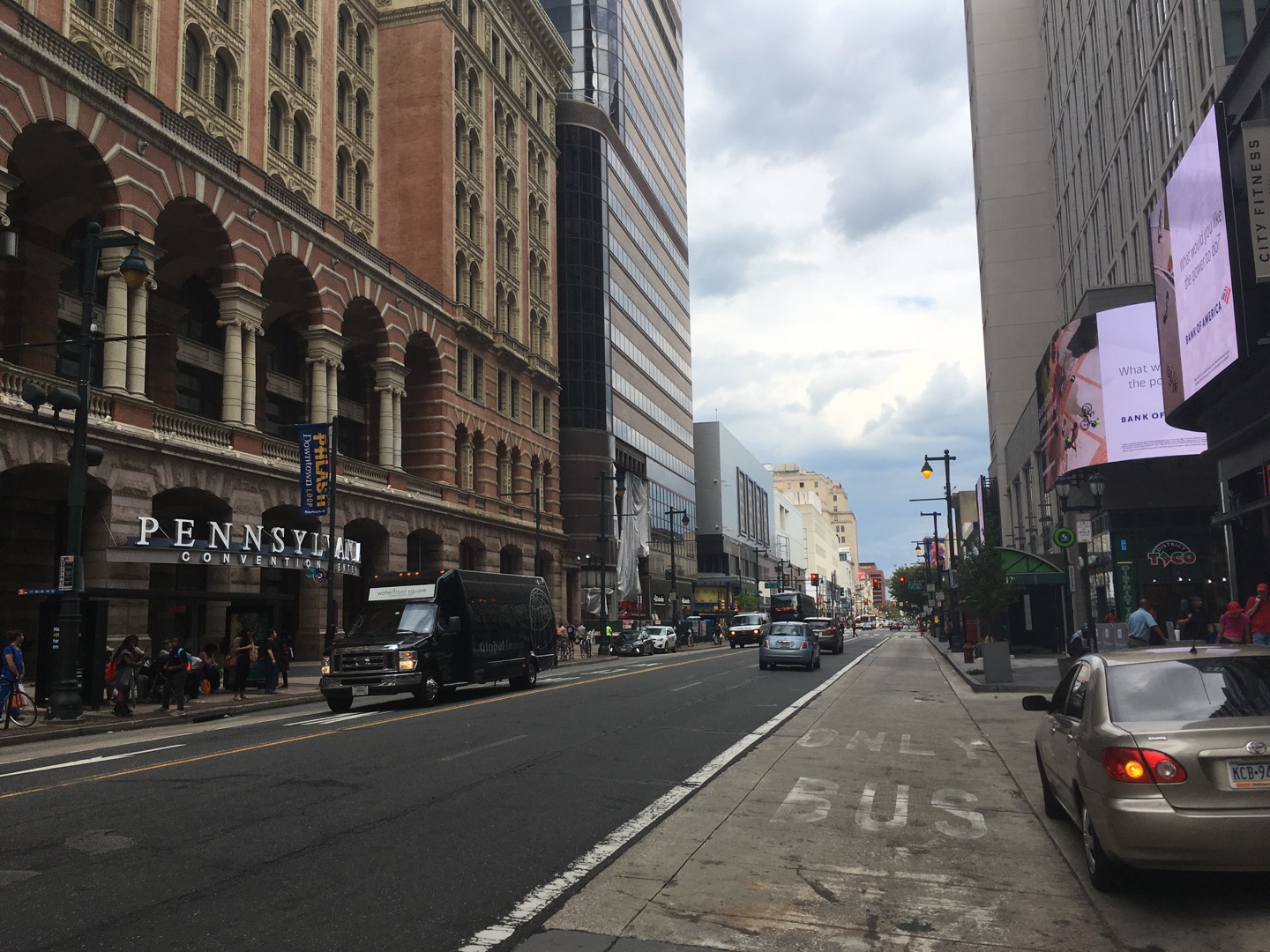
Archival photo: Market Street looking east from 12th Street in September 2019. It shows the existing corridor at the time, not a rendering or approved project. Dough4872 / Wikimedia Commons · CC BY-SA 4.0 · Edited

Mayor Cherelle Parker wants more than 2,000 new homes on East Market Street, the Philadelphia Inquirer reported after a Nov. 16 update on the corridor’s future. That is the stretch where the 76ers once proposed an arena. The team backed away from that plan, and the city now has a different aim for the corridor: bring more people there to live. The next question is how a target for thousands of homes turns into a project anyone can build or move into.
A housing target is not a list of buildings
The city’s Market East Revival describes a planning area from City Hall toward Penn’s Landing, with an emphasis on the blocks between City Hall and Independence Mall. This is a corridor plan, not one project on one former arena site. Thinking about it that way helps explain why the same announcement can talk about homes, shops and how people get around. Each may affect the success of the others; none guarantees the others will happen.
The Inquirer reported that the administration outlined a high-growth scenario of 4,400 households within a decade. That figure and the goal of more than 2,000 new homes describe different things: a target for households living there and an aim for additional homes. Neither shows that thousands of units have been permitted, financed, assigned to a developer or offered at a particular rent.
What the city has already heard
There has already been a public-facing part of the effort. The city ran a storefront called MY Market East, which opened in July and let visitors look at models and photographs, speak to planners and offer ideas. The Planning Department said in a Nov. 13 recap that the storefront attracted 737 visitors who completed 430 postcards. It also reported more than 500 survey responses collected while the hub was open. Those are separate participation counts, not the result of a vote on one development plan.
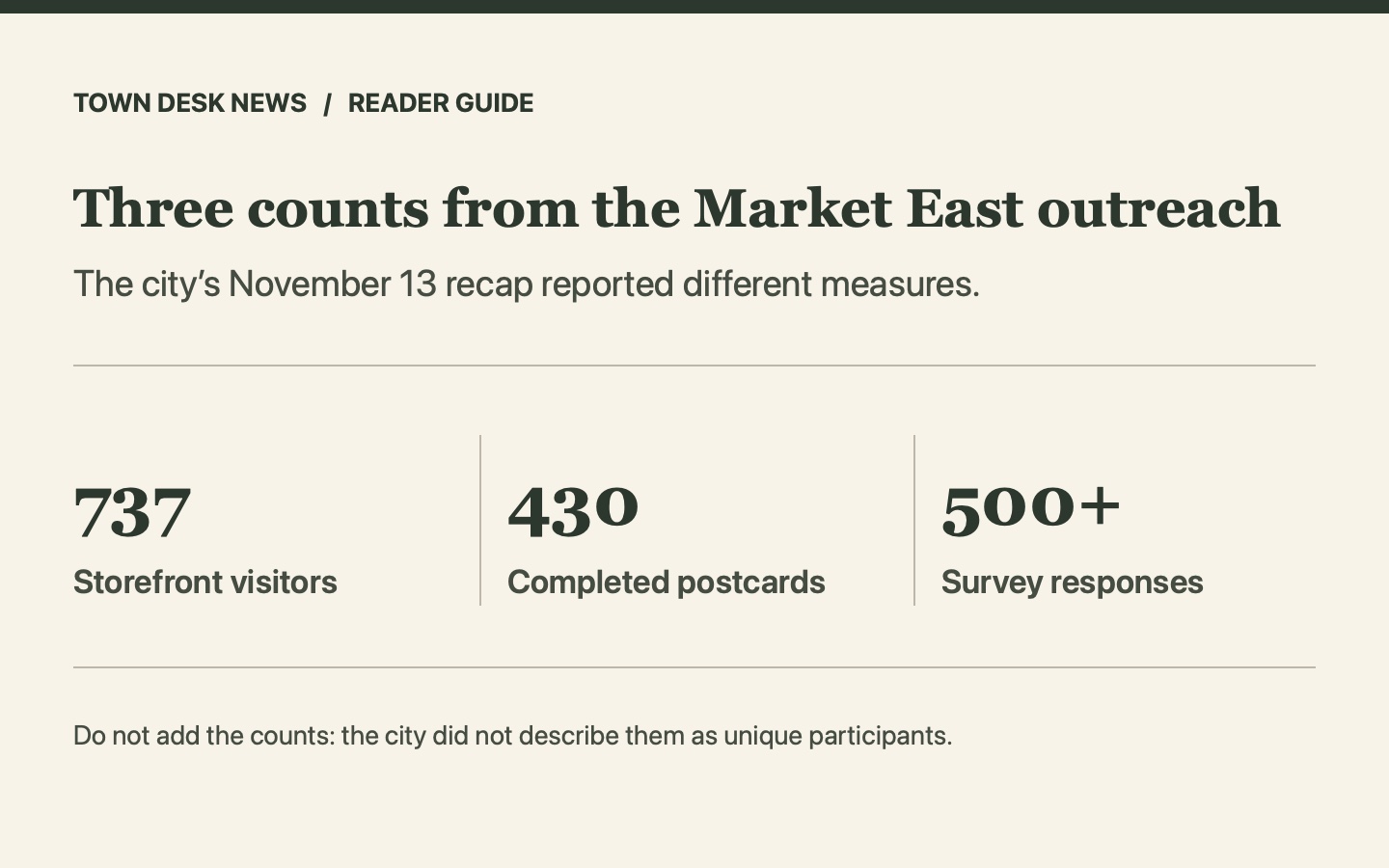
The city tracked storefront visits, postcards and survey submissions separately. These counts are not a vote for a housing plan. Town Desk News · Original Town Desk News graphic based on linked factual source
The city’s recap says participants asked for a safe, welcoming and lively corridor. That’s a broad description, not a blueprint. A person who wants the street to feel busier at night might be thinking about occupied shops, places to wait or regular foot traffic. Someone hoping to live there might put a different question first: whether they can afford what gets built. A final plan has to show how it handles both kinds of concerns.
Where the plan has to get specific
The Inquirer reported that the administration’s longer-range vision seeks more residential and commercial spending along the corridor. But who will build the homes, what might make construction financially workable and whether there will be provisions for affordable units were not established by the housing goal. The fact that proposed homes could support businesses does not establish that a particular storefront will stay open or that tax revenue will cover a given cost.
Watch for concrete site decisions. An existing building proposed for conversion and a new apartment project on a different property are not at the same stage merely because they sit along Market Street. Useful evidence would be a named site and developer, whether an approval application has been filed, and whether the plan identifies public financing or changes to zoning. If a document refers to affordable homes, look for income and rent terms rather than inferring them from the total number of units.
What to look for this winter
According to the Inquirer, more details are expected at the mayor’s December address, with a full plan expected in January and implementation initiatives expected to start in February. Those are planning milestones, not construction dates. The city’s project page gives residents somewhere to check for updates in the meantime.
The missing piece is not another headline number. It is an explanation of which changes the city can carry out, which will require private developers or additional approvals, and what arrangements would bring homes within reach of people who want to live there. Until that is public, the new figure tells us the administration’s ambition for Market East. It does not tell us where a particular household will be able to move.
Sources & reporting notes
- Primary
City of Philadelphia: Market East RevivalCity’s planning program, announcements, and its description of the corridor work.
- Primary
Philadelphia Planning Department: Nov. 13 public engagement recapDocuments the storefront, participation counts and how the city collected feedback.
- Primary
Market East Revival: Planning area and project informationOfficial linked initiative; shows the corridor and planning focus.
- Reporting
The Philadelphia Inquirer: Reporting from the Nov. 16 updateOriginal reporting on the housing goal, planning timetable, and missing implementation details.