Where Will Philly Send Its Trash Now?
A decision at City Hall has put the route your trash takes after pickup back in question.
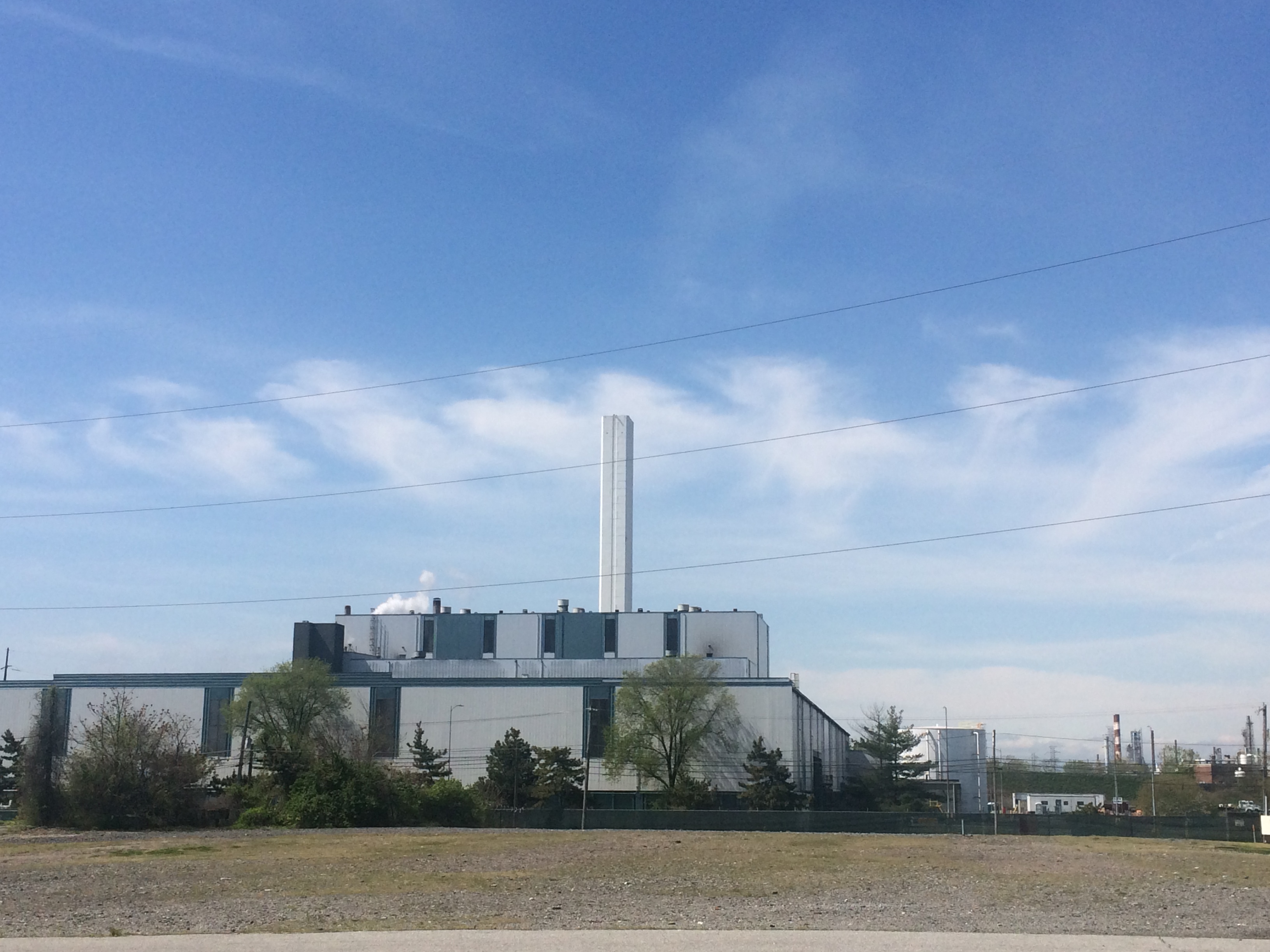
The Chester waste-to-energy facility in 2020, when it operated under the Covanta name. SamHolt6 / Wikimedia Commons · CC BY-SA 4.0

A Philadelphia trash truck can pick up the same bags on the same block no matter where its load goes after the route. What happens next is the subject of a fight at City Hall. On November 18, Philadelphia City Council’s Committee on the Environment took a proposed contract with the Reworld incinerator in Chester out of a bill that would authorize the next round of city trash contracts. The committee sent the trimmed bill toward a full Council vote, WHYY reported from the hearing.
That keeps one major destination out of the proposal advancing from committee. It does not close the incinerator, cancel the current contract, or tell residents to put their trash out on a different day. Those are different decisions. The one Council faces now is whether to let the city sign the remaining waste contracts and how the city would use them to handle the loads that would otherwise go to Chester.
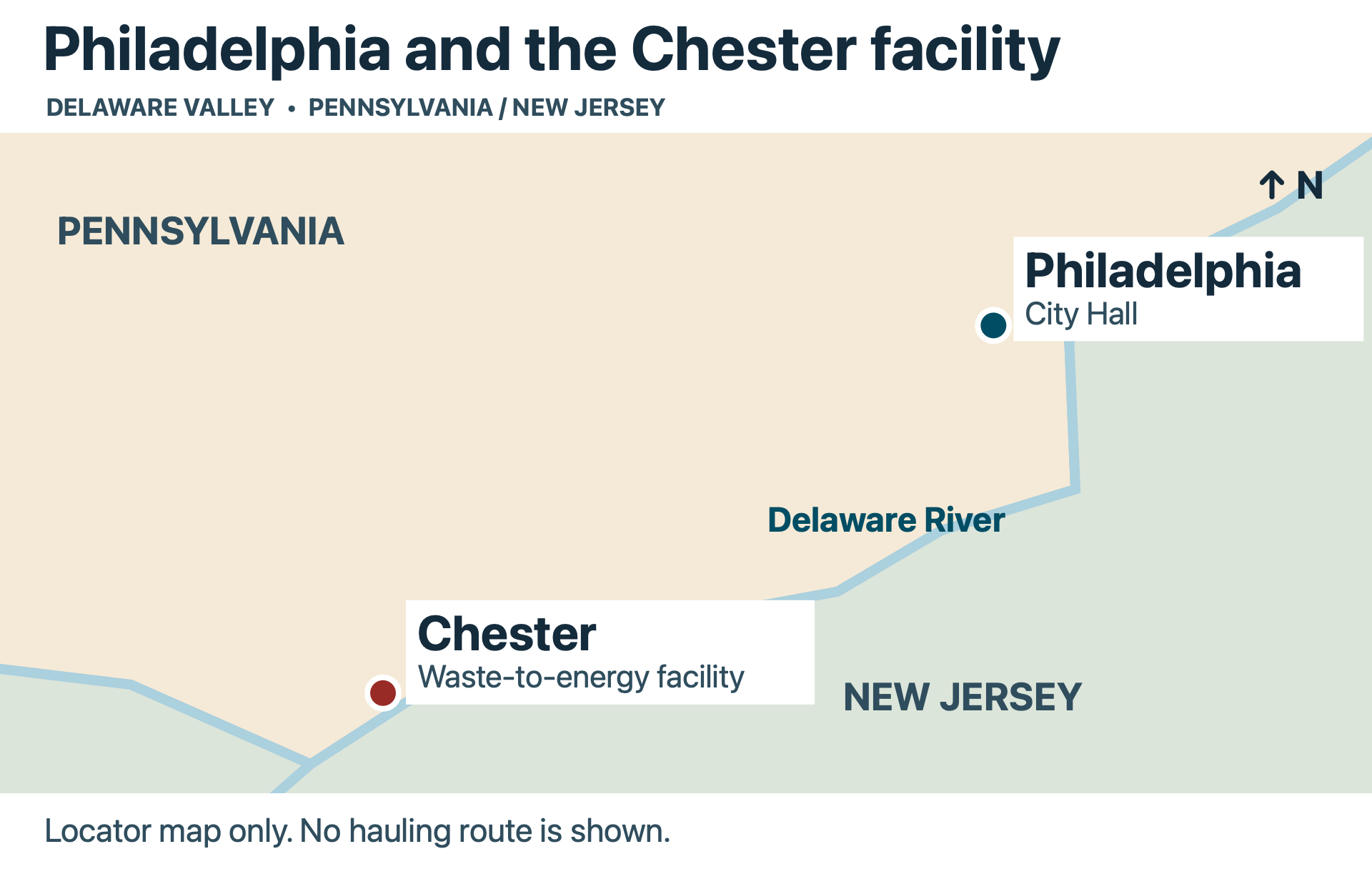
Philadelphia City Hall and the Chester waste-to-energy facility are both on the Pennsylvania side of the Delaware River. State boundaries: U.S. Census Bureau, generalized. Town Desk News · Original Town Desk News explanatory graphic
The decision is about where the truck goes after pickup
The original version of Bill 260794 names three companies: Waste Management of Pennsylvania, Republic Services of Pennsylvania and ReWorld Sustainable Solutions. The council docket’s original bill still shows all three. It is the starting text, not a record of the version the committee advanced. The meeting record lists the hearing but still identifies the minutes as a draft.
The two other proposed contracts, with landfill operators WM and Republic Services, were not removed, WHYY reported. CBS Philadelphia reported that about 30% of Philadelphia’s trash would have gone to the Chester facility under the proposed extension. That figure describes the portion of the city’s trash at issue, not the portion of all waste handled by the plant. If the amended bill becomes law, the next question is how much of that material each remaining contractor would get and which facilities would receive it. The vote itself did not settle that.
There is also a difference between paying more than one proposed option and paying more than the city pays now. At the hearing, the administration estimated a landfill-only approach would cost roughly $15 million more than its preferred option over four years, WHYY reported. The committee chair argued the remaining proposal would still save money against the current contracts. Those comparisons use different baselines. Neither tells residents the final price of a contract that has not been signed.

Inside Philadelphia City Hall, in an archival photograph. Daderot / Wikimedia Commons · Public domain

The existing contracts are due to expire at the end of the year, according to WHYY. That makes the calendar important: a decision about the next contract can be urgent without causing an immediate change at the curb. WHYY reported December 3 as a possible date for a full Council vote, not a confirmed vote or an effective date.
What changes when waste goes to a landfill instead
Chester officials and residents asked Philadelphia not to renew the arrangement, while members of Philadelphia’s administration defended keeping it after weighing environmental factors, costs and how the system would operate. Reworld representatives defended the company’s operations. Those were competing arguments in a procurement hearing, not a finding by the committee about the cause of any individual illness or a state decision about the facility’s operating permit.
The type of facility matters. The EPA’s waste-management hierarchy distinguishes energy recovery, which can generate usable power from material that is not recycled, from disposal. The agency also puts waste prevention, reuse, recycling and composting ahead of both. A truck rerouted from a combustor to a landfill still carries the same tonnage. Cutting the amount the city has to send out in the first place would change a different part of the problem.
The Pennsylvania Department of Environmental Protection maintains the permitting record for the Chester plant. That is separate from Philadelphia’s choice about where to send its own trash. For readers following what happens at City Hall, the next things to look for are the amended bill, the full Council vote and the contracts that spell out where the waste will go. Without those, the committee vote tells us which deal came out, but not precisely where that share of Philadelphia’s garbage will land.
Sources & reporting notes
- Independent local reporting
WHYY: Committee vote and hearingWhat advanced and what remains in the bill.
- Primary record
City Council: Introduced billNames three vendors in the introduced version.
- Primary record
City Council: November 18 hearingOfficial agenda and draft minutes status.
- Independent local reporting
CBS Philadelphia: Committee vote and waste shareIndependent hearing account and approximate share of city trash.
- Federal guidance
EPA: Waste management hierarchyExplains recovery, disposal and reduction.
- State regulator
Pennsylvania DEP: Chester facility permittingOfficial facility permit information.