Proposed sale puts the future of 925 affordable Philly homes in question
The rentals are spread across ordinary residential blocks. WHYY reported that Council authorized hearings; the official docket still lists the resolution in committee. No hearing or sale is listed there.
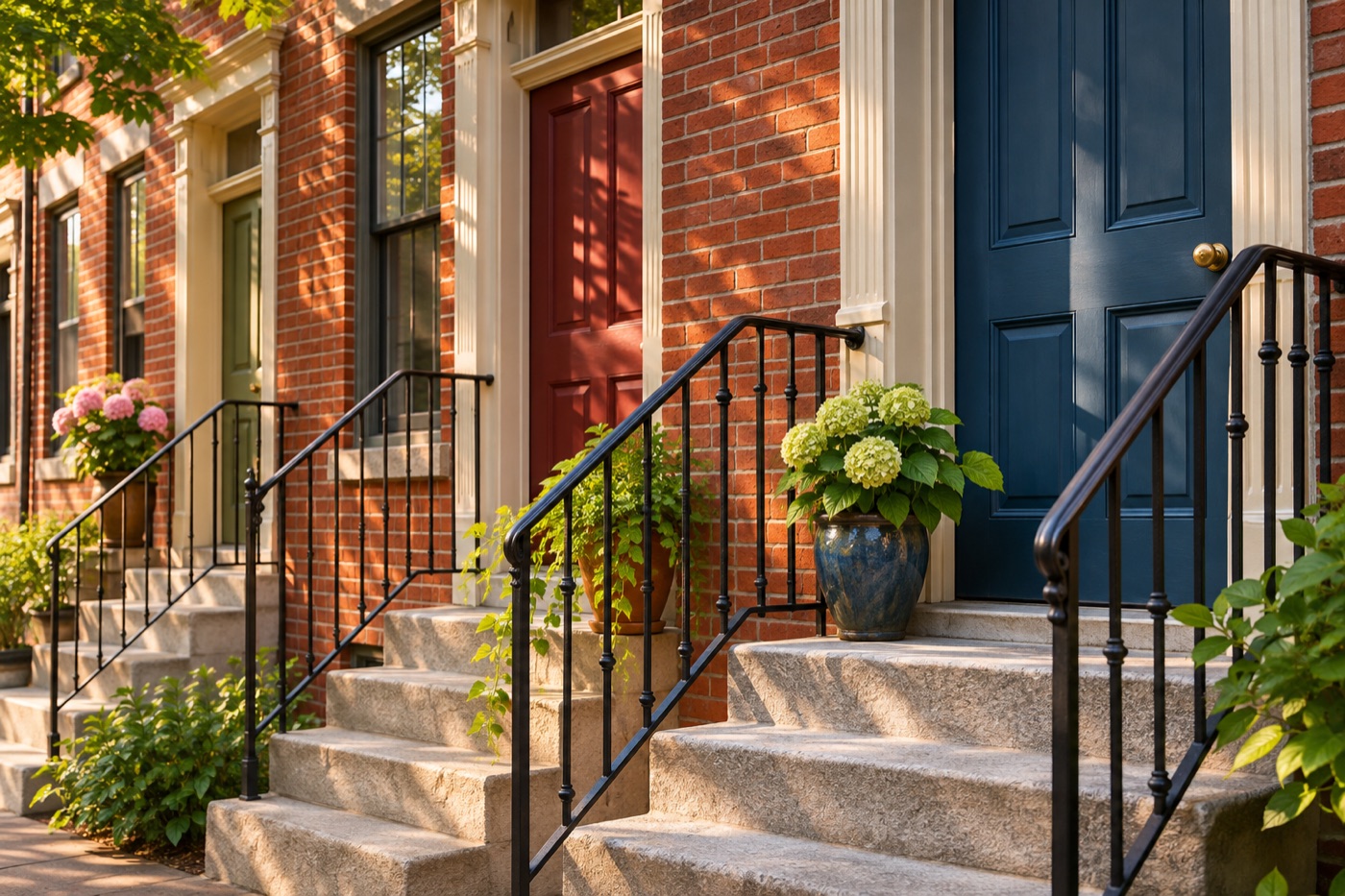
The 925 rentals at the center of Philadelphia’s latest housing fight are not one apartment complex. They’re scattered among rowhouses and twins in West and Southwest Philadelphia, and the owner has signaled an intent to sell the entire portfolio. WHYY reported that Council passed a resolution authorizing hearings on Nov. 12. The official docket for Resolution 260986 still lists it as in committee, with Nov. 12 as its latest action. The record does not list a hearing date, approved sale or funding commitment.
What 925 means on a residential block
Council’s resolution estimates that more than 3,000 people live in the rentals, most of them in three- and four-bedroom houses. That makes the argument about more than how many units a balance sheet shows. For a household that depends on having several bedrooms at below-market rent, losing a home can mean having to look for a substantially different kind of place, not just moving a few blocks. Council puts about 40% of the portfolio in what’s now known as University City.
Neighborhood Restorations developed the homes between 1990 and 2007 with help from city redevelopment property transfers and federal low-income housing tax credits, according to the resolution. The homes are what housing officials call scattered-site rentals: individual properties spread across dozens of blocks, rather than apartments in one project. The homes’ value as a group comes partly from that original decision to put them throughout existing neighborhoods. The resolution estimates that this portfolio alone accounts for roughly 12% of the city’s publicly financed affordable units at risk of losing restrictions over the coming decade.
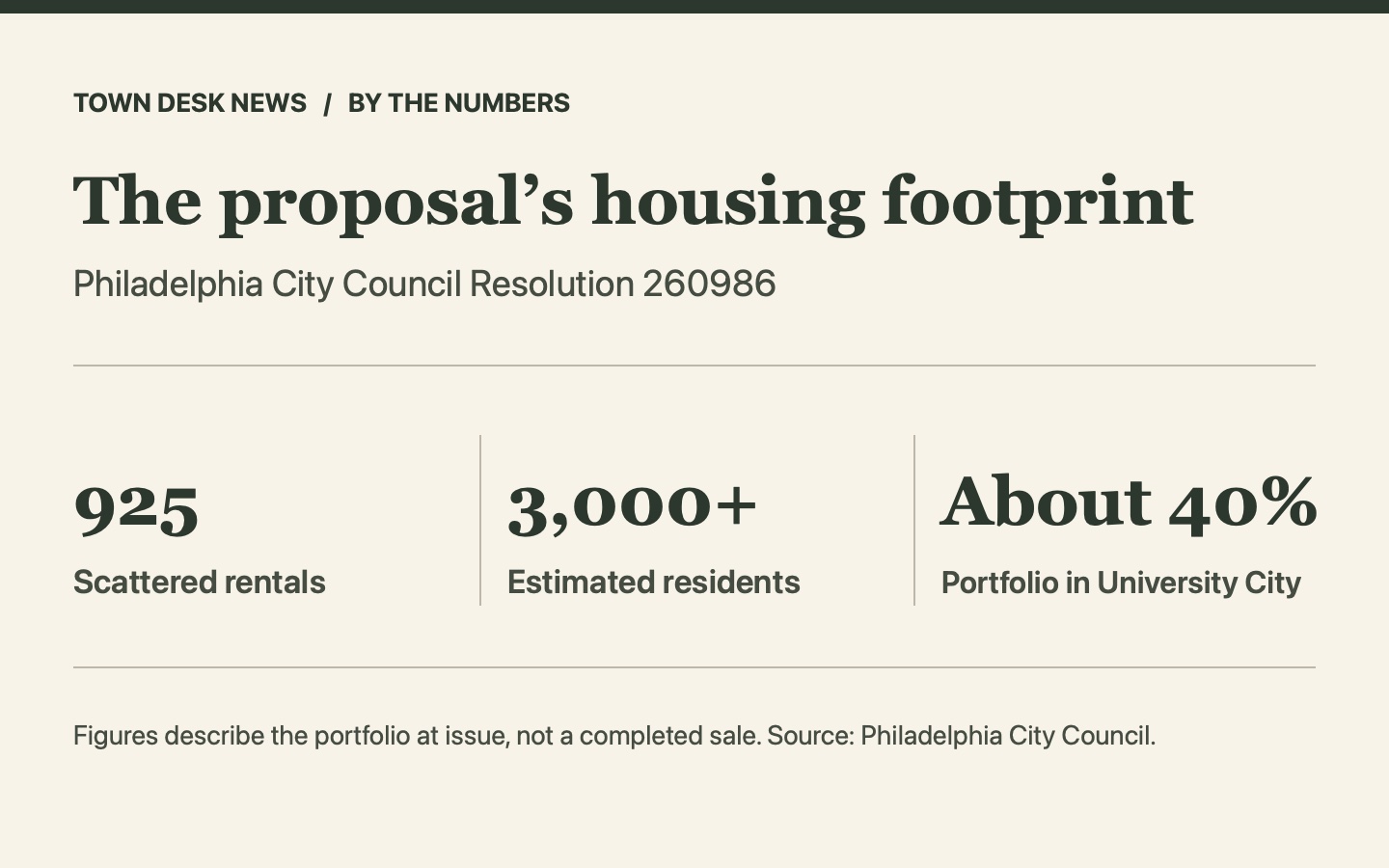
The numbers describe the portfolio discussed in Council’s resolution, not completed sales. Town Desk News · Original Town Desk News graphic; based on the linked source.
The homes are not all on the same clock
The rent restrictions do not run on one clock. WHYY reported that 225 of the rentals have already lost their affordability restrictions, while the remaining 700 are due to lose theirs over the next decade. Those figures describe the status of the restrictions, not how many tenants have received a rent increase or a notice to leave. No single expiration date applies to the whole group.
The owner began giving the required notice of intent to sell in July 2025, according to the resolution. A notice of intent is not evidence that a purchase has closed. What Council is examining is what happens if the owner sells at market terms and buyers eventually let the remaining affordability restrictions lapse. The particular risk can differ from one home to the next, depending on the restrictions still in place and what a buyer agrees to.
The proposed $36 million is not a signed deal
A preservation proposal developed by a team led by the Philadelphia office of the Local Initiatives Support Corporation calls for state financing and $36 million in city support to close a funding gap. The resolution says an agreement should cover all 925 homes over three years and include a path to homeownership for interested households who qualify. The $36 million figure is the city share the proposal calls for, not a reported price for the properties and not a city funding commitment documented in the docket.
The timing is part of the disagreement. Councilmember Jamie Gauthier wants a commitment by year’s end. The mayor expressed support for helping preserve the homes in August, but her announcement did not name a dollar amount, WHYY reported. Housing official Angela Brooks told WHYY the administration was aiming to outline a clear path in the first quarter of 2027. The difference between those dates matters because a public pledge and a funded agreement leave renters in very different positions.
What residents can actually watch for
The next public checkpoint is a hearing date from Council’s housing committee. The more concrete signs of progress would be a named buyer or acquisition partner, a confirmed city funding amount, an agreement covering specific properties and a timetable for keeping rents affordable. The Council record does not provide a hearing date. Renters who have already received an eviction notice or have questions about a housing dispute can find referrals through the city’s tenant resources or call the Philly Tenant Hotline at 267-443-2500.
Sources & reporting notes
- Primary
Philadelphia City Council: Resolution 260986 and legislative historyOfficial scope, estimated residents, preservation financing request and hearing authority.
- Reporting
WHYY: Reporting on the Nov. 12 vote and positions of city officialsReports that Council passed the hearing authorization and describes the 225/700 split and competing timelines.
- Primary
Philadelphia City Council: Public meeting calendarWhere to check for a housing committee hearing date.
- Primary
City of Philadelphia: Legal help for rentersTenant hotline and evictions resources.
See something we should correct?
Some or all of the images may have been generated by AI for illustration purposes only.