Medicare’s 2027 rates just dropped. Check these two numbers before you compare plans
The standard Part B premium is going up, and so is the annual deductible. Here’s what those numbers tell you and what they don’t.

The standard Medicare Part B premium is going up in 2027, but the monthly bill is only one of the numbers households need to compare. The Centers for Medicare & Medicaid Services announced on Nov. 17 that the standard rate will be $209.40 a month, up from $202.90 in 2026. Separately, the annual Part B deductible will rise to $292 from $283. Those increases sound similar, but they show up in very different ways.
One figure is due every month. The other isn’t.
The premium is what you pay for coverage each month. If you pay the standard Part B premium for all 12 months, the change is an extra $78 over the year. That figure is just the increase in premiums. It doesn’t include what you might pay when you actually use medical care, and it applies whether you use Part B services or not.
The deductible is not another automatic monthly bill. Under Original Medicare, it’s the amount you may need to pay for applicable covered care before Medicare starts to pay its share. The Part B deductible resets annually. After you meet it, you may still owe a share of each service or item, known as coinsurance. Medicare.gov says under Original Medicare this is usually 20 percent of the approved amount for covered Part B services after the deductible when the provider accepts assignment, though some services have different cost-sharing.
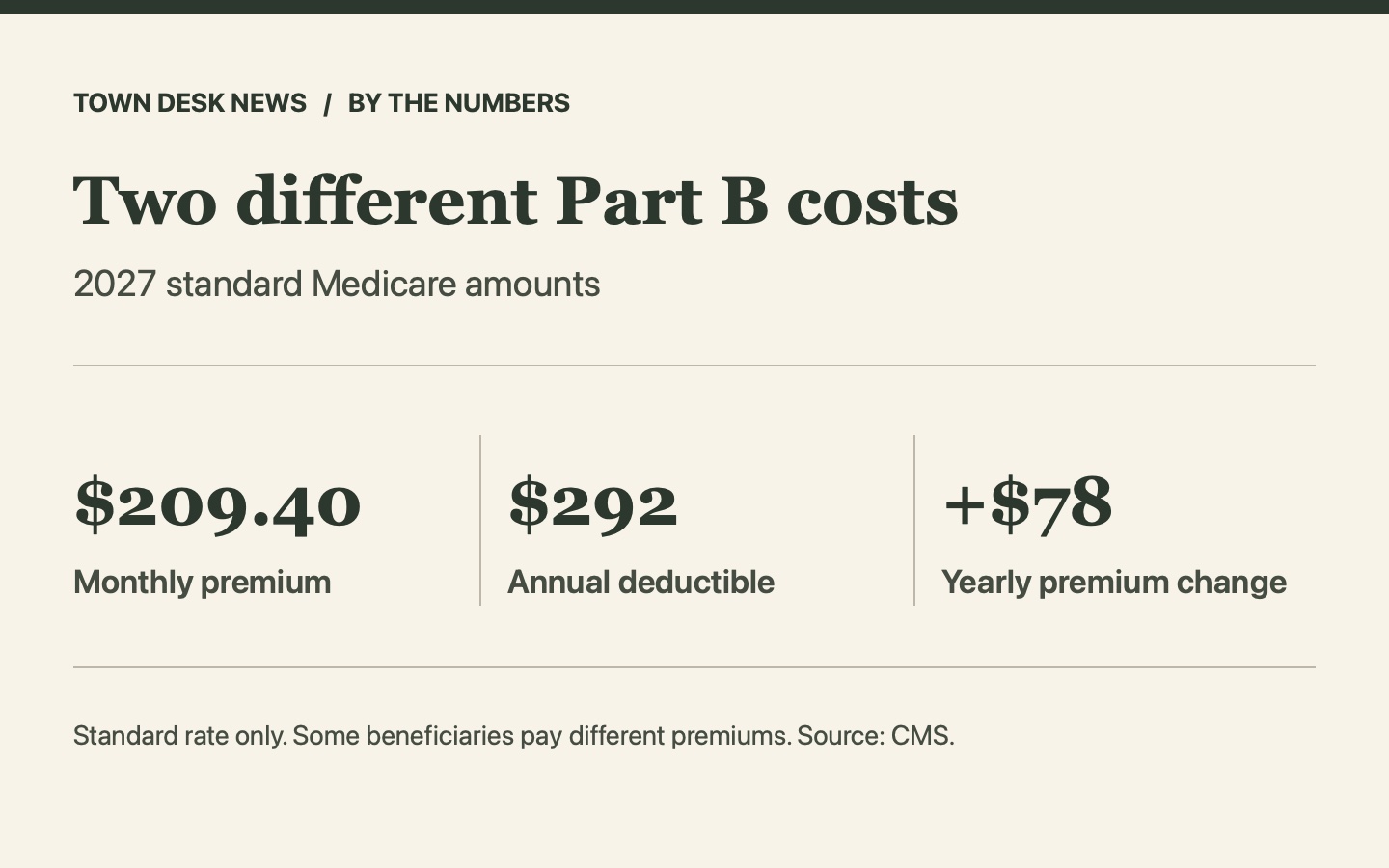
CMS standard Part B figures for 2027. Premiums and deductibles are distinct. Town Desk News · Original Town Desk News graphic; based on the linked source.
Who might pay a different amount?
The word standard matters. CMS publishes higher monthly Part B rates for people subject to an income-related adjustment. For example, its 2027 table puts an individual filer with modified adjusted gross income greater than $112,000 and no more than $141,000 at $293.10 per month for full Part B coverage. Joint filers and certain people who file separately have different thresholds. Use the table for the filing situation that applies to you rather than assuming your rate equals the headline number.
If the standard amount itself is hard to fit into your budget, Medicare lists state-administered Medicare Savings Programs that can help people who qualify. They are separate from the comparison of private health and drug plans, and qualification depends on the program and state rules. The federal page explains the options and where to apply; don’t assume an income figure you saw for another person is the right test for your household.
The hospital deductible is a separate question
Part A covers a different set of services, including inpatient hospital care. Its inpatient hospital deductible goes up $40 to $1,776 in 2027. Most people do not pay a monthly Part A premium, CMS says, but the hospital deductible can still apply. Unlike the Part B deductible, it is tied to a benefit period. Medicare.gov explains that you can have more than one benefit period in a year, so it’s possible to face the Part A deductible more than once in the same calendar year.
Also keep inpatient hospital costs and medical professional charges distinct when planning. Medicare puts most doctors’ services during a hospital stay in the Part B cost-sharing category, while the hospital stay itself has Part A rules. These federal figures are a starting point for people on Original Medicare, not an estimate of what any person will pay after supplemental coverage or under a private plan.
What to look at before Dec. 7
If you’re reviewing Medicare Advantage or Part D prescription coverage, pull up your plan’s Annual Notice of Change and look at the items you actually use. Compare the plan premium, how it covers your prescriptions, and what you may pay to see your doctors or use your preferred pharmacy. A lower advertised premium by itself doesn’t mean every visit or prescription will cost less.
Fall open enrollment ends Dec. 7. You don’t need to assume that a national rate change means you have to switch plans. You do want to know what changed in the federal figures and what changed in your own plan while you still have time to compare. Make two columns, one for predictable monthly costs and the other for the expenses you could owe when you need care. Put each number in the right column before you make a decision.
Sources & reporting notes
- Primary
CMS: 2027 Medicare premiums and deductiblesFederal announcement, standard Part B figures, Part A hospital costs and income adjustments.
- Primary
Medicare: Open enrollmentEnrollment window and eligible coverage changes.
- Primary
Medicare: Annual Notice of ChangeExplains where to find your plan’s changes to coverage and costs.
- Primary
Medicare: What Medicare costsExplains premiums, annual Part B costs and Part A benefit periods.
- Primary
Medicare: Medicare Savings ProgramsDescribes available programs and how to check state eligibility.
See something we should correct?
Some or all of the images may have been generated by AI for illustration purposes only.