Lower Makefield has two tax debates. Here’s the one on Wednesday’s notice
The Nov. 18 proposal deals with overdue real estate taxes. A separate set of options is about how the township pays for services year after year.
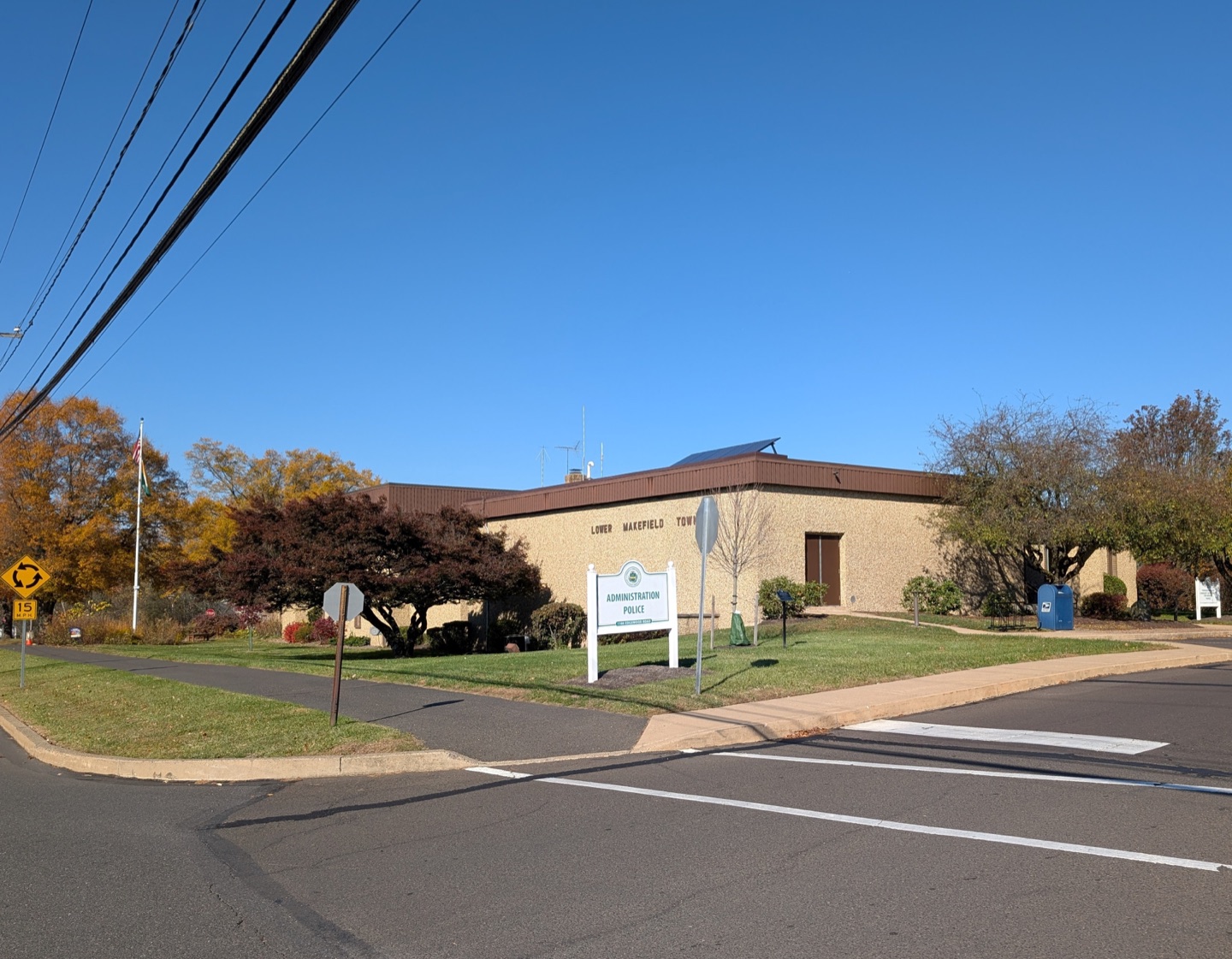
Lower Makefield Township’s municipal building in November 2025. File photo. Mr. Matté / Wikimedia Commons · CC BY-SA 4.0 · Edited

Lower Makefield Township’s tax paperwork this fall covers two questions that sound similar but affect different people. What happens if a property tax bill is already overdue? And how should the township raise enough money to run its day-to-day services in future years? One advertised item for the Wednesday, Nov. 18, meeting covers overdue bills. That notice does not describe all the board’s tax business. The township has also published separate budget and rate options, which should not be read as part of the collection ordinance or as adopted rates.
The Board of Supervisors meeting is scheduled for Nov. 18 at 7:30 p.m. Eastern. No outcome has been announced in the township record checked before the meeting. The public notice says the board is to consider an amendment adding a section on collection of delinquent real estate taxes to its local code. The notice and draft show what is proposed, not what the board ultimately did. If you read them after the meeting, check the record for whether the board acted and whether it acted on the text you saw.
What the delinquent-tax draft says
The draft would appoint the Bucks County Tax Claim Bureau as an alternative collector and direct it to file liens for existing delinquent taxes under the authority described in the document. It specifies annual interest of 9 percent for taxes that have been returned as delinquent, starting no earlier than the first day of the month after the return. In the draft, where its collection provisions apply, it fixes collection charges at 5 percent and attorney fees at an additional 1 percent of the delinquent amount including interest and penalties. Those figures describe the draft, not a balance for a specific parcel.
A homeowner reading the words “real estate tax” without the rest of the sentence could mistake those percentages for a new town-wide rate. They are not the same thing. A collection proposal addresses the handling and cost of paying an overdue account. The recurring tax rate and budget are separate decisions. If you have a question about your own bill, use the contact and instructions on the relevant notice or the township’s official contacts rather than calculating what you owe from a draft ordinance.
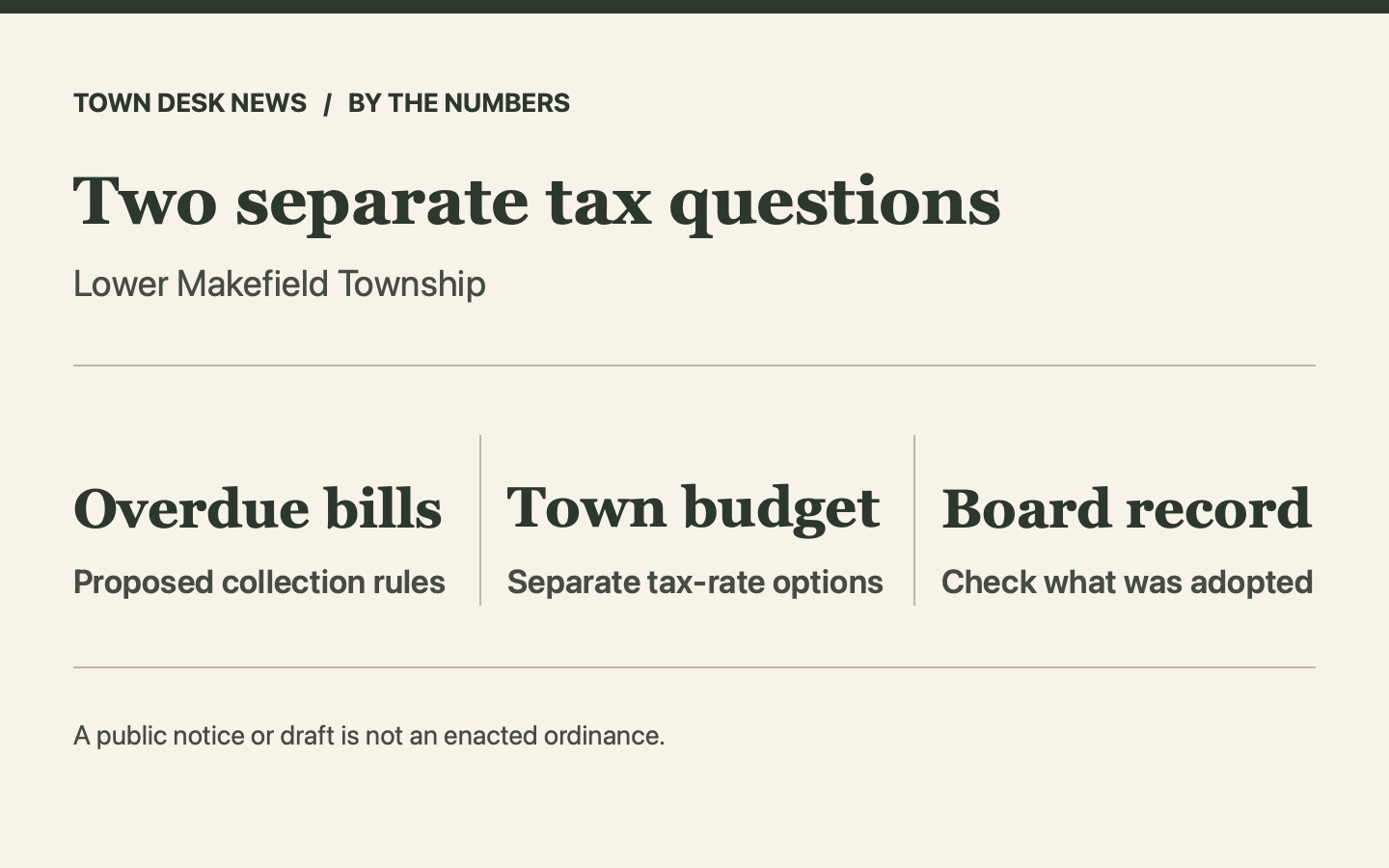
A proposed rule for collecting overdue tax bills is a different decision from changing future tax rates. Town Desk News · Original Town Desk News graphic based on linked township information.
What the separate budget debate is about
The township’s October budget overview defines its General Fund problem as a structural deficit: its continuing revenues have not been enough to keep up with continuing expenses. That is a description of the ongoing gap, not a claim here about the township's cash balance on a specific date. Its overview lays out three options. The first would seek court approval for authority to raise the general-purpose real estate tax rate to as much as 19 mills. The township described this as a route requiring approval from the Bucks County Court of Common Pleas, not a rate it had already put in place.
The second tool it describes is a local earned-income tax paired with a 5-mill reduction in the general-purpose property tax rate. That would change the mix of who pays and how, not guarantee the same net change for everyone. The township says the effect would vary with circumstances including earnings and property ownership. The third measure is a possible change from a second-class to a first-class township. The township says that option requires voter approval and would change the governing framework. The three ideas are possibilities presented for discussion, not a package of enacted changes.
Where to find the next decision
Read the information in two places depending on what you want to know. Start with the public notification and attached text for the proposed delinquency rules. Start with the finance materials and structural-deficit fact sheets for the future budget and rate options. From the meeting page, check the exact agenda and next posted record rather than relying on the October explanation alone.
The schedule lists regular board meetings on Dec. 2 and Dec. 16 at 7:30 p.m. Those listings don't tell you which taxes or budget actions will be on each agenda. The useful question to ask when a new document appears is whether it is a draft, an authorization to take another procedural step, or a final rate or ordinance. Keeping that distinction straight avoids reading a possible charge on an overdue bill as a forecast of what every household will pay.
Sources & reporting notes
- Primary
Lower Makefield Township: Nov. 18 public noticeThe advertised item concerns collection of delinquent real estate taxes.
- Primary
Lower Makefield Township: proposed delinquent-tax ordinanceProposed alternative collector, timing, interest and collection fees.
- Primary
Lower Makefield Township: structural deficit optionsExplains the separate General Fund issue and three framework options.
- Primary
Lower Makefield Township: board schedules, agendas and minutesBoard meeting listings and the official starting point for meeting records.