The rain stopped. Part of Kinshasa was left facing a different danger.
Local reports describe rising rivers and flooded streets. In the western commune of Mont-Ngafula, a neighborhood official reported a different kind of loss.
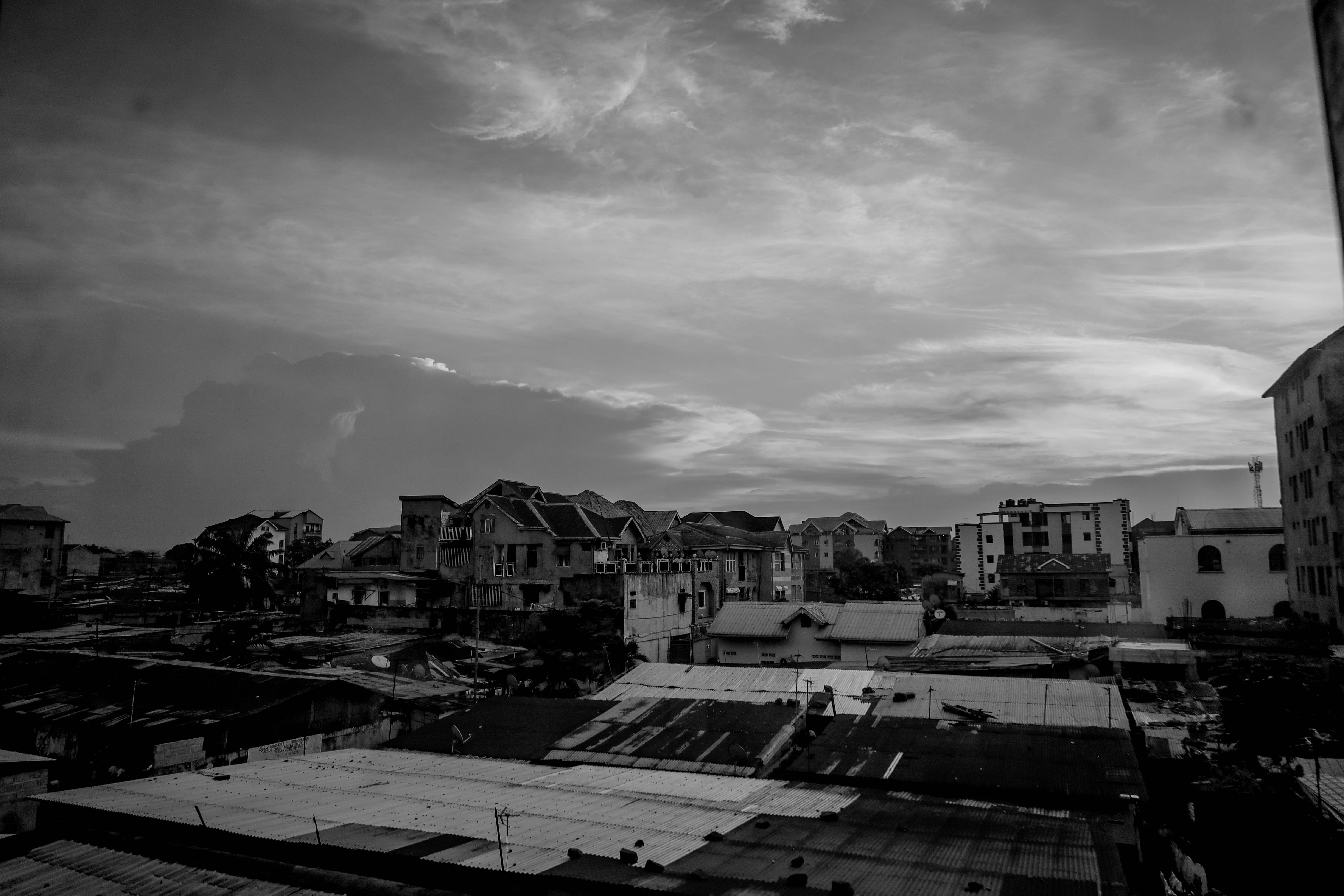
An archive view of Kinshasa earlier in November 2026, not a photograph of the Nov. 18 storm. Fiston bamela / Wikimedia Commons · CC0 1.0

On Wednesday, heavy rain sent the Makelele River over its banks in central Kinshasa. A reporter for the Agence Congolaise de Presse, the country’s public news agency, observed traffic disruption in the Sykin neighborhood of Bandalungwa. In the west of the city, a neighborhood official described a different kind of damage: as erosion gullies grew, more than ten homes in Kimbuta were lost, he told the agency.
Those reports came from different parts of the Democratic Republic of the Congo’s capital after the rain on Nov. 18. One describes what a reporter saw on the ground. The other provides a local official’s initial estimate. That number is not an independently verified survey of Kimbuta, much less a total for Kinshasa. It does help explain why a report that focuses only on flooded roads misses part of what residents faced.
Two ways one storm damaged the city
In Bandalungwa, the problem was water coming out of a river channel and into streets and homes near it. ACP’s reporting described disruption near the Makelele, and Radio Okapi separately described flooding in multiple districts, including houses near the river. The Radio Okapi article also uses some information from ACP; those overlapping accounts do not supply a second independent count of homes damaged.
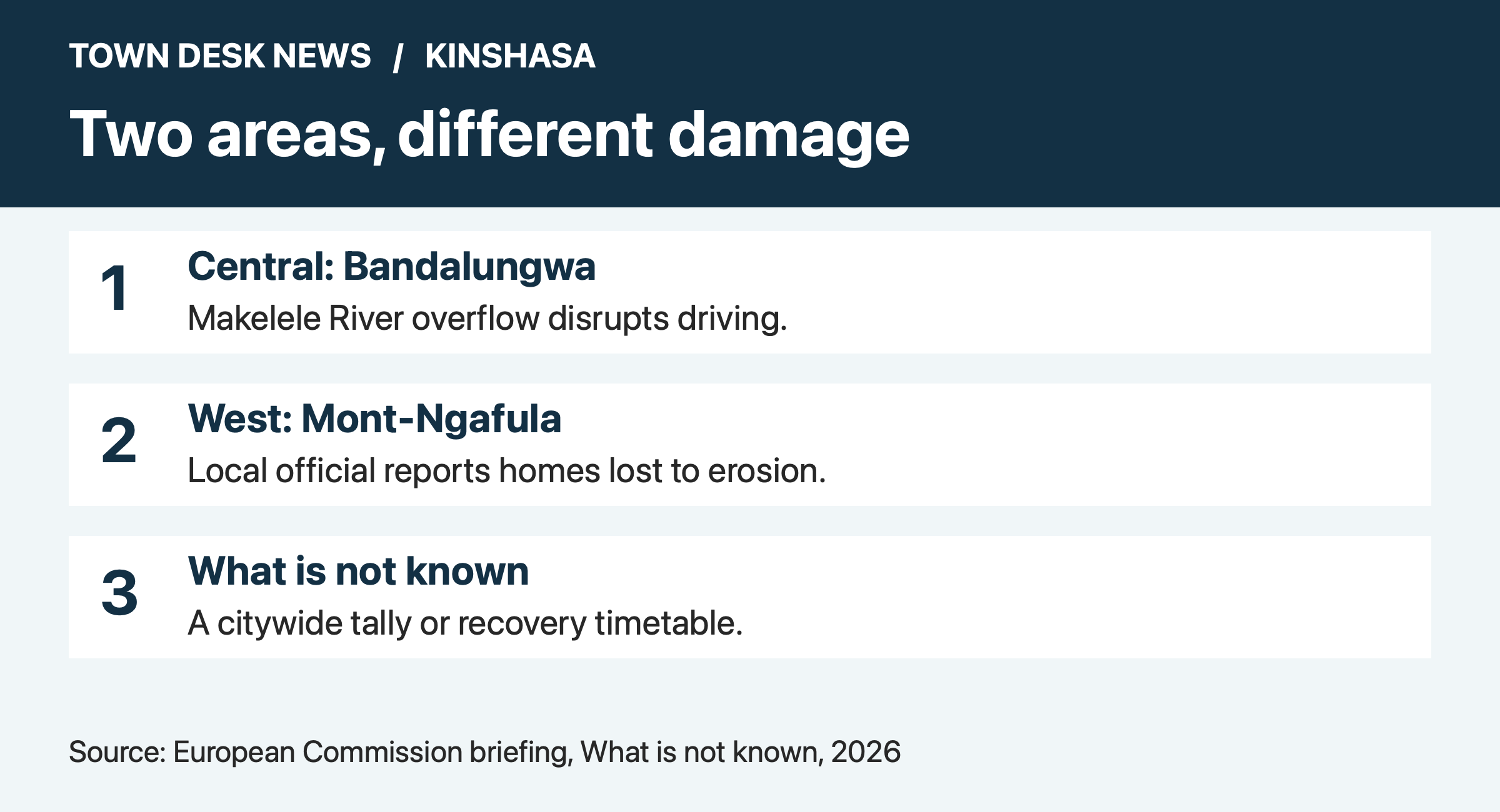
Reports from two different communes describe different kinds of damage. This is a schematic, not a map of individual homes. Town Desk News · Original Town Desk News explanatory graphic
In Kimbuta, a neighborhood of the Mont-Ngafula commune, neighborhood chief Israël Kazadi told ACP that advancing erosion had swept away more than ten homes and that some families no longer had a place to stay. Here, the issue was not only water entering a building. When runoff cuts a deep channel through soil, it can remove the ground beneath or beside structures. The condition of a road after surface water drains tells residents little about the stability of ground elsewhere.
Radio Okapi also described flooding and erosion problems in other parts of Kinshasa. Its coverage is useful for locating separate incidents, but it is not a consolidated assessment from the city. Reports about one neighborhood can inform people nearby without answering how many families need help across all affected communes. The most consequential missing details are which neighborhoods have been formally assessed and what assistance has reached them.
The previous week offered a separate example in the same commune. ACP reported a rain-related landslip on Avenue Baruti in the Mama Mobutu neighborhood and later reported that work to repair that road had started. That work predates the Nov. 18 storm. It is not evidence of repairs or assistance in Kimbuta, a different neighborhood.
What drainage work can and cannot tell us
The World Bank has been funding work on Kinshasa’s urban services and flood resilience for several years. Its 2021 Kin Elenda announcement included plans to reduce residents’ exposure to flooding while improving access to other services in a group of neighborhoods. That was a planned investment in long-term resilience, not an announcement that the city’s flood risk had been resolved.
In April 2026, the bank announced a separate program aimed at making Kinshasa’s waste system more reliable. It described blocked drainage channels as one way uncollected waste can make flooding worse. Improving collection and keeping channels open may help water move through the city, but the bank’s description of that general problem does not identify the cause of Wednesday’s damage at a particular home or street. Nor does it establish that any of the newly reported sites already have funded repairs.
That distinction matters for recovery. Clearing a flooded road and addressing a growing gully are different jobs. The reports from Bandalungwa and Mont-Ngafula give a first look at both kinds of damage. They do not establish which streets had reopened, which slopes had been inspected, or whether the families displaced in Kimbuta had been offered temporary shelter. Kazadi appealed for assistance, according to ACP.
What remains unconfirmed
Developing story: Town Desk News last checked the local reporting and available source material early Friday, Nov. 20, Eastern time, Friday morning in Kinshasa. We have not independently confirmed the neighborhood’s home-loss count, a consolidated citywide tally, or a relief timetable. We’ll update this article if authorities or relief organizations release more specific verified information.
Sources & reporting notes
- Local reporting
ACP: Kimbuta damage and neighborhood official’s accountAttributes the home-loss estimate to Kimbuta’s neighborhood chief.
- Firsthand local reporting
ACP: Makelele overflow in BandalungwaObserved travel disruption after the river overflow.
- Local reporting
Radio Okapi: flooding in several Kinshasa districtsDescribes several communities; some details come from ACP.
- Primary project announcement
World Bank: 2021 Kin Elenda projectLong-term service and resilience work.
- Primary project announcement
World Bank: 2026 waste-management projectSeparately describes how blocked channels can worsen flooding.
- Local reporting
ACP: earlier road repairs in Mama MobutuA separate earlier response in Mont-Ngafula, not evidence of relief in Kimbuta.