Gaza’s winter floods destroy shelters and strain an already limited aid system
The World Food Programme and IOM say families have lost shelter and stored food, while restrictions on supplies and funding gaps are slowing the response.
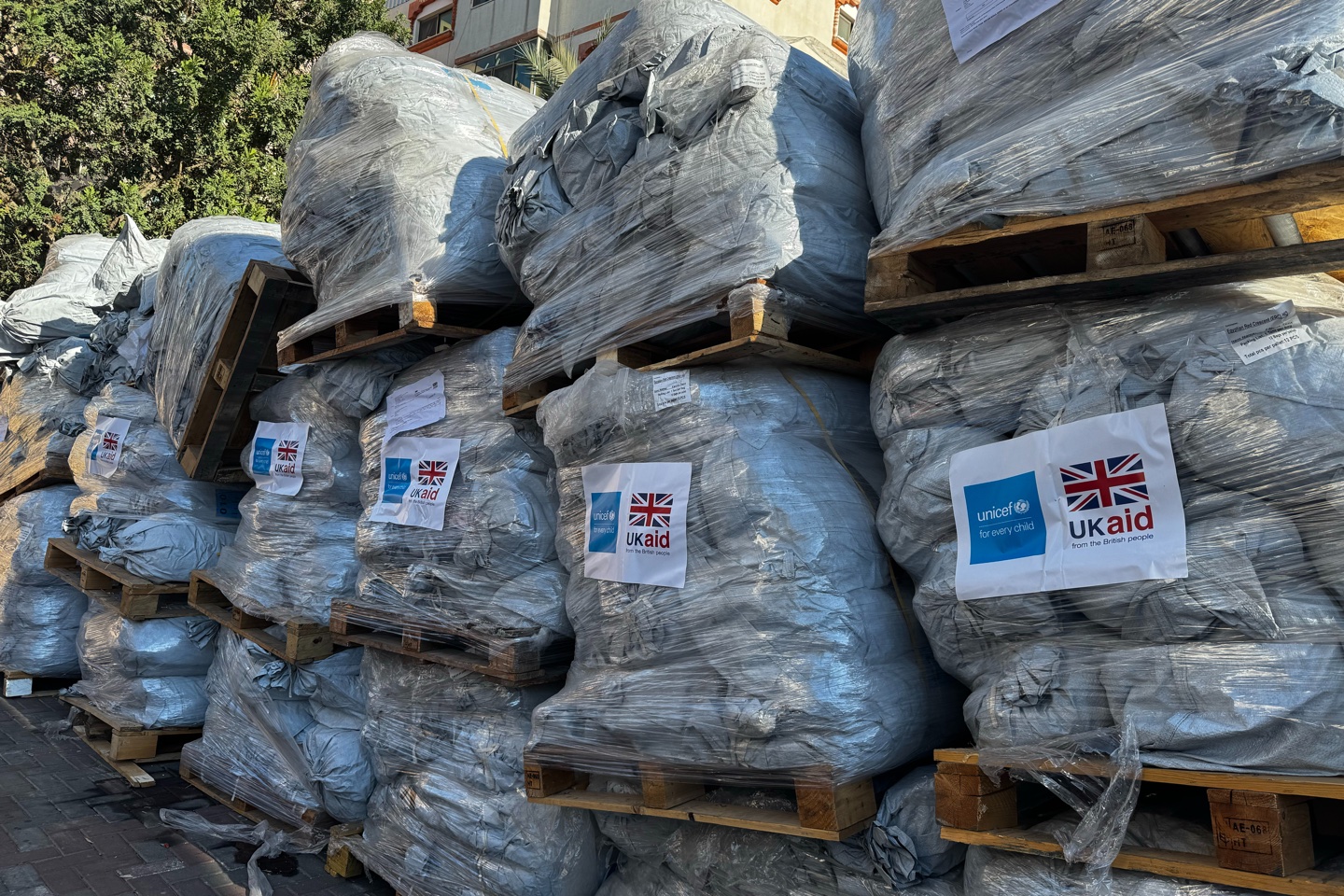
File photo: UK-funded tents arriving in Gaza for UNICEF distribution in December 2025. This is not a photograph of the November 2026 flooding. Foreign, Commonwealth & Development Office / Flickr · CC BY 4.0 · Edited
Families displaced in Gaza are facing a new round of shelter and food losses ahead of winter. Heavy rain that began Nov. 6 flooded displacement sites, destroyed food stored in tents and interfered with services, according to United Nations agencies. On Nov. 17, the World Food Programme and International Organization for Migration warned that shortages of funding and limits on aid access are constraining the response as needs increase.
At least 40,000 additional shelters have reportedly been damaged or destroyed since early November, according to the agencies’ joint Nov. 17 statement. That figure combines damage and destruction. It should not be read as a count of people, deaths or households without shelter. Earlier United Nations figures covered earlier reporting windows, and the totals should not be added together as though they describe separate disasters.
What the rain changed
More than half of Gaza’s roughly 1,700 displacement sites are in flood-prone areas, according to WFP and IOM. The agencies say many sites need sandbags and more than 40 percent require work such as drainage and improving the ground beneath shelters. New tents can replace damaged ones, but putting them back on the same exposed ground leaves part of the problem unresolved. The agencies are seeking supplies both for individual households and for work shared by many families at a site.
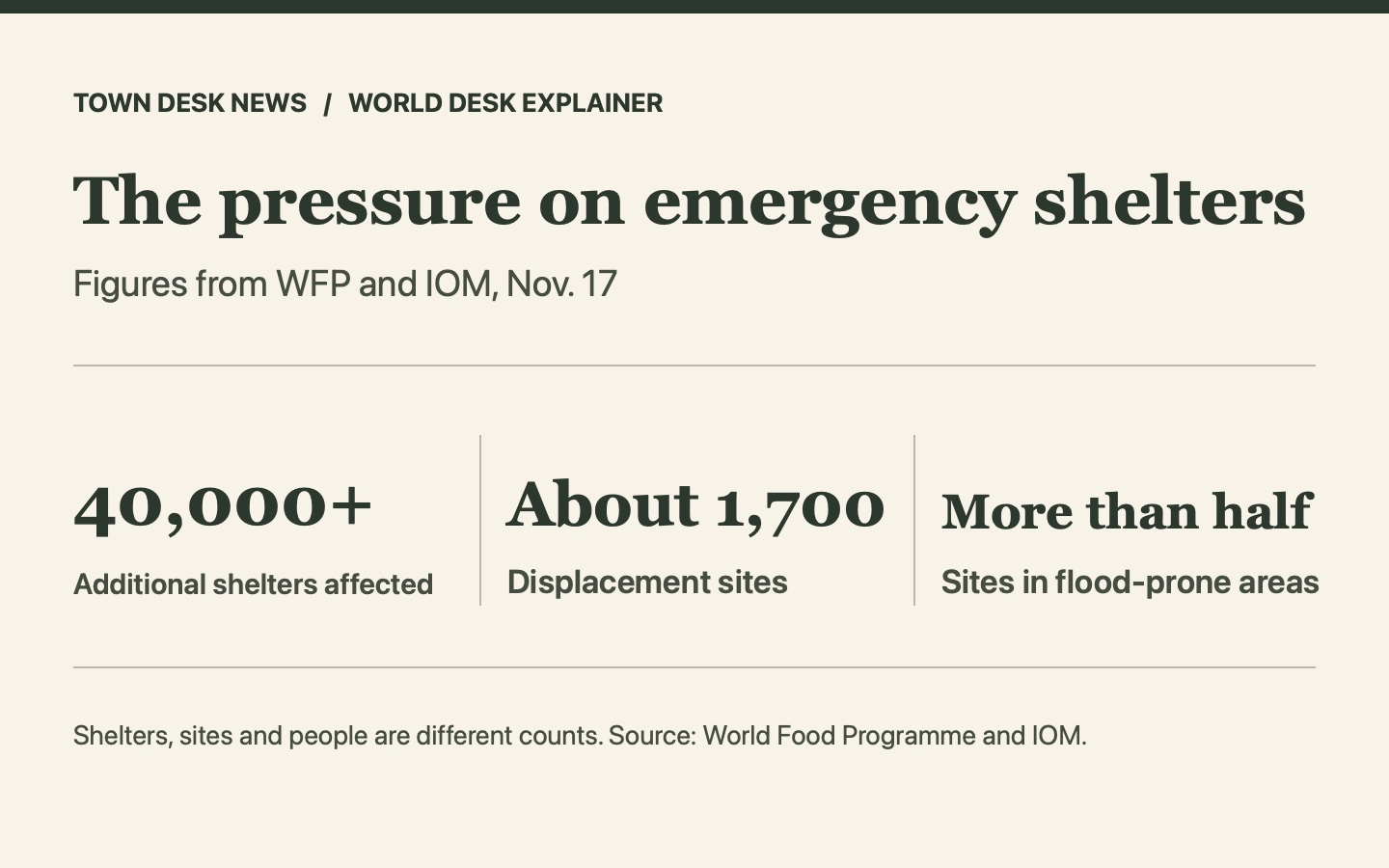
WFP and IOM said at least 40,000 additional shelters were reportedly damaged or destroyed since early November. This is not a count of people. Town Desk News · Original Town Desk News graphic; based on reporting and linked source.
Flooding also disrupted access to health services. The UN humanitarian office’s Nov. 13 situation report described difficulty for health workers traveling to facilities and for patients reaching them. The health risks of floodwater and cold are compounded by shortages of shelter and sanitation. The UN office reported that Gaza and North Gaza together had about 90 operational pediatric inpatient beds, compared with about 350 before the escalation. That is a figure for those areas, not a count of beds across the entire territory.
Why food deliveries are under pressure
WFP said funding shortfalls had already reduced its assistance. It described hot meals being served every other day and reductions in food parcels and cash assistance. It also reported that flooding destroyed some food people had stored at home. Cooking gas and firewood are scarce or too expensive for many families, the agency said. Delivering food is only part of providing a usable meal when people also lack a safe place to store it or fuel to cook it.
WFP estimated a $436 million gap over the next six months for its work to reach two million people across Gaza and the West Bank. That figure is not the amount required for shelter alone, and it is not a Gaza-only funding estimate. IOM separately said it needed $173 million to sustain emergency shelter assistance. The agencies described a further $9 million need for improving and managing displacement sites, including drainage and shared infrastructure.
The bottleneck between the border and the tent
In its Nov. 17 statement, WFP and IOM said Kerem Shalom, also called Kerem Abu Salem, remained the only crossing authorized for humanitarian and commercial goods entering Gaza. They said restrictions on the main north-south route complicated onward delivery, and equipment including pumps, spare parts, heaters, fuel and heavy machinery faced delays or restrictions. Authorization for entry and delivery to the people who need an item are different stages; problems can occur at either one. The agencies are asking not just for more cargo at the border but also for reliable access to distribute it.
The Associated Press separately reported that a Board of Peace assessment warned the Gaza ceasefire process could unravel and described the prospect of another winter for civilians in tents and damaged buildings. That report and the UN agency figures address different questions. The board assessed the political and security process, while humanitarian organizations count needs and track operations. What would change conditions for displaced families is not only a new diplomatic statement or a pledge of funds, but evidence that winter supplies have entered in greater quantities and can be delivered to the sites at risk.
Sources & reporting notes
- UN agencies
WFP and IOM joint statementNov. 17 account of shelter needs, food assistance, funding gaps and aid entry.
- UN field report
OCHA Nov. 13 situation reportDocuments flood-related disruption to humanitarian and health services.
- UN transcript
Nov. 17 UN briefing transcriptRecords agency briefings on the winter response and the practical limits on assistance.
- Independent reporting
AP reporting on the Board of Peace assessmentObtained and reported a separate warning on the ceasefire and conditions facing civilians.