Was the FAA ground stop a cyberattack? What investigators know so far
The FAA says it has found no indication of a cyberattack. The Nov. 13 ground stop is over, and investigators have not determined the underlying cause.
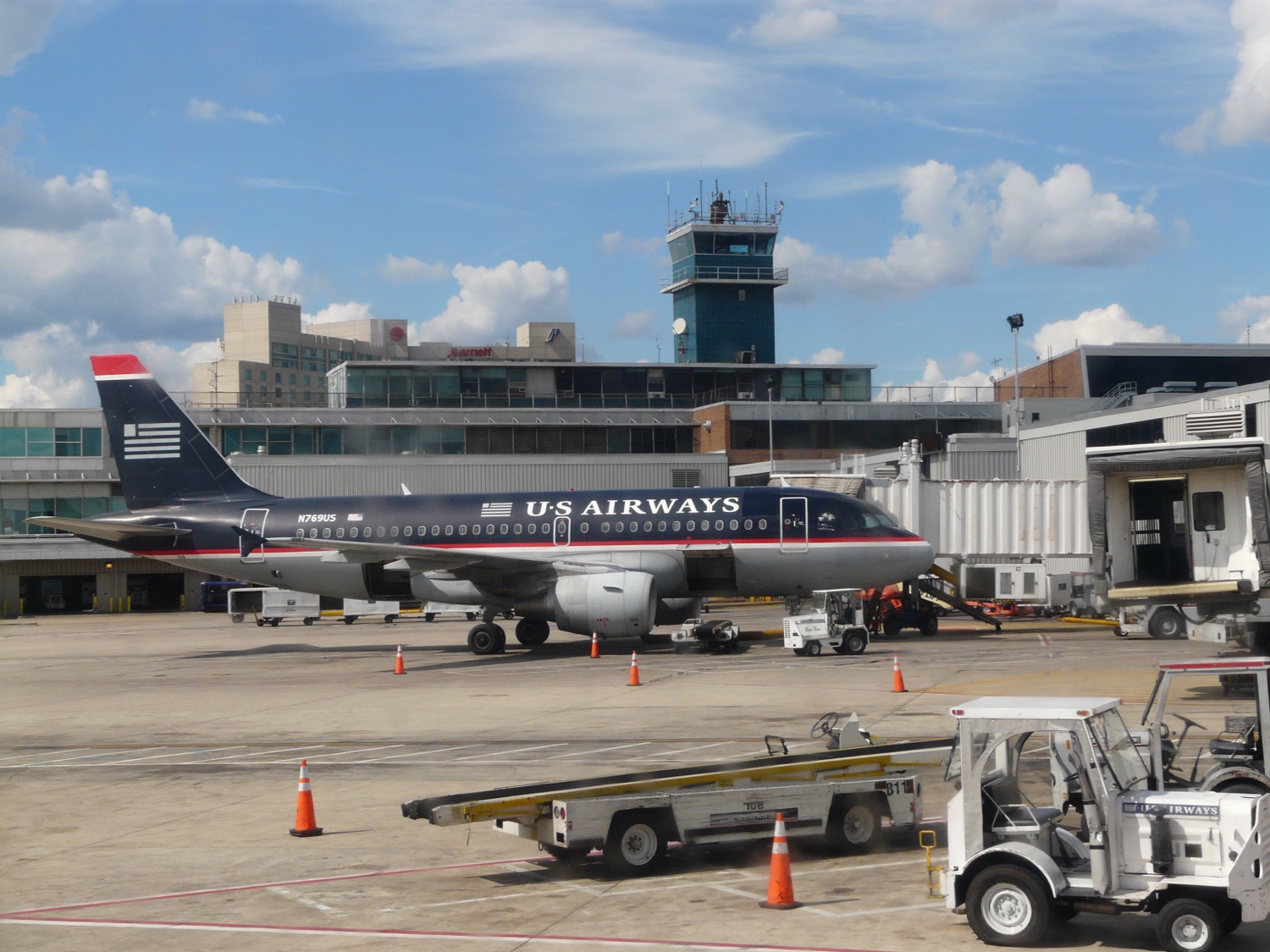
File photo: aircraft at Philadelphia International Airport in 2008, not the Nov. 13 ground stop. Piotrus · CC BY-SA 3.0; resized, distributed under the same license. · Edited

The Federal Aviation Administration says it has found no indication that a cyberattack or outside actor caused the Nov. 13 nationwide ground stop. The agency paused installation of certain routers after the disruption, and the Transportation Department said operations had returned to normal. Investigators are still working to identify the root cause. An equipment change preceded the failure, but that does not establish why it happened.
What was paused
ABC News reported that an FAA spokesperson confirmed the installation pause. Transportation Secretary Sean Duffy said a router installation in Arkansas preceded the disruption. The FAA says providers took steps to stabilize the network; the Transportation Department said investigators reproduced the problem but had not determined the underlying cause.
That distinction matters. Officials can identify the step that preceded the overload without knowing what made this installation behave differently. Duffy said dozens of earlier installations went through without the same problem. The FAA’s decision to pause installations is narrower than abandoning the larger modernization effort. It gives investigators a chance to check the equipment and the network before repeating the work, not a timetable for when it will resume. On Nov. 18, Secretary of State Marco Rubio said officials had no evidence linking the FAA incident to a separate Microsoft incident. Reuters reported the officials’ account of separate disruptions, not independent technical proof of their causes. The FAA’s investigation is about air traffic; it does not establish what happened in any separate Apple service disruption.
What the ground stop did
The FAA said the technical problem began around 3:30 p.m. Eastern on Nov. 13. Instability was reported at 17 of its 22 regional air traffic centers and spread to some facilities that control aircraft arriving at and leaving airports. The agency said it held departures while keeping frequencies available to bring aircraft already in the air down safely. Some critical operations, including lifesaving flights, continued.
The FAA said air traffic resumed at 8:15 p.m. Eastern that day after the system was stabilized. Resuming flights was not the same as putting everyone back on their original itineraries. Airlines still had airplanes, crews and booked passengers in the wrong places. That is the difference between an air traffic restriction ending on Friday and an airline still needing time to get its schedule back in order.
The scale of the disruption can be hard to see in the time of the stop alone. The FAA put Friday’s canceled flights at roughly 12,462 across operators, including about 9,082 at major airlines. Those are agency figures for the day of the event, not a count of flights that travelers should expect to lose on a normal November day.
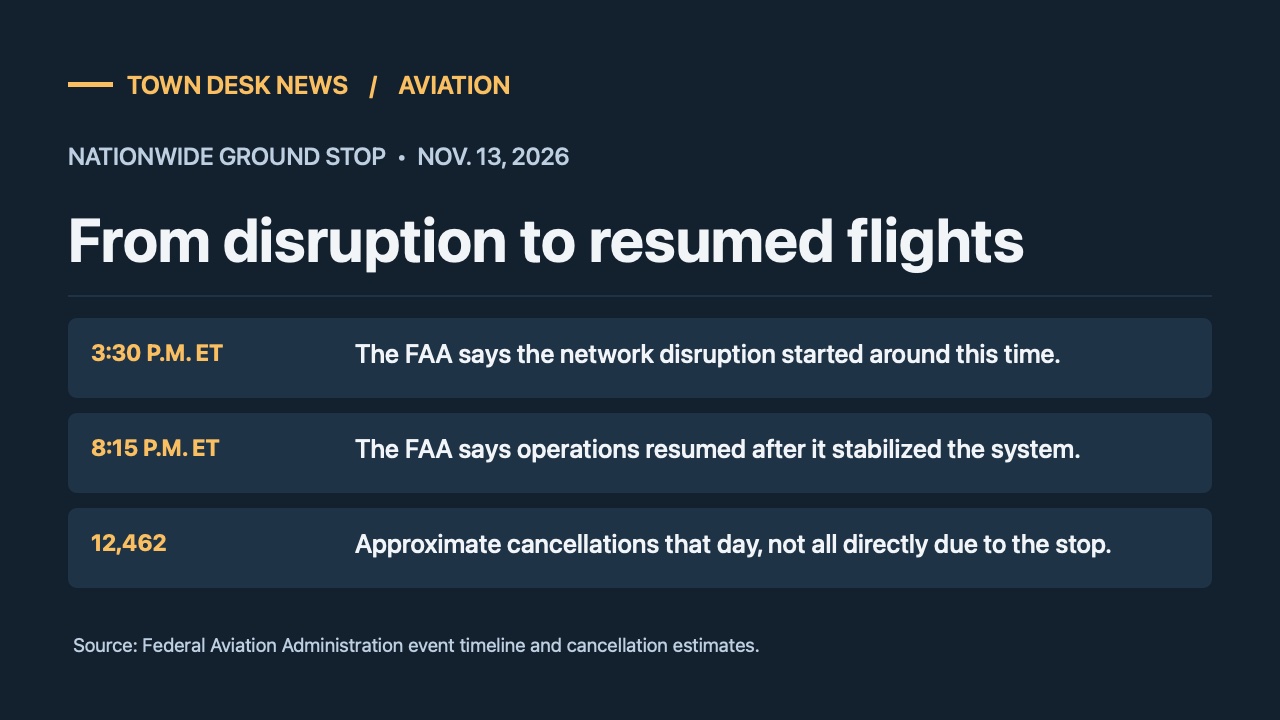
FAA timeline for Nov. 13, 2026. About 12,462 flights were canceled that day; the FAA says not all were directly caused by the ground stop. Town Desk News · Original Town Desk News explanatory graphic based on public facts; no third-party imagery.
A separate fight over funding
The outage also brought more attention to how the federal government pays for replacements. Duffy and FAA Administrator Bryan Bedford told senators Tuesday they want another $50 billion for air traffic modernization. The request is separate from the router pause and is not money already approved. AP reported skepticism from senators about how the department would use additional funding. The immediate investigation still has its own narrower job: explain why the network was disrupted on Nov. 13.
What to check before your trip
For Thanksgiving travelers, the thing to watch is your own reservation. The FAA has a public status page for delays and restrictions affecting airports, but it does not tell you whether your airline changed your particular booking. Check your airline’s app or site before leaving for the airport. If you have a connection, check both flight segments, not just the flight out of your home airport. Airport-wide conditions can improve while an individual flight is still delayed for a different reason.
If the airline cancels and you choose not to travel or accept an alternative, the Transportation Department’s passenger guidance explains when you are owed a refund. That is a different decision from taking the replacement flight an airline offers you. Verify the terms that apply to your booking and keep the cancellation notice if you need to follow up later.
The November 13 nationwide restriction is over. What is still open is the review of the equipment change and what comes next for that rollout. A notice about work on the network is not, by itself, an alert that your plane is grounded.
Sources & reporting notes
- Primary
FAA: nationwide ground stop questions and answersNo indication of cyberattack in the available evidence; status of the root-cause review and official timeline.
- Primary
Transportation Department: Nov. 17 investigation updateOfficials describe investigative status, return to normal and funding request.
- Reporting
ABC News: FAA confirms installation pauseReports direct confirmation from an FAA spokesperson.
- Reporting
Associated Press: senators question new funding requestCongressional response and modernization context.
- Primary
FAA National Airspace System StatusCurrent airport-level restrictions.
- Primary
Transportation Department: air travel refundsRefund rights for canceled and changed flights.
- Primary
White House: Nov. 18 remarks on recent outagesRecords officials’ assessment of separate incidents and what the available evidence supports.
- Independent reporting
Reuters: officials say they see no coordination behind recent outagesReports the officials’ assessment of separate events; does not establish an underlying technical cause.