The European Commission took apps offline. What did AI have to do with it?
Brussels disclosed a cyber campaign it detected in October. Most affected applications are back, but officials haven't finished assessing the impact.
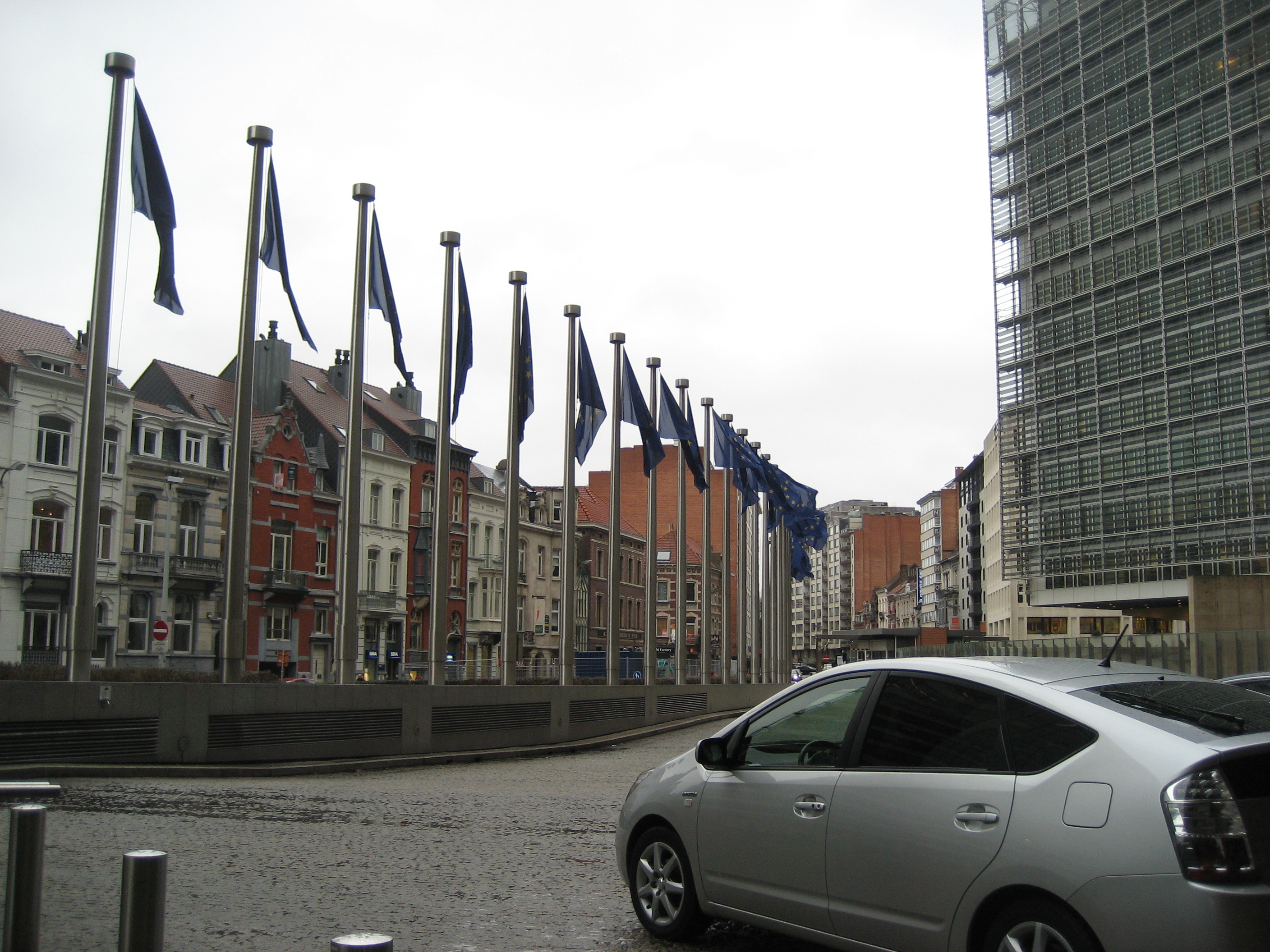
European Union flags outside the Berlaymont building in Brussels in 2009. Hlynz / Wikimedia Commons · CC BY-SA 3.0

When several European Commission applications went offline this autumn, the shutdown was deliberate. The Commission said Thursday it took them down as a precaution after detecting a cyber campaign that involved an AI tool. Most of the applications have since been restored. What officials could not give on Nov. 19 was a full accounting of the incident or a name for whoever was behind it.
Commission spokesperson Thomas Regnier said at the midday briefing that an AI tool had been misused in what he described as a series of incidents. That is a narrower finding than saying an AI system carried out the entire campaign or that attackers obtained every employee's records. He confirmed that the Commission first detected the incident on Oct. 22, then confirmed it after an initial investigation on Oct. 26. Neither date necessarily tells us when the activity began.
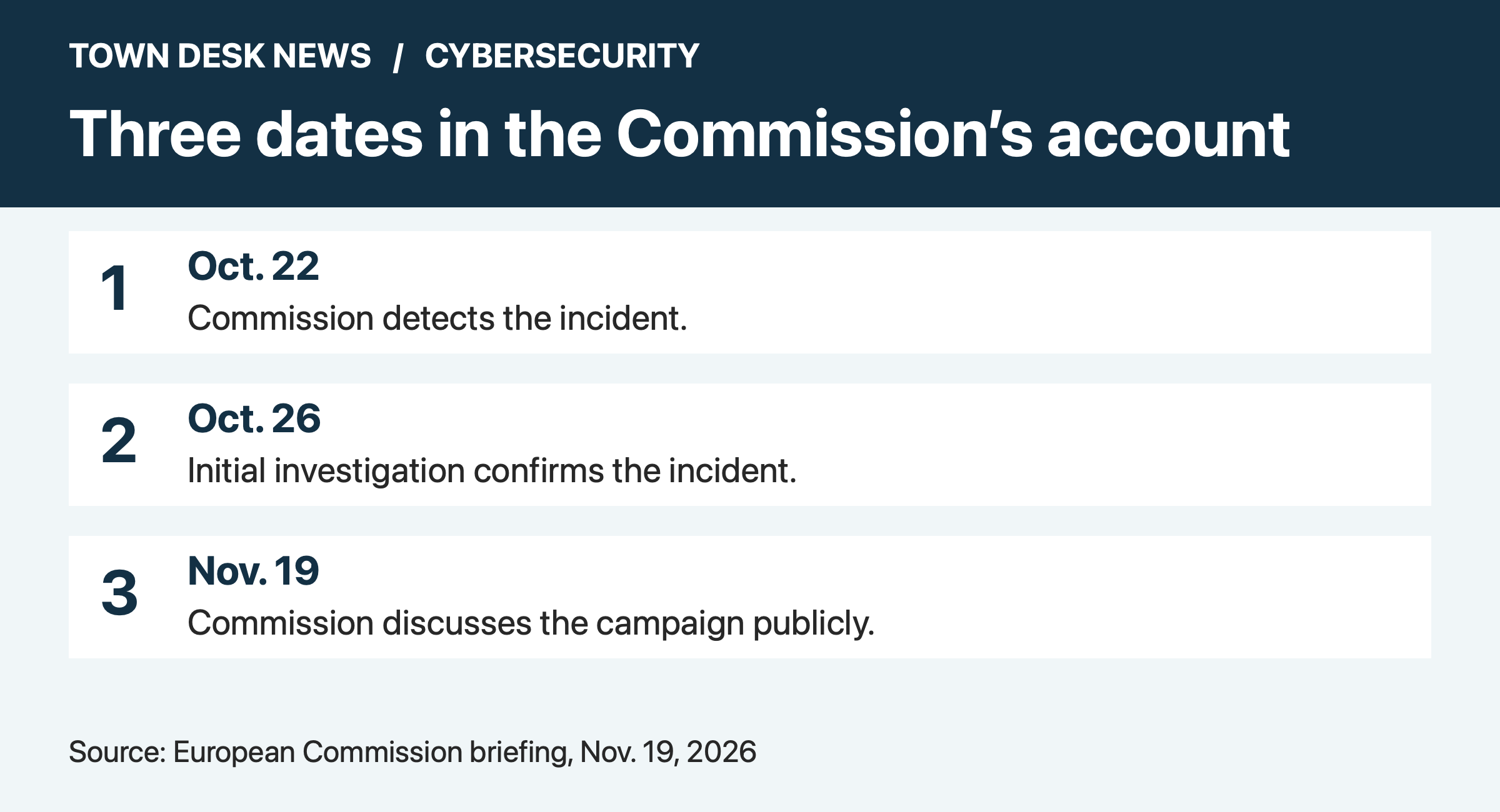
Three dates from the Commission’s briefing. The first is the date of detection, not necessarily when the campaign began. Town Desk News · Original Town Desk News explanatory graphic
What was taken offline, and what came back
The Commission described the shutdown as a preventive measure. Regnier said most of those applications had been restored, but the briefing did not name the applications still unavailable or set a date for the rest to return. A return to service answers one question: whether people can use a tool again. It does not, on its own, answer whether an attacker viewed or copied information while the tool was running.
The Commission said it was in touch with CERT-EU, the cybersecurity service for EU institutions, and the European Data Protection Supervisor. Regnier said the affected services had been informed. Asked about the lag between detection and public disclosure, he said the Commission had followed its usual information-sharing procedures and had not publicized the protective steps it was taking. That is the Commission's explanation, not an independent assessment of whether notice should have come sooner.
What officials confirmed about the data
At the briefing Regnier said investigators had found no evidence of a breach affecting Commission staff as a whole. That wording matters. It is not a finding that nobody's information was affected. Officials did not provide a total count of affected records, list exposed categories of information, or say which individuals might have been affected. The absence of a published total isn't a reason to guess at one.
The spokesperson also declined to assign responsibility and said he was not aware of a ransom demand. The answers leave open who carried out the campaign and what they intended. A question at the briefing mentioned a country's possible connection to a tool. That question isn't confirmation of the tool's maker, the attacker's location, or a government role. Reuters and AP reported the Commission's confirmation; both kept attribution and scope open.
One point of comparison is what was said publicly about the systems involved. Politico reported that tools used for staff functions, including translation and reimbursements, were affected. AP reported those claims and noted that the Commission did not confirm them. An application going offline as a precaution doesn't establish that the underlying records were accessed. With no system-by-system accounting from the Commission, the effects on data and service availability remain separate questions.
Why this isn't an explanation for other outages
The Commission's dates put detection in late October, several weeks before the announcement. They do not connect it to the unrelated financial and service incidents that made headlines in November. The Commission also published an account of a separate incident involving its shared public web infrastructure earlier in the year. The public record for that episode is not evidence about this campaign. When two stories use similar words, compare the organizations, dates and systems involved rather than assuming they describe the same event.
The next useful updates would say which applications are fully restored and whether investigators can identify affected people or information. A notice from the Commission or its privacy supervisor would be more useful on those points than a claim from an unnamed account. On Thursday, officials had confirmed an AI-assisted campaign and that they had brought most of the affected applications back. They were still investigating the scope.
Sources & reporting notes
- Primary source
European Commission: Nov. 19 briefing transcriptDetection, confirmation, application restoration and what is still under investigation.
- Independent reporting
AP: Brussels reportingDistinguishes reports about specific applications from the Commission’s confirmation.
- Independent reporting
Reuters: Commission confirms an AI-assisted campaignReporting on unresolved scope and the spokesperson’s account.
- Official statement
European Commission: March 2026 web infrastructure incidentSeparate incident, not part of Thursday’s disclosure.