The EU and Indonesia signed a trade deal. Now there’s a January deadline
Brussels and Jakarta signed two agreements after a decade of talks. Indonesia’s existing EU tariff preferences end Jan. 1, whether or not the new trade pact is ready.
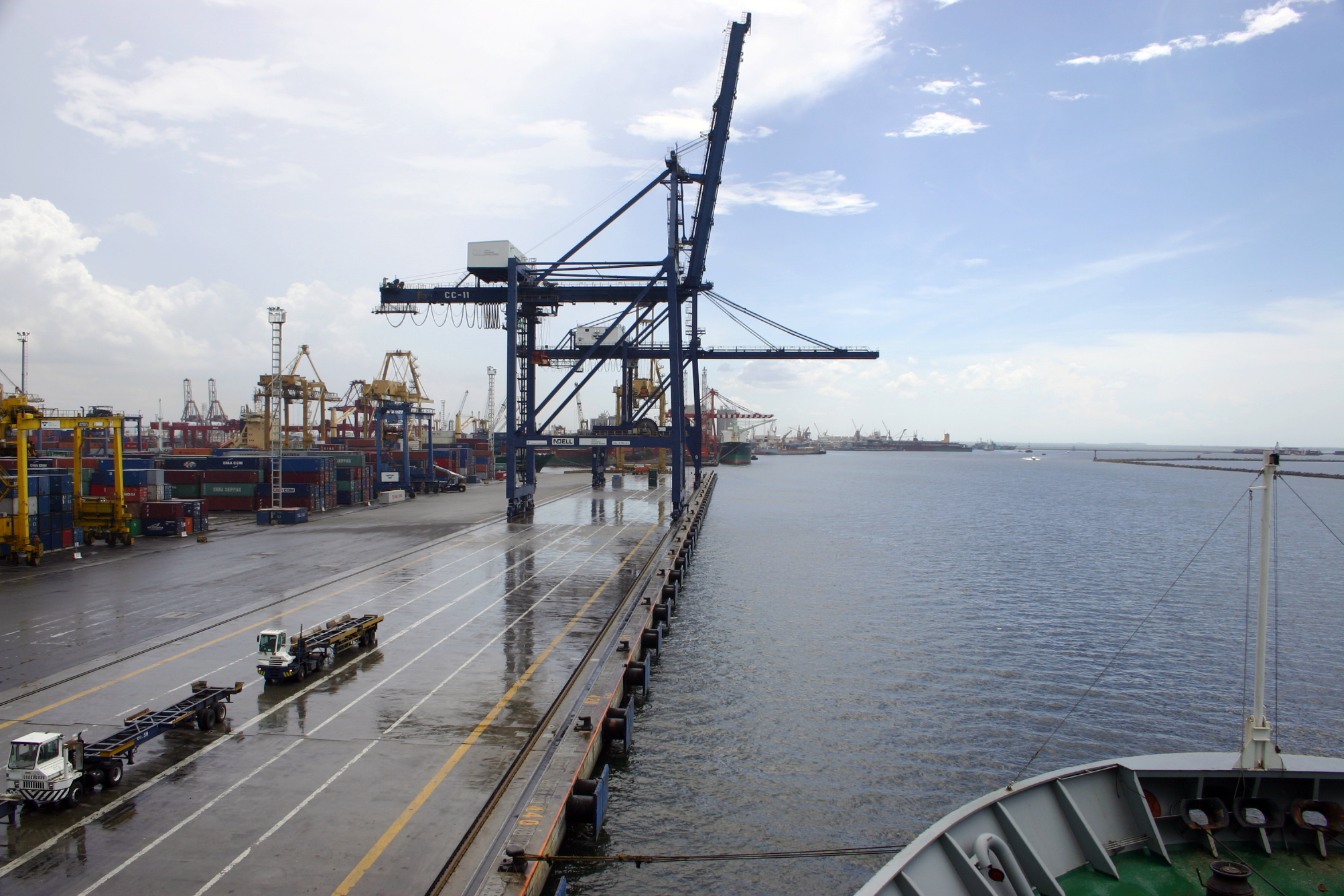
Containers at the Tanjung Priok terminal in Jakarta, Indonesia, in April 2006. Archive photograph. Niels Johannes / Wikimedia Commons · CC BY-SA 4.0

BRUSSELS — The European Union and Indonesia signed trade and investment agreements on Saturday, Nov. 21, after a negotiation that began more than a decade ago. For a shoe or clothing exporter in Indonesia, the next date to watch is Jan. 1. That is when a separate program that already gives some Indonesian goods lower tariffs in Europe is due to end.
The new trade pact does not switch on automatically that day. The Council of the European Union says both sides must finish their own procedures for provisional application and notify one another before it can begin. European Parliament consent is required before the Council can formally conclude the agreements. That makes signing, applying some terms provisionally, and bringing the agreements fully into force three distinct steps.
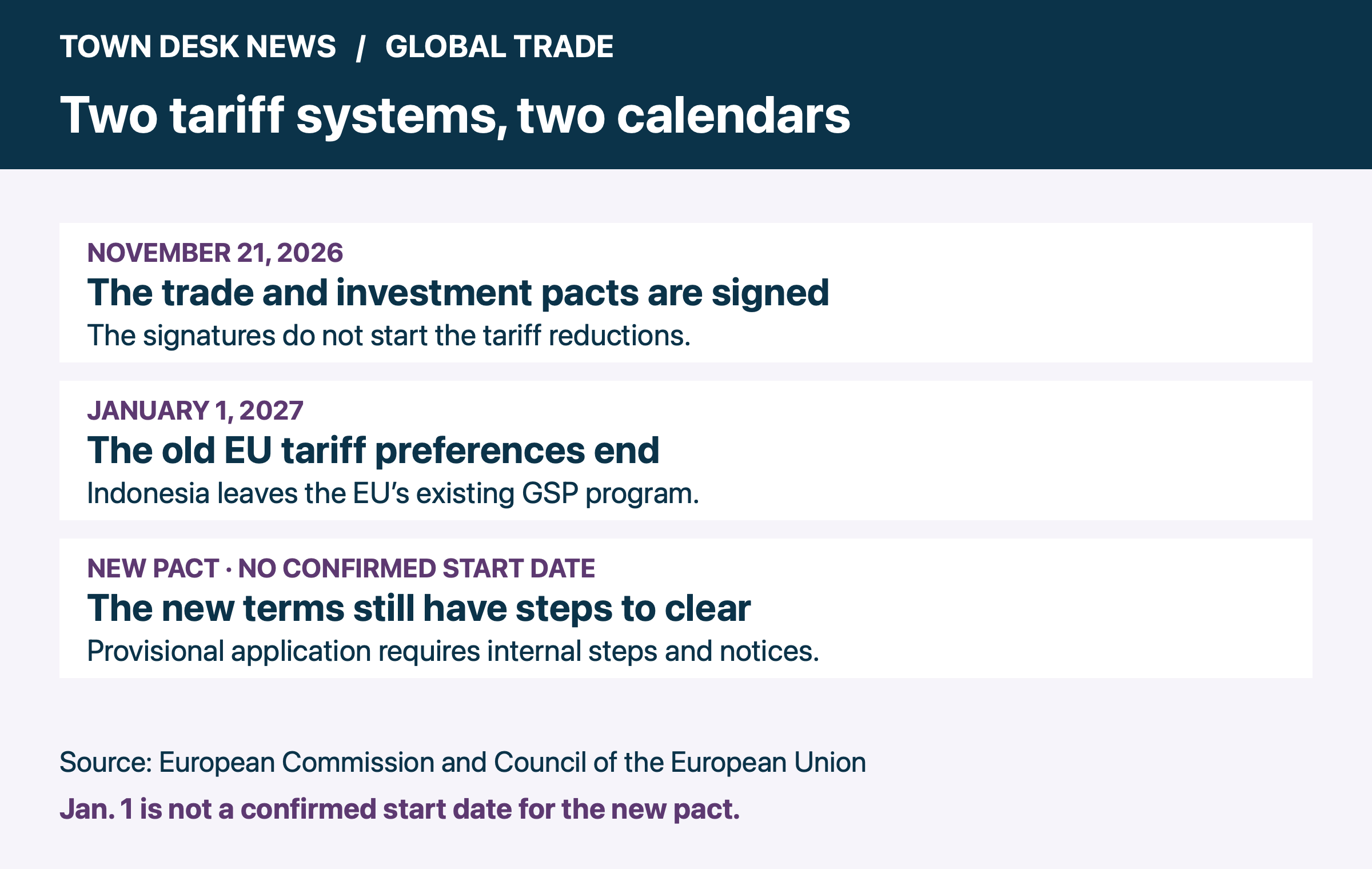
The existing EU preference program and the new trade agreement are on different calendars. Town Desk News · Original Town Desk News explanatory graphic
Indonesia’s Coordinating Ministry for Economic Affairs said before the signing that it was targeting full application of the trade pact in the first quarter of 2027, after the two sides finish their legal procedures. That is a target, not a start date. If the old preference ends before a new one is available, businesses should not assume that a shipment qualifies for the new rates just because the agreement has been signed.
What it could mean for a factory in Indonesia
Indonesia’s ministry says footwear, textiles and processed goods stand to gain from better access to the EU’s 27 member countries. It expects about 90 percent of EU tariff lines for Indonesian exports to be duty-free once the agreement is fully in force, with additional lines subject to phased cuts or quotas. That figure refers to categories of goods, not the share of every factory’s exports that would automatically get a zero rate.
For an exporter, the cut will also depend on where a product was made or substantially processed. The European Commission’s explanation says the deal uses rules of origin to keep tariff breaks from simply going to goods made in third countries. Businesses will be able to certify origin themselves under the rules, though customs authorities can still verify their claims. Knowing the tariff rate is only one part of knowing whether it applies.
Indonesia’s trade ministry had been discussing what implementation would involve before the signing. At an October meeting with the European business chamber in Jakarta, Trade Minister Budi Santoso pointed to simpler and more predictable trade procedures. For a business, that is a different question from whether a tariff falls. Even a shipment eligible for a lower duty still needs the right paperwork.
Some tariffs will take years to disappear
The European Commission says that under the agreement, tariffs on more than 98 percent of tariff lines would eventually be eliminated across the two sides. The word eventually matters. The Commission identifies Indonesian duties on some European motor vehicles as high as 50 percent, with most of those tariffs scheduled to disappear over five years. Some categories of European pharmaceuticals have a shorter timetable.
There are exceptions, too. The Council says the EU is not opening sensitive products such as rice, sugar and ethanol to tariff liberalization under this deal. Some other products have limited quotas. The agreement also covers areas that are not about import duties, including trade in services, some public contracts and protection for regional product names.
The investment agreement signed alongside the trade pact is a separate text. It sets protections for investments, including against unlawful expropriation, but preserves each side’s right to regulate for public health, climate and environmental goals. The Council still needs European Parliament consent before formally concluding it, too.
What to watch before January
The Council puts EU–Indonesia goods trade at €28.9 billion in 2025. That is a measure of the trade relationship before the new agreement, not a forecast for what the pact will deliver. The Commission’s record shows talks opened in July 2016 and wrapped up in September 2025, more than a year before Saturday’s signature.
The next thing to look for is an official notice with an application date. For companies budgeting their shipments, the useful questions are narrower than whether the deal is done: which tariff applies to the specific goods, what proof of origin customs will accept, and whether the new rate is in place when they need it.
Sources & reporting notes
- European Commission record
European Commission: signing record and agreement chronologyConfirms both agreements were signed November 21, 2026 and documents the start and conclusion of the talks.
- EU Council statement
Council of the EU: approval process, trade figures and Jan. 1 preference deadlineDistinguishes provisional application, formal conclusion and the date Indonesia leaves the EU preference program.
- Indonesian government statement (Indonesian)
Indonesia’s Coordinating Ministry for Economic Affairs: export priorities and implementation targetDescribes Indonesia’s first-quarter 2027 target, its export opportunities, and how reductions are scheduled.
- Indonesian government statement (Indonesian)
Indonesian Trade Ministry: Budi Santoso and European businesses on implementing the pactReports the October discussion in Jakarta about access, simpler procedures and the investment climate.
- European Commission technical explainer
European Commission: tariff schedules and rules of originExplains phased reductions, eligible goods, certification and verification.
- Independent reporting
Reuters: EU and Indonesia sign after a decade of negotiationsSeparately reports Saturday’s signing and the remaining European and Indonesian procedures.