Denmark voted on Greenland’s defense deal. What did it actually approve?
Both parliaments have signed off on the agreement with the U.S. A diplomatic notice still matters, and the vote does not change who governs Greenland.
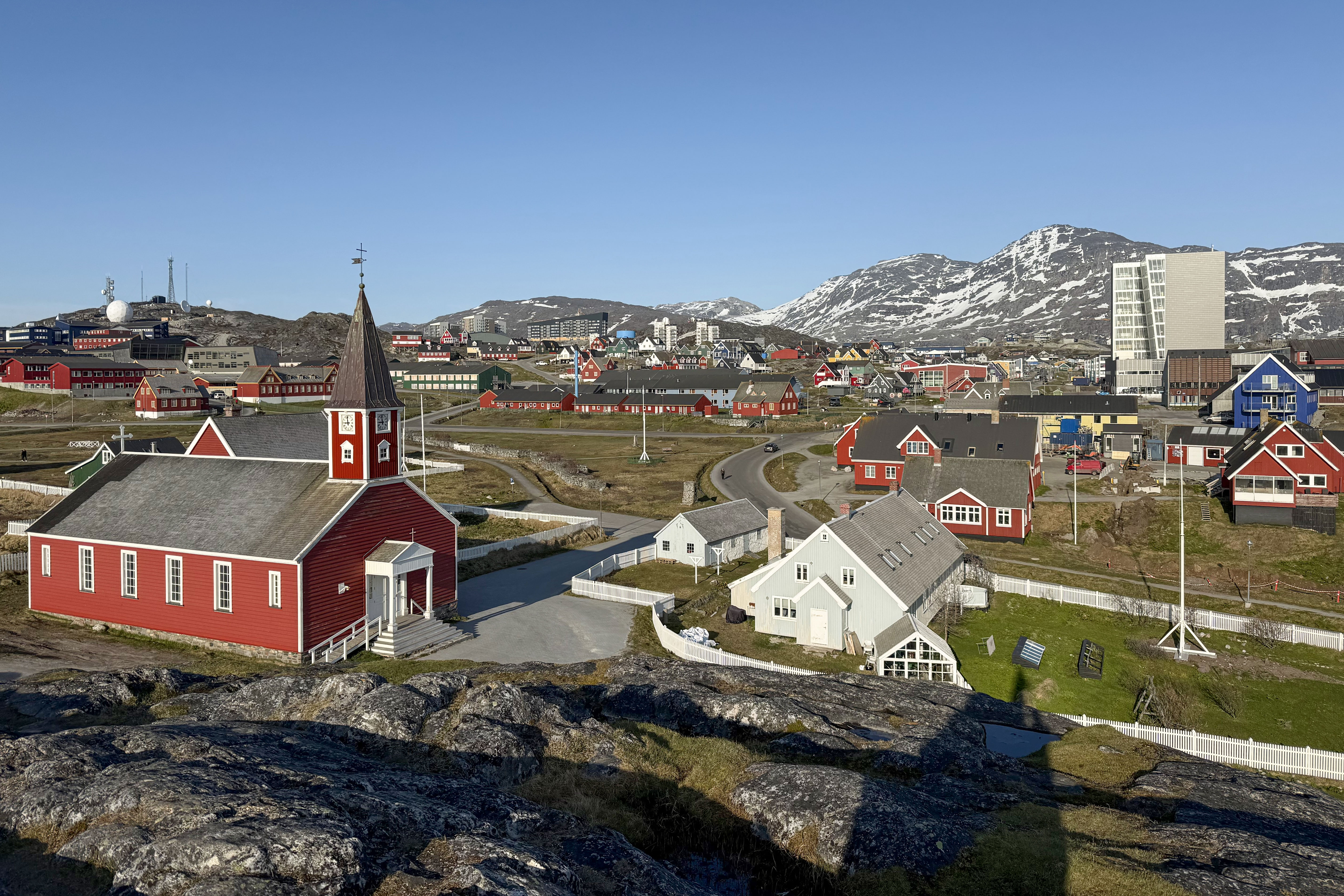
An archive view of Nuuk, Greenland, in June 2025. Greenland’s parliament approved the defense agreement before Denmark’s final vote. Quintin Soloviev / Wikimedia Commons · CC BY 4.0

Denmark’s Parliament approved a defense agreement with Greenland and the United States on Thursday, Nov. 19, clearing the last parliamentary hurdle in a process that started with a signing in New York in September. All 109 lawmakers who voted in the 179-seat Folketing backed it. No one voted against it. In Nuuk, Greenland’s parliament, Inatsisartut, had already approved the agreement on Nov. 3.
The difference between approval and implementation matters. The Danish vote gives the government consent to move ahead with the agreement. Article XII of the published text says the agreement enters into force on the date of a diplomatic note formally informing the United States that the required parliamentary procedures are complete. Greenland’s government described that notice as the next step after Thursday’s vote. The vote itself does not tell us that the note has been sent or that new activity on the island has begun.
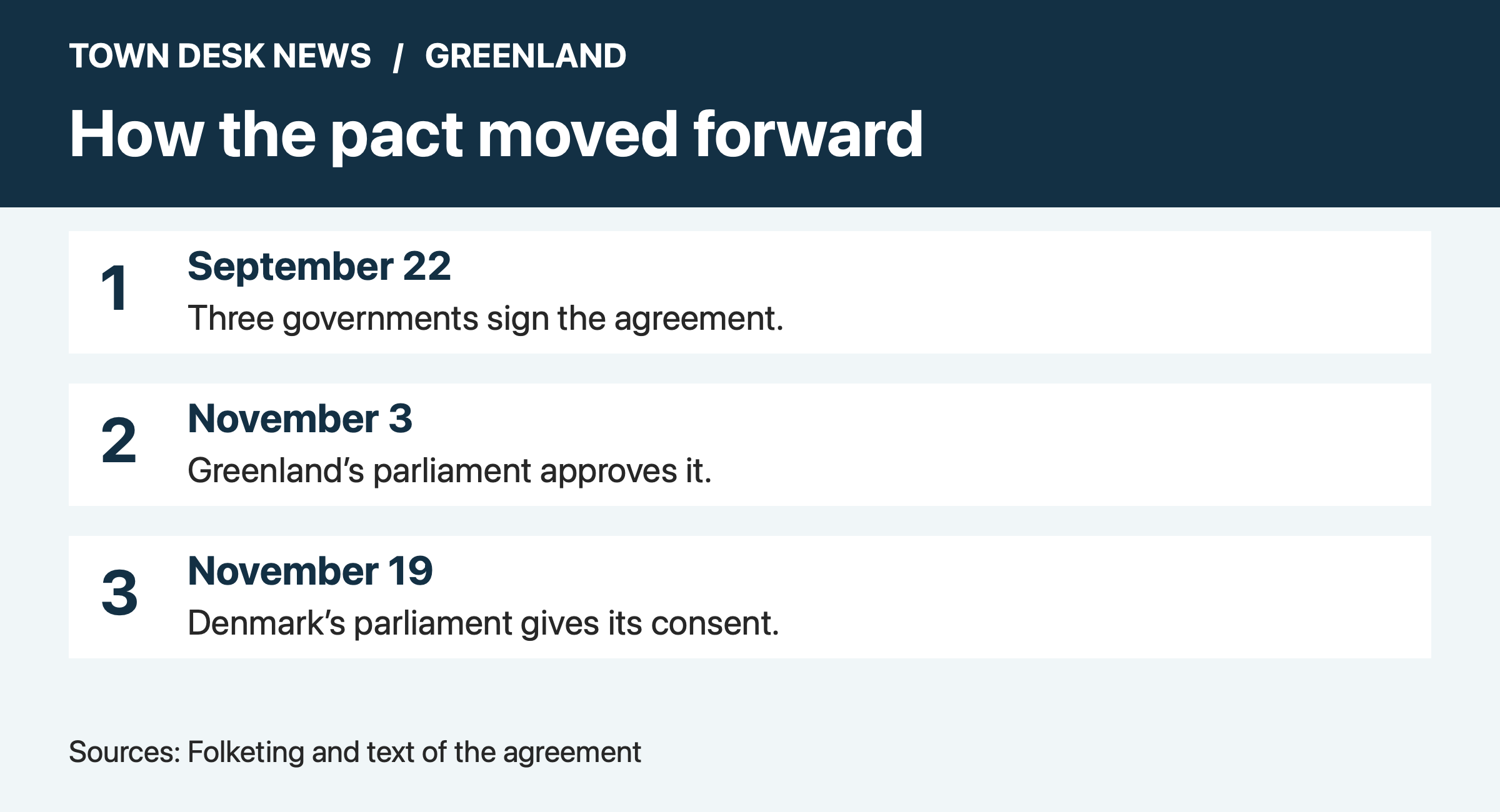
The September signing and two votes precede the diplomatic notice required for the agreement to take effect. Town Desk News · Original Town Desk News explanatory graphic
A new agreement, not a change of ownership
The United States already had a military presence in Greenland. This agreement updates an arrangement dating to 1951, made under the North Atlantic Treaty. Under the new text, the United States can expand defense access and the parties can establish additional defense areas. That is a framework for military activity. It is not a sale, annexation or transfer of Greenland, and it does not give Washington the power to govern the island.
The document itself addresses a very different future scenario: if Greenland exercises its right to self-determination and becomes independent, it sets out the defense obligations a future Greenlandic state would take on. That clause does not create independence or fix a timetable for it. It does show why describing the vote as a decision about which country owns Greenland gets the point wrong. What the parliaments approved was an agreement about defense and security.
There is also a difference between approving a place for possible defense use and opening a functioning base. Danish Defense Minister Jeppe Bruus told Reuters that work would now begin on plans for two possible U.S. military installations and on Greenlandic investment-screening legislation. Those are implementation steps. Thursday’s vote did not announce construction, a start date for operations or a finished investment law.
What mattered in Nuuk
Greenland’s government did not present Thursday’s result as a decision Copenhagen made on its own. In its Greenlandic-language statement, Premier Jens-Frederik Nielsen welcomed the vote and stressed that Greenland would continue to take part in decisions about its land and its future. Nielsen signed the agreement alongside Danish Prime Minister Mette Frederiksen and U.S. President Donald Trump on Sept. 22 in New York. Greenland’s parliament deliberated on the agreement before Denmark’s final vote.
That earlier vote was not the same kind of unanimous endorsement that the Danish tally might suggest. A Ritzau report from Nuuk counted 16 votes in favor, none against and seven blank ballots. Reporting before the vote, Greenlandic public broadcaster KNR described opposition party Naleraq’s concerns about terms for Greenlandic businesses and how strongly the agreement would hold the United States responsible for environmental cleanup. Those concerns signal what some lawmakers want watched, not a finding that any new facility has already caused damage.
KNR also reported that the Greenlandic parliamentary committee wanted Naalakkersuisut, Greenland’s government, to brief Inatsisartut at least annually on how implementation is going. The request gives people a concrete way to judge what follows the vote: not just whether officials announce new projects, but whether Greenlanders can find out how they are being decided and whether local concerns are being addressed.
What to look for next
The first public sign to look for is confirmation of the diplomatic note and its date. After that, proposed implementation measures and legislation should be read separately from the defense pact itself. For example, the agreement describes screening security risks in sensitive investments, but that is different from saying a new Greenlandic screening law has already passed. A proposal, a completed legal step and a change on the ground are three separate things.
The two approvals bring the September deal closer to taking effect. They also make the next questions clearer: when the notice is sent, what the governments actually propose, and how those choices are reported back to Greenland’s elected representatives. None of those answers can be read off Thursday’s vote tally alone.
Sources & reporting notes
- Danish primary source
Folketing: Danish parliamentary approvalConfirms the Nov. 19 consent and Nov. 3 approval in Greenland.
- Parliamentary record
Folketing: B 36 vote recordOfficial vote listing for the Danish approval.
- Greenlandic-language government statement
Naalakkersuisut: Greenland’s response to Denmark’s voteGreenland’s premier welcomes the decision and describes the next diplomatic step.
- Primary agreement text
White House: text of the September agreementArticle XII specifies the entry-into-force condition.
- Reporting from Nuuk
Ritzau: Greenland’s parliamentary voteReports 16 in favor, zero against and seven blank ballots.
- Greenlandic public broadcaster
KNR: committee review and the opposition’s concernsDescribes the recommendation for annual updates and disagreement about implementation.
- Independent reporting
Reuters: Danish vote and implementation plansReports the Danish vote and the defense minister’s description of the work ahead.