The penny law is signed. Here’s when a cash total can change.
The Common Cents Act ends production of pennies for circulation and allows, but does not require, certain cash rounding. Existing pennies and electronic payments are treated differently.
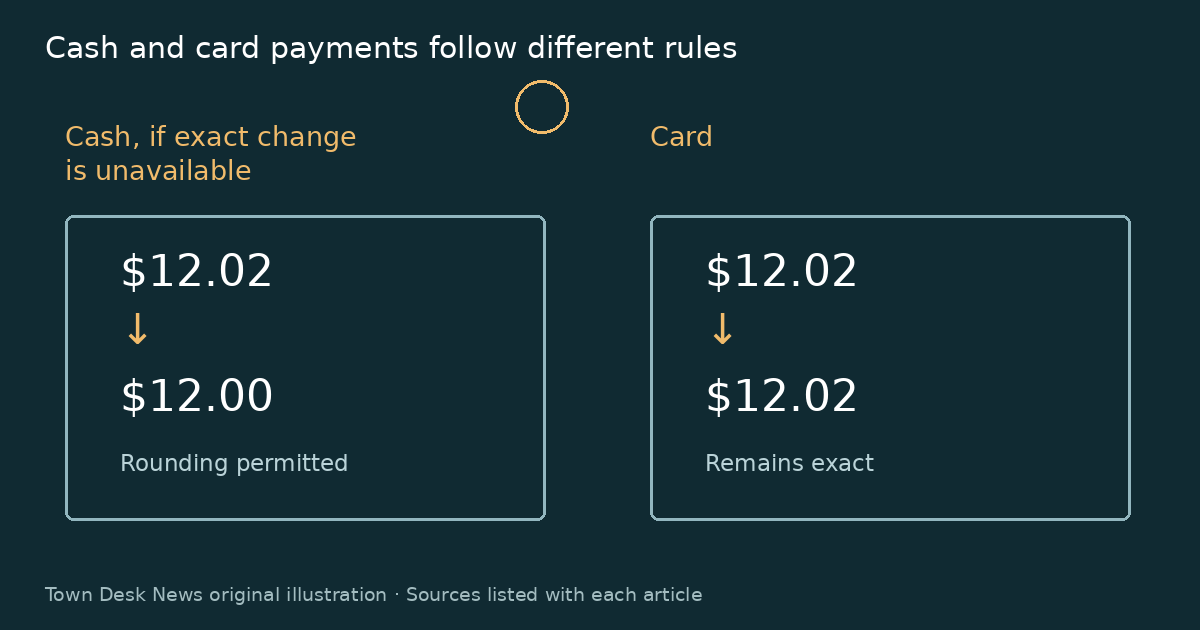
President Donald Trump signed the Common Cents Act on Friday, Nov. 20, making permanent the end of penny production for general circulation. The law also sets out when a cash payment or change can be rounded to a multiple of five cents. That does not make the pennies already in your drawer worthless, and it does not change the total on a credit-card or electronic payment.
The law, H.R. 10167, allows the Treasury to continue making and issuing pennies for sale to collectors. Pennies minted and issued before enactment remain legal tender. The new law changes the supply of new coins for everyday use, not the value of the ones that were already issued.
What changes at a cash register
Under the main cash-rounding rule, when exact change cannot be provided at the time of a transaction, the law permits rounding the final amount, including taxes, or the change due. It does not require rounding. The law does not make each item’s shelf price a multiple of five cents.
A cash total of $12.02 could round down to $12.00 when that rule applies. A total of $12.03 could round up to $12.05. The law makes an exception for an entire transaction of one or two cents: it may be rounded up to five cents. A separate provision permits rounding in the customer’s favor, such as rounding the amount down when the customer is the one paying.
If you see a cash-rounding sign, it is not an announcement that the government has abolished the value of pennies or ordered rounding on every purchase. The enrolled text does not impose a federal sign-posting requirement. The cash-rounding provisions exclude electronic transfers, checks, gift cards, credit cards and similar methods. A card payment is still processed to the cent under this law.
What took effect, and what comes later
The law’s rounding provisions and its protection for transactions that follow them do not have a separate delayed effective date in the enrolled text. The protection, sometimes called a safe harbor, covers compliance with the specified rounding provisions under federal, state and tribal laws and local requirements of state subdivisions. It does not excuse minimum-wage, overtime or paid-leave violations.
Treasury had issued nonbinding recommendations before Congress passed the law. Those recommendations are separate from the enacted text. The law also gives the Federal Reserve 90 days from enactment to publish a plan for handling penny orders and deposits and keeping coins moving through the distribution system. That is a deadline for a report, not a waiting period for the rounding rules or their legal protection. A later report is to assess whether the distribution plan is working.
Sources & reporting notes
- White House: signing on Nov. 20
Primary signing announcement.
- Congress’s enrolled H.R. 10167
Controlling text: sections 2–5. Operative cash-rounding permission controls over the long title’s shorthand require. No delayed effective-date or mandatory signage provision found in the reviewed full text.
- Treasury’s pre-law nonbinding penny FAQ
Pre-law recommendations, kept separate from enacted statutory protections. Recheck for later official guidance before release.
- House Financial Services summary
Supporting legislative summary; the enrolled text controls.
- CBS News: Nov. 20 signing report
Independent reporting on signing and cash-only application. Legal-tender status is not presented as a requirement that every retailer accept cash or particular coins.