Chase says outside vendors were hacked. What got exposed?
Chase says some customer contact details may have been accessed. Mastercard confirmed limited email exposure, and Visa says the incident it identified did not affect payment data.
A Chase branch in Brooklyn, New York, in May 2026. Archive photo; resized. Nielsoncaetanosalmeron / Wikimedia Commons · CC BY 4.0

JPMorgan Chase said Thursday that companies it hires to provide services were hit by a cyberattack. The bank believes the attackers got into marketing records that may include customer names and email addresses. The Associated Press reported that the leak involved thousands of Chase customers and appeared to include some phone numbers. Chase says the information involved did not include credit card data.
That distinction matters. A stolen card number can be used to attempt a charge. A name, email address or phone number can help someone pose as a bank and try to talk a customer into handing over credentials. Those are different risks. The exposure itself does not mean someone has accessed your bank account, and a real breach doesn’t make an unexpected message about it real.
What Mastercard and Visa are saying
Mastercard told The Register that an outside provider exposed email addresses for a limited group of people enrolled in one cardholder benefit program. Mastercard said its network still works, people can use their cards, and the provider’s exposure has been contained. The company did not identify the program or give a count in that statement.
Visa described an incident at a service provider in the Asia-Pacific region. It told The Register its own systems were not involved and that payment data, including card numbers, was not affected. That is not the same as confirming that Visa customers’ records were exposed. The companies’ statements don’t establish that one vendor served all three.
Why the Chase outage is separate
There’s another distinction for anyone who had trouble signing in earlier in the week. Chase attributed that service disruption to a software problem and said it was unrelated to the breach it disclosed Thursday. The timing alone doesn’t connect the two. Thursday’s announcement concerns information held outside the bank, not a breakdown in the systems people use to make payments.
How to check a message without trusting it
If an email, text or phone call asks you to confirm a card number, move money or read out a one-time code, stop and contact the bank yourself. The Federal Trade Commission recommends using a number or website you already know is real. For a card, that can be the number printed on the back. If you see a charge you don’t recognize, report it through your issuer’s official app or phone line.
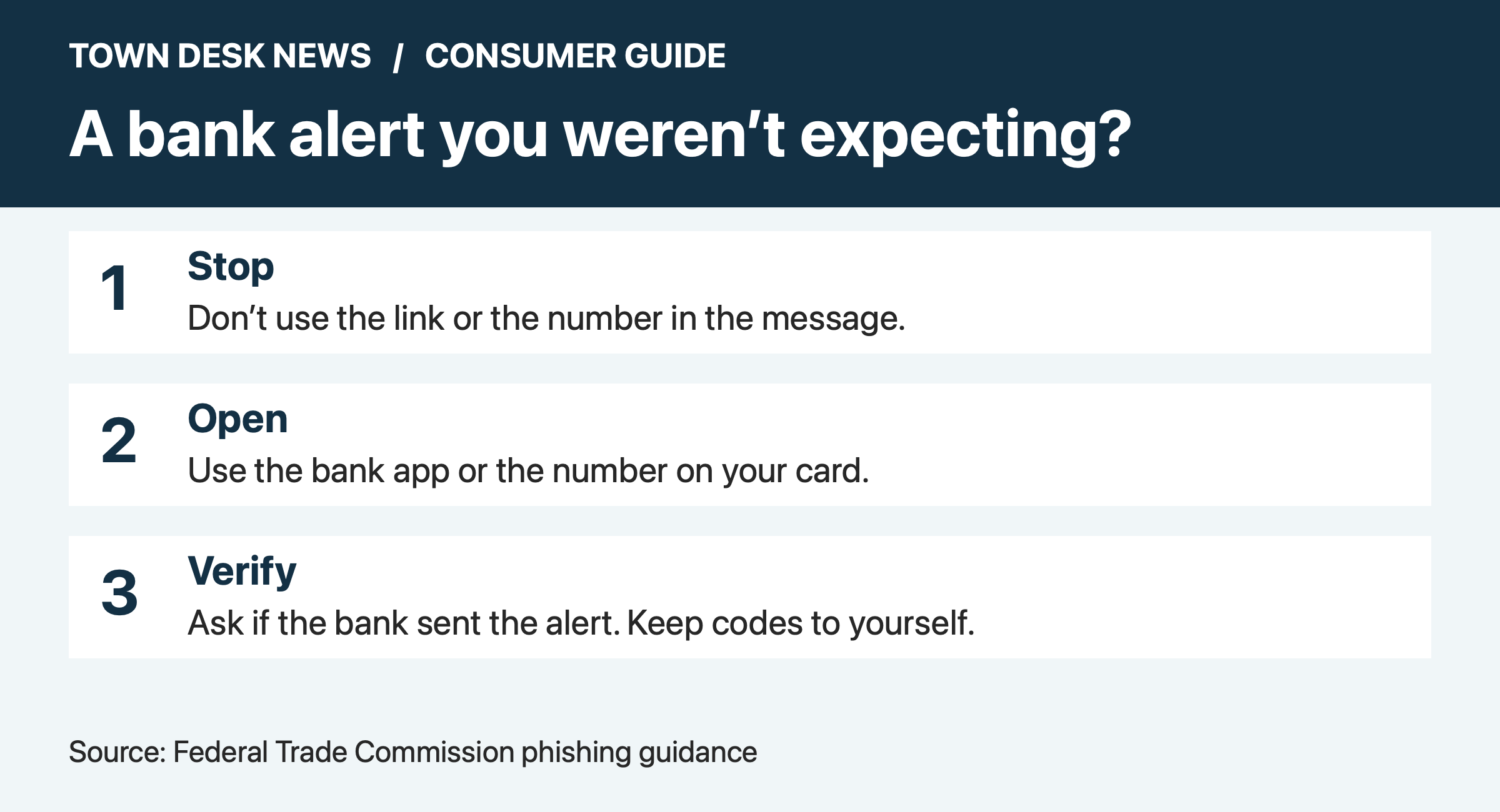
Verify a bank alert through a channel you already trust. Guidance: Federal Trade Commission. Town Desk News · Original Town Desk News explanatory graphic
Chase told ABC News it would contact affected customers where appropriate and offer help that may include free credit monitoring. If you receive a notice, verify it through the app or the number on your card before following a link. You can ask the issuer what information was involved and whether it recommends any change to the account or card. A personalized greeting or a familiar logo is not proof that the message came from your bank.
If you didn’t receive a notice, the public statements don’t tell you whether your own information was in the affected records. You don’t have to wait for a notice to look at your recent transactions in the official app. If you already clicked a suspicious link and entered a password or code, contact the bank through a known number right away and explain what you shared. A message demanding you transfer money to a supposedly safe account is another reason to hang up and make your own call.
The next useful disclosure would explain which customers are being notified and exactly what fields the vendor held. Those details matter more than a single headline number. A notice about an email address calls for vigilance about impersonation; an issuer saying that card numbers were compromised would change what affected customers should ask about, including whether replacement cards are being issued.
Developing story: As of Thursday evening, the companies had not named the providers in the statements reviewed for this report. We haven’t confirmed a combined count, a shared vendor or which customers received notices. We’ll update this story if the companies clarify who was affected or change their assessment of what information was exposed.
Sources & reporting notes
- Independent reporting
Associated Press: Chase contact information appears in a leakChase spokesperson and reported scope of the contact-data leak.
- Direct company statements
The Register: Visa and Mastercard respondVisa’s statement about the provider and Mastercard’s description of the affected benefit program.
- Independent reporting
ABC News: JPMorgan Chase statements on the attack and customer supportChase’s statements about the separate outage and support for affected customers.
- Official consumer guidance
Federal Trade Commission: How to recognize and avoid phishing scamsVerify unexpected messages through independently obtained contact information.