Where Will Camden County’s Clean-Water Tax Money Go?
One line on the ballot was tied to a much bigger plan for Camden County’s waterways.
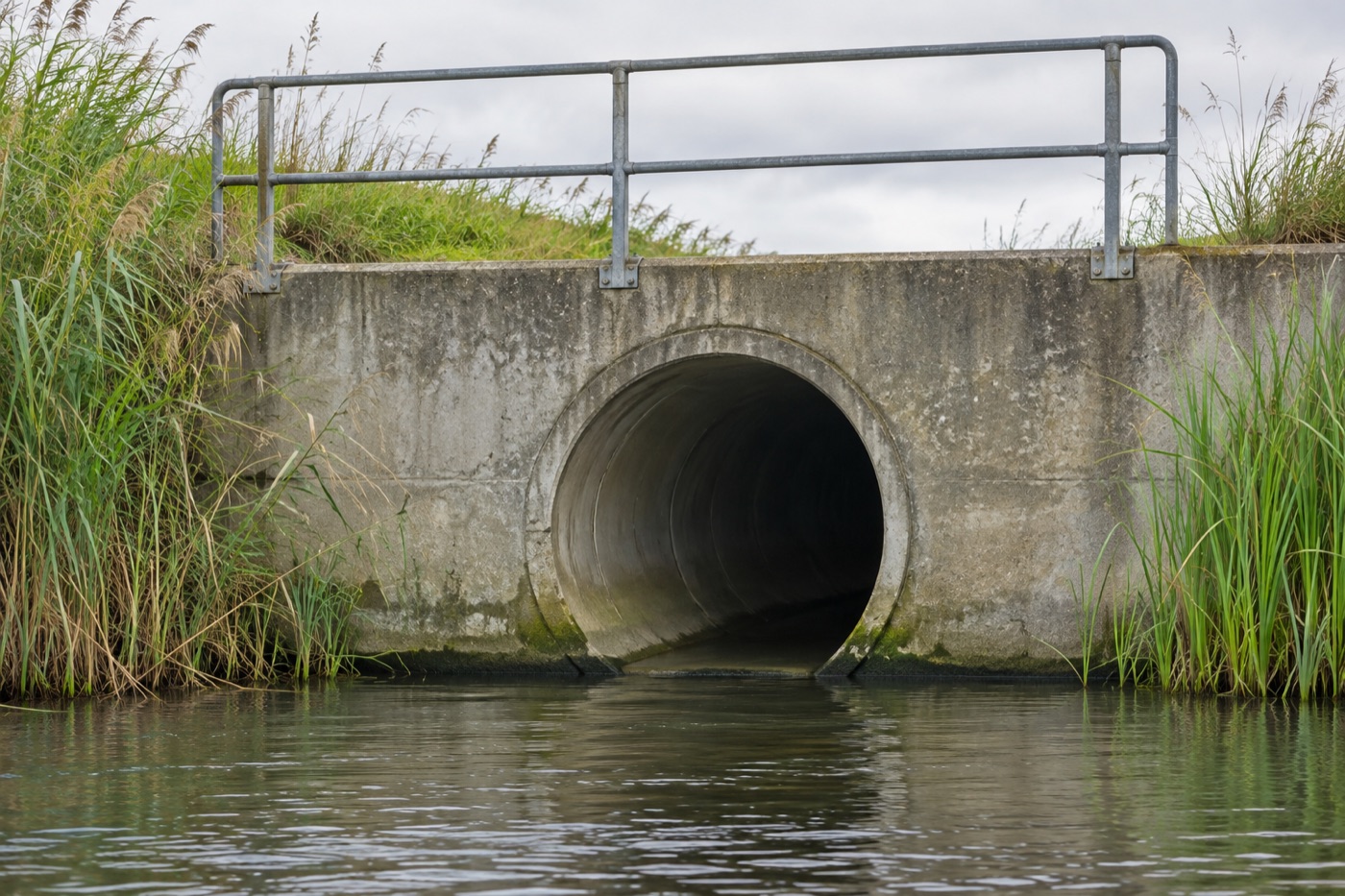
Camden County voters backed an increase in a dedicated property-tax levy, according to the county clerk’s official results for the Nov. 3 election. One problem the money could help address: an estimated 1 billion gallons of sewage mixed with stormwater overflow each year from combined sewers in Camden and Gloucester City, according to county officials cited by WHYY. The proposed county water plan calls for roughly $400 million in investment over a decade.
The county clerk’s official canvass shows 97,051 votes in favor of the county question and 25,734 against. That is about 79.0% of the 122,785 votes cast on the question, not 79% of everyone who cast a ballot in Camden County. The measure changes the local levy, but the result doesn’t set construction dates or establish that all the money for the broader plan is in place.
What it could cost on your tax bill
The ballot raised the annual Open Space Trust Fund levy from two cents to three cents for every $100 of equalized real-property value. Using the county’s examples, a home assessed at $220,000 would pay about $22 more per year toward this particular fund, going from $44 to $66. At $300,000 assessed, it would be $30 more, from $60 to $90. These are county examples, not individualized estimates; the levy is based on equalized real-property value, not a home’s listing price. Those figures apply to the trust-fund portion, not the whole tax bill.
At the county’s estimated tax base, the additional penny is projected to raise about $6 million a year, or $60 million over a decade. That is nowhere near the entire $400 million proposal. Camden County says it expects to use the local revenue to pursue state and federal grants, low-interest financing and other funding. The ballot allows spending on debt service related to the work and requires public disclosure of spending and an annual public audit. The county says the amount of outside funding will vary from project to project.
The biggest expense is underground
In a combined sewer, rain running off streets and wastewater from buildings share a pipe. When a storm puts more flow into the system than it can handle, the mixture can spill into waterways. That’s not the same as a billion gallons of undiluted sewage. Even so, the water that comes out is contaminated. WHYY reported that overflows can also contribute to flooding in streets and basements and that a local paddling group has had to cancel outings because of high bacteria levels.
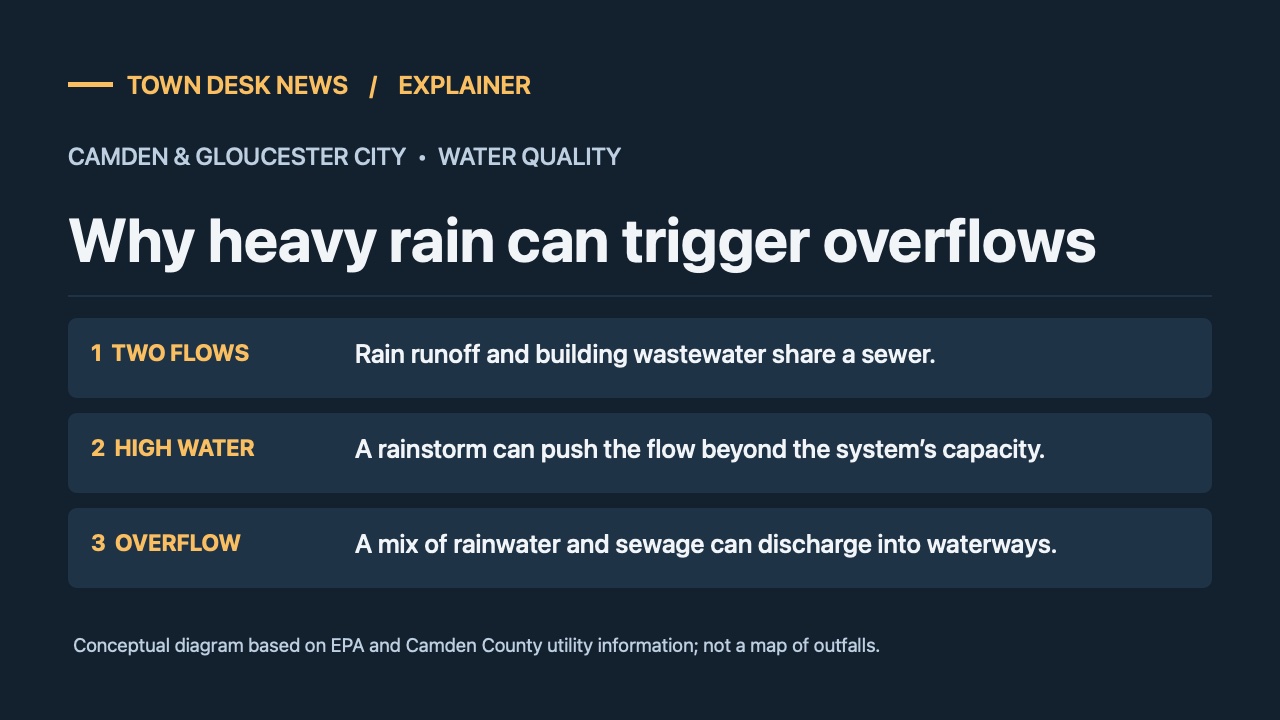
This graphic explains combined sewer overflows. It does not depict or locate a specific pipe or outfall. Town Desk News · Original Town Desk News graphic based on published facts; no third-party image.
The largest line item in the county’s vision is about $200 million to reduce those overflows. The county’s utility authority already has a joint long-term plan with Camden and Gloucester City addressing the combined system. One project described by WHYY would separate Pennsauken’s stormwater from its sanitary sewage, a change intended to reduce the combined load that currently runs through Camden. The point isn't to stop rain from getting into a river. It’s to keep that rain from carrying sewage with it.
The county’s other estimates include $75 million for dredging and contaminated sediment, $50 million for sewer rehabilitation, $50 million for restoring recreational lakes and $25 million for green infrastructure. The Cooper River watershed is central to early planning; Atco Lake, Evans Pond, Wallworth Lake and Audubon Lake are also named among current priorities. Those are categories and proposed priorities, not contract awards or construction start dates.
What the vote does not promise
For anyone wondering whether the vote means swimming at Cooper River Lake is around the corner, the county's own answer is cautious. Its water-quality page says it cannot guarantee that any specific lake, stream or pond will be safe to swim in within 10 years. The July vision document is a framework, not a final construction schedule. The first useful signs of progress will be named projects with a funding source and a timetable, followed by monitoring that shows whether the water is actually getting cleaner. Until monitoring says otherwise, the vote does not lift any existing swimming restrictions.
Sources & reporting notes
- Official county canvass
Camden County Clerk: Official general election results, PDF page 26Lists the county question at 97,051 yes and 25,734 no, out of 122,785 votes cast on the question.
- Sample ballot
Camden County: exact ballot question (Camden Ward 4 sample)Shows the change in the trust-fund levy and its spending, disclosure and audit terms.
- County initiative and FAQ
Camden County: Clean Water FutureGives project categories, tax and revenue examples, funding assumptions and the limits of the planning document.
- Utility planning documents
Camden County Municipal Utilities Authority: combined sewer overflow planLinks to the long-term plan involving Camden and Gloucester City.
- Independent reporting
WHYY: Camden County's sewer and water-quality voteReports county officials’ estimated overflow volume, effects on paddling and flooding, and planned separation of Pennsauken sewer flows.
See something we should correct?
Some or all of the images may have been generated by AI for illustration purposes only.