Ukraine’s allies met in Berlin. What would keep a ceasefire from falling apart?
The leaders called for winter truces and discussed how Ukraine could be protected after a broader agreement. Those are two different tests.
Updated Nov 21, 2026, 11:11 PM EST to add Zelenskyy’s Saturday remarks about a proposed further round of talks, as reported by Ukrinform and Suspilne.
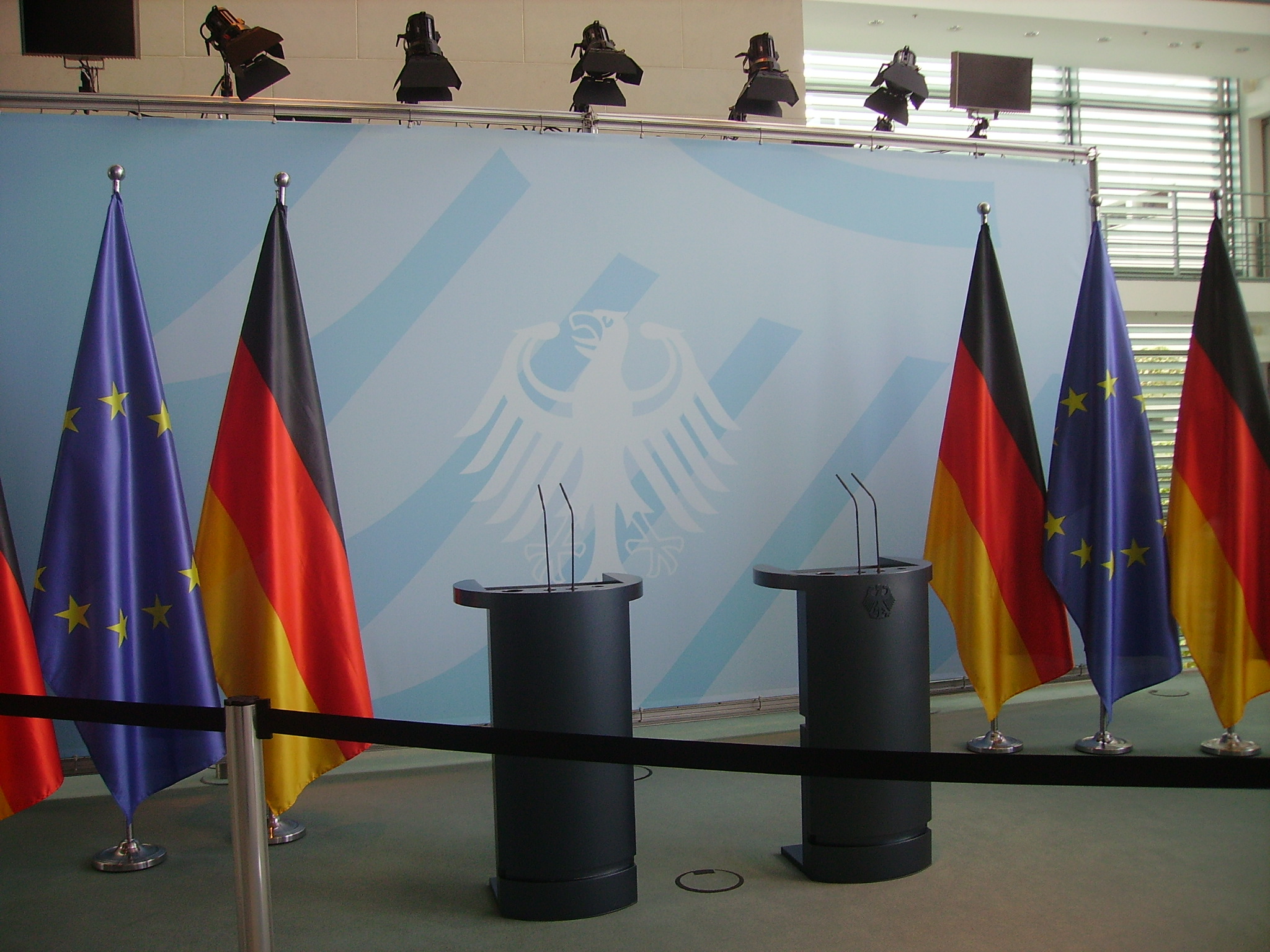
Germany’s Federal Chancellery in Berlin, archive photograph from Wikimedia Commons. Not a photograph of the summit. Zairon / Wikimedia Commons · CC0 1.0

The officials who gathered at Germany’s chancellery on Thursday did not leave with a ceasefire. They left with a clearer account of what Ukraine and its allies want before they would trust one. Germany, France, Britain and Ukraine issued a joint statement backing direct talks between Kyiv and Moscow, with U.S. and European participation. The statement sets out possibilities for protecting Ukraine after an agreement, but it doesn’t set a date for either the talks or an end to the fighting. The four governments called for a winter pause on attacks on energy infrastructure and a separate truce that would allow food shipments through the Black Sea. They were proposals, not arrangements in effect.
Speaking to reporters Saturday, Ukrainian President Volodymyr Zelenskyy said U.S. representatives in Berlin had proposed holding another round of talks before Christmas. He said Kyiv backed a speedy meeting and security advisers would work on an agenda. No date or lineup was announced, and the proposal is not a ceasefire or confirmation that Russia agreed to the next round. Ukrinform’s reporting; Suspilne’s reporting.
The timing explains some of the urgency. Earlier Thursday, President Donald Trump met Russia’s Vladimir Putin and China’s Xi Jinping in Shenzhen. The widely discussed three-way declaration was a separate document. It was not an agreement with Ukraine. In Berlin, Trump’s envoys Steve Witkoff and Jared Kushner joined the coalition’s discussion. The four leaders named on the Berlin statement are the leaders of Germany, France, Britain and Ukraine. Attendance by U.S. representatives is not the same thing as Washington issuing the statement in its own name.
Winter needs don’t wait for a deal
Ukraine’s president, Volodymyr Zelenskyy, used the news conference to put air defense at the top of his list. His office’s Ukrainian-language transcript also lists military aviation, longer-term European defense cooperation, diplomacy and security guarantees. The order matters. A commitment that takes effect after a ceasefire will not answer the immediate need to protect power supplies and nearby communities this winter.
Britain announced a £260 million package of support in connection with the summit. The announcement is a funding commitment, not evidence that the equipment has arrived. Zelenskyy also distinguished the short-term needs, including keeping electricity and other infrastructure working, from his longer-term preference for integration into the European Union and for the protection that NATO membership would provide. Neither membership was granted in Berlin.

Kyiv in 2017. Archive photo, resized; it does not show current conditions. Francisco Anzola / Wikimedia Commons · CC BY 2.0

Ukrinform, reporting from the post-summit news conference, highlighted those Ukrainian priorities. China’s state news coverage of the earlier Shenzhen meeting, by contrast, emphasized the three powers’ role in diplomacy and the joint declaration they discussed there. The disclosures aren’t interchangeable: one describes what Kyiv is asking its partners to do, while the other presents Beijing’s account of a separate meeting.
There is a difference between a pledge and an agreement
The Berlin statement treats the country’s own ability to defend itself as the foundation of future guarantees. It also describes possible outside support after hostilities end. Those plans raise practical questions: Who would take part? Who would verify violations? How would the guarantors respond if fighting resumed? The countries could keep discussing those questions even if direct peace talks remain stalled.
Speaking in Shenzhen earlier Thursday, Putin said Russia would not agree to pauses on strikes at sea or on energy infrastructure after the recent attack on the bridge linking Russia to occupied Crimea, Russian outlet Interfax and Reuters reported. That was his public position before the Berlin statement. In Berlin, U.S. envoy Jared Kushner told reporters he believed Russia was comfortable with an arrangement resembling NATO-style guarantees, AP reported. That is an envoy’s description, not Russia agreeing to either limited truce or signing a guarantee.
The other issue is who gets a seat in future talks. Ukraine’s European allies want their own role, not just a briefing afterward. Britain’s Andy Burnham stressed that discussions about Ukraine should include Ukraine and that decisions about European security should include European participants. The joint statement backs that approach. It does not say that a date, place or list of participants for direct negotiations has been finalized. In a later readout, Zelenskyy’s office said he had discussed how to coordinate the next steps with U.S. envoys and European national security advisers. It did not announce a date for direct talks with Moscow.
A useful way to follow the next development is to ask what has actually changed. An announcement of winter support can be meaningful even with fighting continuing. An agreed meeting date would change the diplomatic timetable. A ceasefire would require a separate agreement, and provisions on enforcing it would tell readers whether the paper has a practical plan behind it. Berlin clarified the coalition’s aims. It did not turn them into terms accepted by both sides.
Sources & reporting notes
- Joint statement
Ukraine’s presidency: Joint Berlin statementWinter energy and sea proposals, participation, and conditions of guarantees.
- Official Ukrainian transcript
President Zelenskyy’s post-summit statementKyiv’s priorities and direct talks.
- Official statement
Ukrainian presidency: Late meeting with U.S. envoys and European advisersAdditional coordination after the larger meeting.
- Original Russian reporting
Interfax: Putin’s Shenzhen press conferencePutin’s public response to proposed pauses.
- Independent reporting
Reuters: Putin’s position on the Black Sea and energy proposalsCorroborates his Shenzhen remarks.
- Government announcement
Britain’s announcement of £260 million for UkraineBritish commitment, not deliveries.
- Independent reporting
AP: Kushner’s public remarks after the Berlin talksEnvoy’s assessment of Russian position.
- Saturday update reporting
Ukrinform: Zelenskyy’s Saturday remarks to reportersZelenskyy’s attributed proposal and preparatory work, not an agreed meeting or ceasefire.
- Saturday update reporting
Suspilne: proposed timing and preparatory consultationsZelenskyy’s attributed proposal and preparatory work, not an agreed meeting or ceasefire.