The South Jersey test site behind America’s first digital air traffic towers
Controllers in Florida and Alaska can now watch the airfield on screens. The FAA did most of the approved system’s testing near Atlantic City.
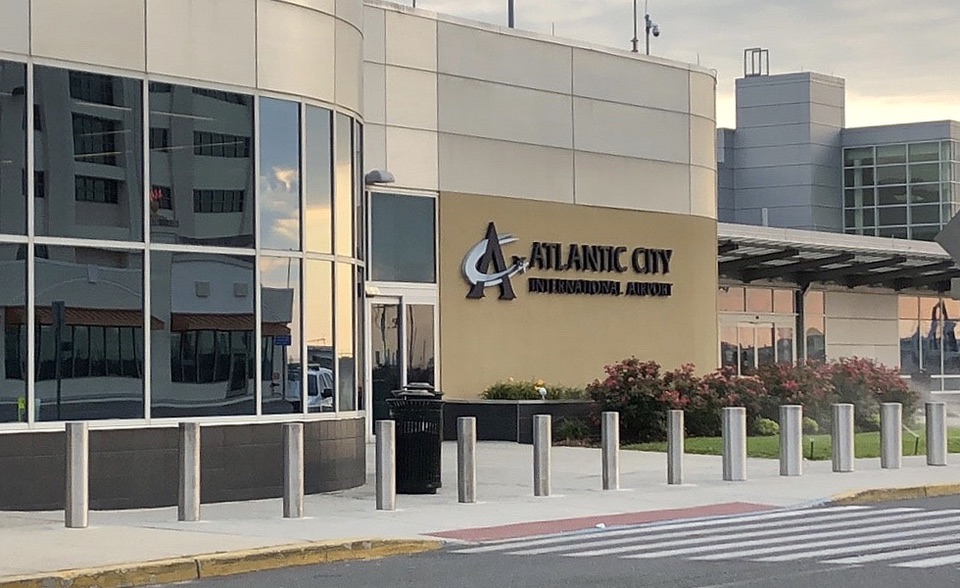
The Atlantic City International Airport entrance in a 2024 file photo. This is not the FAA’s digital-tower test facility. McJant / Wikimedia Commons · CC0 1.0 · Edited

A controller looking for a plane on a runway normally has a window to look through. At two U.S. airports, cameras and screens can now provide that view instead. In a Nov. 6 announcement, the Federal Aviation Administration said the country’s first operational digital towers were at Bartow Executive Airport in Florida and Kenai Municipal Airport in Alaska. Most of the testing on the approved system happened in South Jersey, at the FAA’s William J. Hughes Technical Center near Atlantic City.
It’s a testing story here and an operating story there. The FAA says a prototype was installed at Atlantic City International Airport in 2022 for further evaluation. The Nov. 6 announcement does not name Atlantic City as one of the first operating sites or say that the prototype replaced its operating tower. The agency’s timeline also says Bartow began operating in September: Nov. 6 is the date of the announcement about the two sites, not necessarily their first day of operation.
What replaces the view through a window
In a digital tower, cameras and other sensors collect an airfield view, and controllers see a live panorama on a wall of displays. The picture covers runways, taxiways and the surrounding airspace. The system can also carry ambient sound from the airfield into the control room. The design makes it possible for controllers to see the field without being in a room raised high enough to look directly down on the runway.
The screen does not take over the controller’s judgment or run the airfield by itself. Human controllers still monitor and direct traffic. The FAA describes infrared imaging, low-light enhancement and aircraft labels among the tools digital towers can provide. Some of those features offer a way to supplement what a camera records. But for routine airport use, the basic picture has to arrive fast enough for controllers to act on what is happening outside.
What South Jersey helped test
That is one of the things the South Jersey evaluations measured. Evaluators timed the delay between an event on the airfield and its appearance on the display. They also looked at how controllers responded to equipment failures, the layout of their workstations and the training materials they would use. The FAA describes the approval as more than a check that the screens turn on: the system had to meet its standards for how the airfield is presented and how well the setup works under normal and failure conditions.
Flight research also drew on nearby aviation groups. The FAA names Big Sky Aviation in Millville and Ascent Aero Academy in Lumberton, along with Fly Legacy Aviation in Northeast Philadelphia, as partners that helped provide aircraft or operational support. The research page describes crews using airplanes and rotorcraft to run scenarios including taxi movements and arriving aircraft. Some work extended to multiple-runway research, but that should not be confused with the narrower approval announced for the selected system.
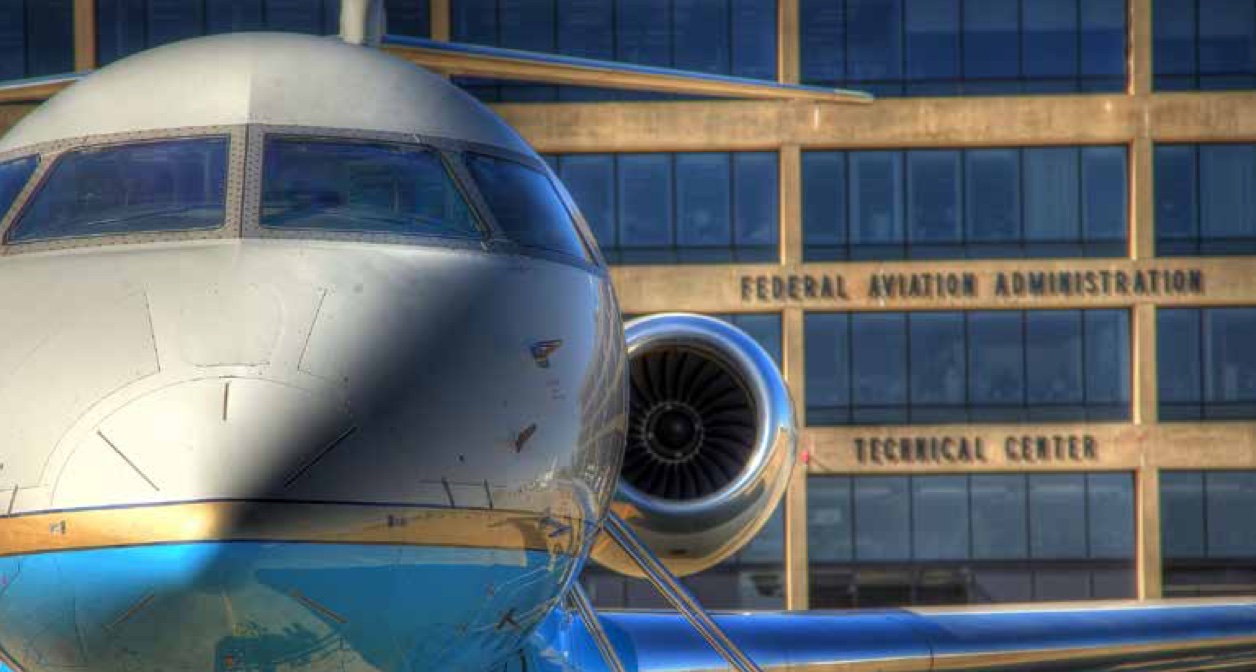
An FAA Bombardier Global 5000 research aircraft at the William J. Hughes Technical Center in an archival agency photo published in 2019. The photo does not show the digital tower tests or an aircraft used in those tests. Federal Aviation Administration · U.S. federal government work; public domain in the United States. FAA FY 2019 Performance and Accountability Report, printed p. 7, expressly credits the image “FAA photo.” · Edited
The FAA says the initial design approval applies to sponsor-owned federal contract tower airports with a single runway and Class D airspace. Its Nov. 6 announcement also names five airports that do not currently have towers and are next in line: Winter Haven and Venice in Florida, Montgomery County Airpark in Maryland, Johnston Regional in North Carolina and Durango-La Plata County in Colorado. The agency presents cameras and displays as an option that could make tower service practical at smaller airports where constructing a conventional tower costs more.
Atlantic City is getting a different upgrade, too
Atlantic City International does appear on another FAA list. On Nov. 5 it was named among the first facilities to receive the Enterprise Information Display System, or E-IDS. Think of that as an information board, not as a window: it gathers things like weather information, pilot reports, operating conditions and advisories. It is part of a national effort to move away from some systems dating back to the floppy-disk era. That announcement does not say when any particular Atlantic City device was retired, or declare a replacement of the airport’s tower.
Sources & reporting notes
- Official announcement
FAA: first operational deployments, Nov. 6Confirms Florida and Alaska sites, the South Jersey test center and the next five airports.
- Technical overview
FAA: digital towers overview and approval timelineConfirms the prototype, tests, Bartow milestone and the design approval’s limited scope.
- Research summary
FAA: flight research and partnersIdentifies flight scenarios and the Millville, Lumberton and Philadelphia partners.
- Official announcement
FAA: separate information-display modernization, Nov. 5Lists Atlantic City International as an early E-IDS facility and describes what the separate display system does.