Japan and Southeast Asia agreed on a supply-chain plan. The next test is whether goods can move differently
The Nov. 17 Manila statement calls for cooperation on electricity links, food security and critical minerals, and a review of an existing trade agreement. It does not change tariffs today.
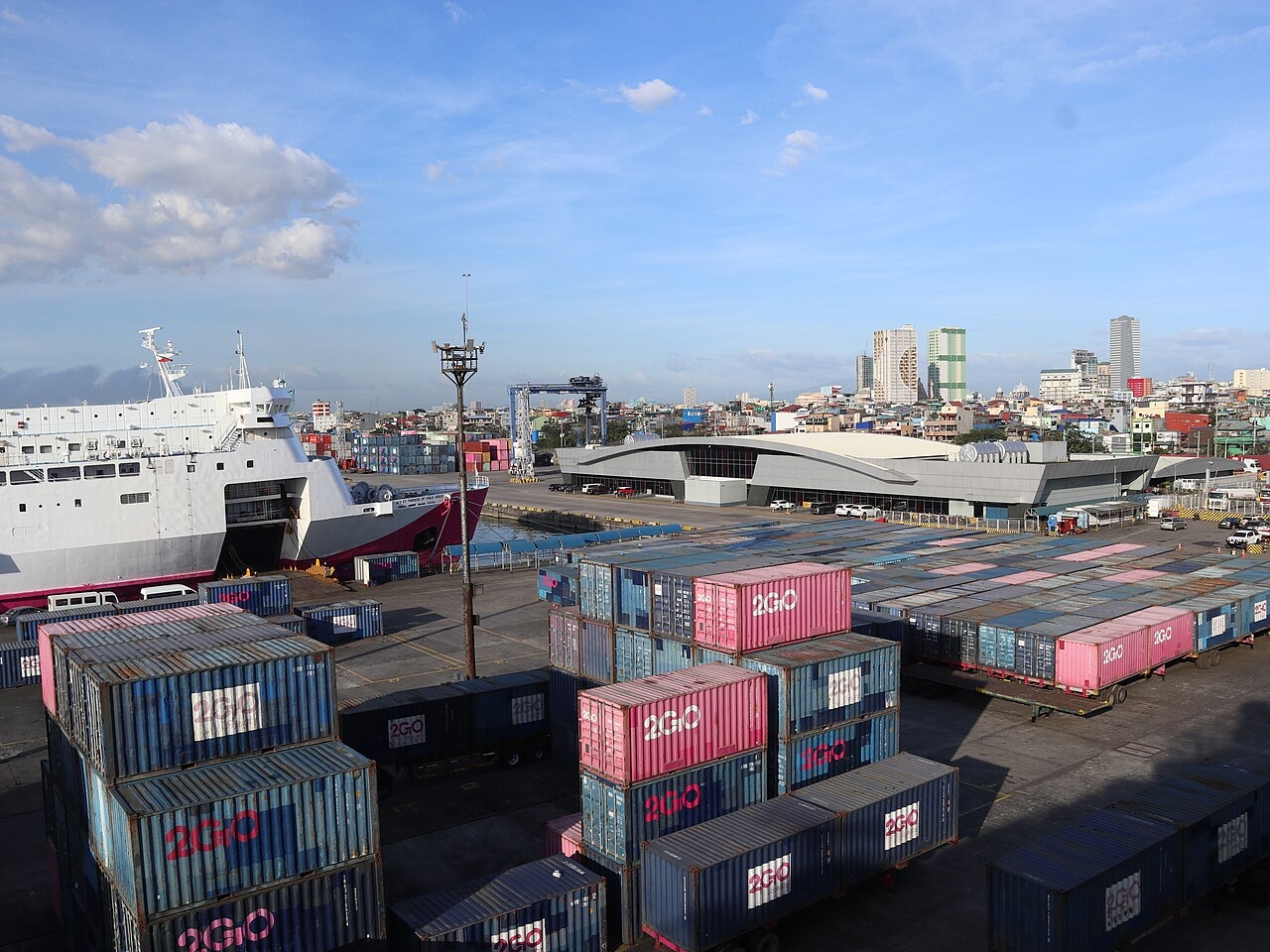
Shipping containers at Manila North Harbor in 2023. This file photo illustrates regional trade and does not depict the ASEAN–Japan summit. Patrickroque01 / Wikimedia Commons · CC BY-SA 4.0 · Edited

Japan and the Association of Southeast Asian Nations adopted a joint statement in Manila Nov. 17 on keeping power, food and industrial materials available during disruptions. One practical piece is a joint feasibility study of how their existing economic partnership agreement might be updated. The statement identifies the problems governments want to work on. It does not establish a new tariff schedule, pick the sites of new projects or guarantee a change in the price of the goods they cover.
The port and the power grid are part of the same story
The statement calls for safe and continuous transit in the Strait of Hormuz and stresses the importance of working markets for energy and essential goods. That passage is a reminder that the location of a disruption can be far from the factories, farms or homes that feel its effects. Calling for transit to be restored is a diplomatic position. The signatories’ words are not a navigation notice that a route has become safe or that shipments have resumed.
Closer to home, Japan and ASEAN support work on the ASEAN Power Grid, including potential investment in transmission and links across national borders. Such links would give participating systems more ways to move electricity rather than treating every grid as an island. But the Manila document does not announce a new line in service. A cross-border link needs a defined project, infrastructure on the ground and arrangements for who supplies and pays for the power.
Why minerals make the list
The agreement also focuses on supplies manufacturers cannot quickly replace. It lists critical minerals among products for which the participants want more diverse and reliable supply chains. The joint text identifies cooperation involving electronic waste, end-of-life vehicles and critical minerals, as well as work with development banks. Recovering material from products already in use is distinct from opening a new mine. Both kinds of activity can matter if manufacturers want more than one place to obtain materials, but the document does not give a production forecast.
Food gets its own paragraph in the declaration. The governments call for cooperation on agricultural resilience, with examples such as satellite data and crop monitoring. Better information about growing conditions could help officials or producers respond to problems earlier. It isn’t a promise that a particular harvest will improve. For readers following the cost of food, the difference between a monitoring project and a commitment to deliver more goods matters.
What this means for the existing trade agreement
Japan and ASEAN already have a Comprehensive Economic Partnership Agreement. The Manila statement welcomes starting a review and launching a joint feasibility study to explore upgrades. It names possible areas: supply-chain connectivity, stable supplies of minerals and energy, and digital and green economic activity. A review can identify which rules would need changing. It is not the changed rule and does not tell an importer to use a new form at customs.
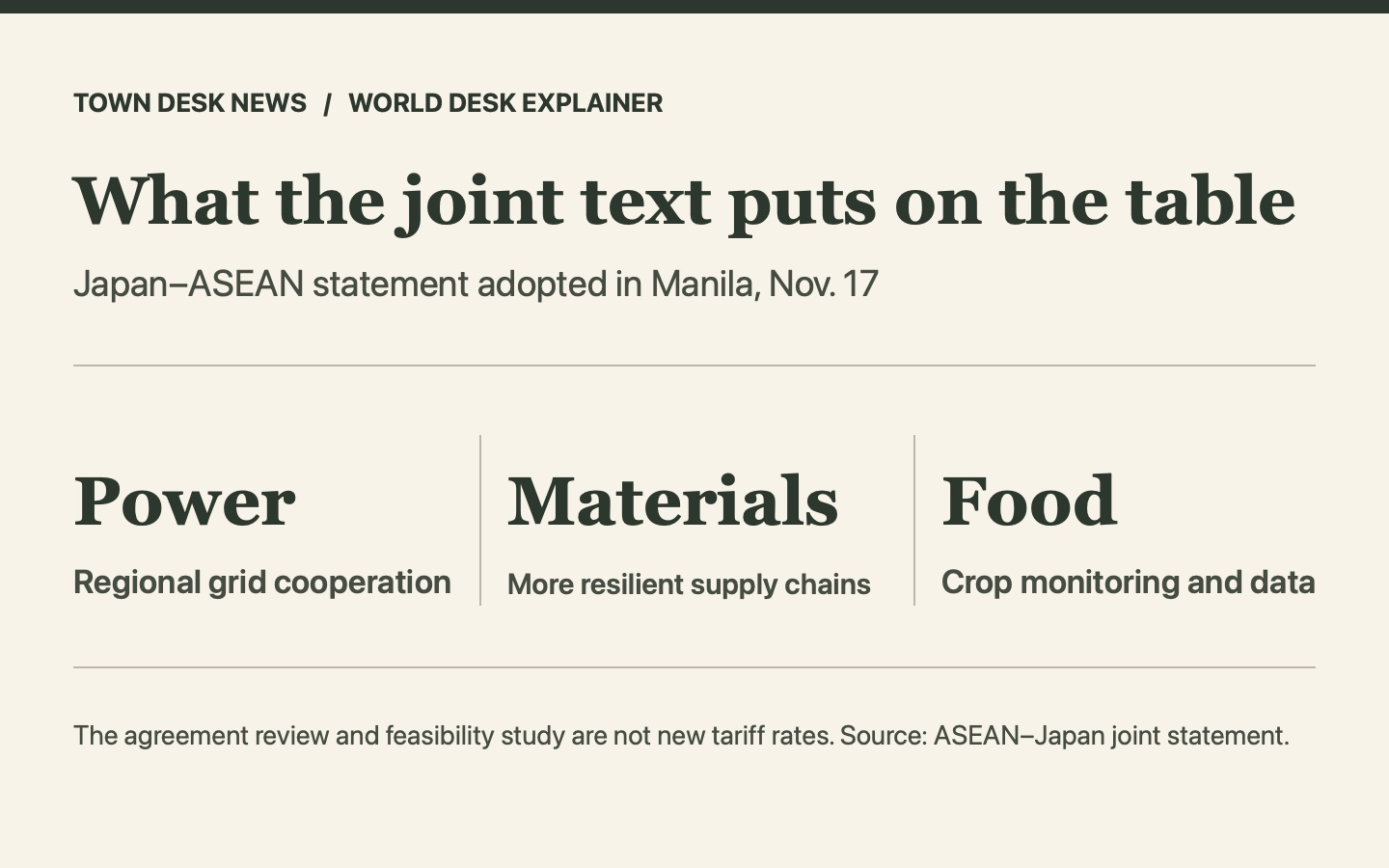
Three areas of work in the Manila statement. Town Desk News · Original Town Desk News graphic; based on reporting and linked source.
The declaration also says Japan plans an economic security leadership program for 2027 that would support exchanging information and building expertise. That is a more specific milestone than a broad promise of cooperation, though the wider program described in Manila is still made up of separate projects and policy tracks. An importer trying to cut delays, a utility considering a regional power connection and a manufacturer looking for materials may each need to watch for different next steps.
The milestones that would show which promises are moving
The indicators that matter now are concrete. Does the feasibility study make recommendations, and do governments take them up? Does a power link receive financing and a construction timeline? Do mineral programs name facilities or supply agreements? Those developments would let readers tell the difference between public commitments and changes that companies or communities can plan around.
This was a meeting between Japan and ASEAN members in Manila, with its own signed-off policy statement. It is separate from the wider APEC gathering in Shenzhen. A reader tracking the region’s economies should treat each meeting’s documents and follow-through as separate evidence, even when officials use similar language about trade and resilience.
Sources & reporting notes
- Primary
ASEAN and Japan: Full joint statement on economic resilienceOperative cooperation language on energy, food, critical minerals, and the existing trade agreement.
- Primary
ASEAN Secretariat: Nov. 17 Manila summit summaryConfirms adoption of the statement and the meeting location and date.
- Primary
Japan Foreign Ministry: 29th ASEAN–Japan SummitJapan’s official meeting summary and further information on parallel initiatives.