A new pitch in Abidjan: Can more of the work stay where the minerals are mined?
Côte d’Ivoire introduced investor meetings at its mining and energy exhibition. Botswana is pushing for more materials to be processed closer to the mines.
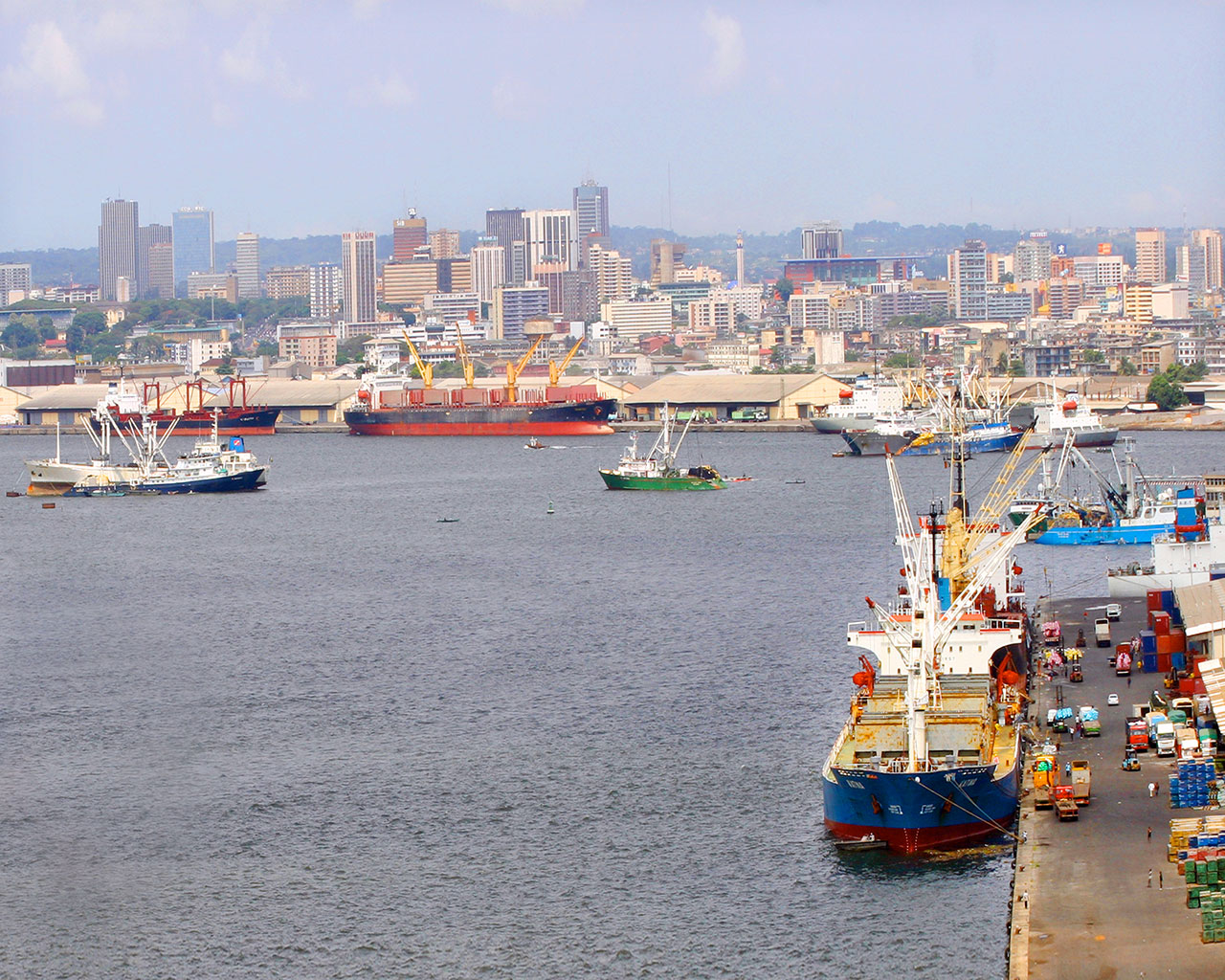
An archival view of the port in Abidjan, not the exhibition venue. Eric browin / Wikimedia Commons · CC BY-SA 4.0

A proposal can leave a mining conference with a long list of new contacts and still have no money to build. At an exhibition in Abidjan this week, Côte d’Ivoire is trying to shorten the distance between those two things. Its mining and energy minister announced a way to bring project developers and investors together for targeted meetings, while Botswana’s president used the opening to make the case for doing more of the work of turning raw materials into finished or intermediate products closer to where they are extracted.
The announcement came Wednesday at the opening of SIREXE, an extractive industries and energy exhibition running through November 22 at the Parc des Expositions in Port-Bouët, Abidjan. Côte d’Ivoire’s government named Botswana the guest of honor. Côte d’Ivoire’s national press agency, AIP, reported that Mines and Energy Minister Mamadou Sangafowa-Coulibaly introduced the investor meetings under the name SIREXE Invest and announced space for domestic businesses. The announcement describes how businesses can meet potential backers. It does not identify a facility that has secured funding.
What happens between a mine and a finished product?
When officials in Abidjan talk about processing materials locally, they are talking about the steps after extraction. A mine can sell what it digs up. A processor can take that material and turn it into something that a manufacturer can use. Those steps require different expertise, equipment and business relationships. Putting them closer together could create work beyond extraction; it would not, by itself, make the work profitable or guarantee who gets the jobs.
Botswana’s perspective starts with a different commodity mix. The country has extensive experience with diamonds; the Botswana government’s DailyNews reported in February that the two countries were looking to learn from each other as they diversified, including through cooperation on mining and energy. An official Ivorian account of the opening said Botswana President Duma Boko called for more capacity to explore for deposits as well as for more of the processing to take place in Africa. Those are distinct jobs: the first helps establish what’s underground and whether it can be mined; the second depends on finding buyers for what a facility can produce.
The French-language business outlet Abidjan Économie reported that the conversations also included the security of energy supplies. That matters to this story beyond the price of fuel. A processor needs dependable power to run, transport to move inputs and products, and enough customers willing to buy the output. A supplier that cannot count on any one of those pieces could still have a difficult time getting financing, even if a meeting with an investor goes well.
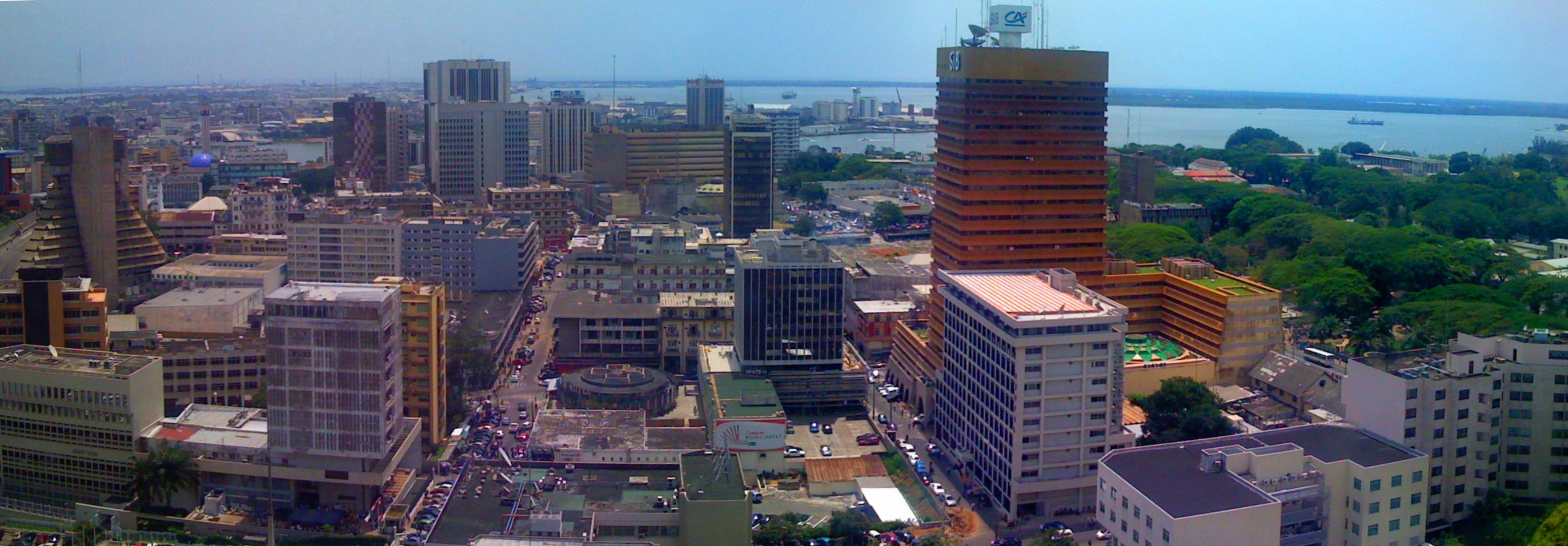
The Plateau district and Ébrié Lagoon in an archival panorama of Abidjan. Zenman; stitched by Marku1988; color adjustment by Skiper / Wikimedia Commons · CC BY-SA 3.0

Which details would turn the announcement into a project?
Start with a name and a location. A processing plant is a much more concrete proposition once there is a public record of who would build it, what it would handle and where it would go. A signed financing commitment or a published construction plan would tell readers more than a meeting or a broad cooperation announcement. For people near a proposed site, the details to watch would include what reviews apply, what infrastructure the project needs and which jobs or supplier opportunities are actually available locally.
The exhibition program offers a glimpse of those decisions without showing that any of them have been made. The organizer listed discussions on how mines can cut emissions without losing competitiveness, on the place of local investors in mining finance and on the practical business of developing an oil and gas market. Those are different questions, even if they appear on the same agenda. A mine operator looking for a buyer, a utility looking for reliable demand and a local contractor looking for work would each need answers that a general agreement cannot provide.
Botswana’s government news service reported that the two governments agreed to deepen cooperation in sectors that also include agriculture and trade. The important thing to watch after the Abidjan exhibition is narrower: whether any of the mining or energy proposals that reach an investor comes back with a named partner, a financing decision and a timetable. Until then, the most concrete development is a new place to have those conversations.
Sources & reporting notes
- Organizer
SIREXE conference programAbidjan venue, dates and session topics.
- National news agency
AIP: New investment and domestic-supplier initiativesFrench-language report on the minister’s opening announcement.
- Government account
Côte d’Ivoire government: Opening remarks in AbidjanBoko’s comments on exploration and processing.
- Local business reporting
Abidjan Économie: Mining and energy talksFrench-language coverage of energy supplies and local industry.
- Government news service
Botswana DailyNews: Earlier cooperation discussionsGaborone meeting and Botswana’s rationale for participating.
- Government news service
Botswana DailyNews: November 18 editionReport from Abidjan on Monday’s bilateral talks.